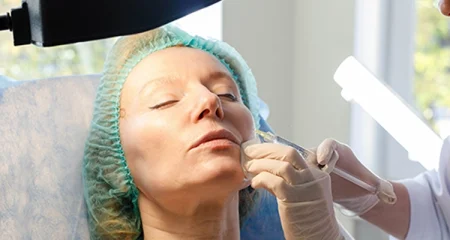

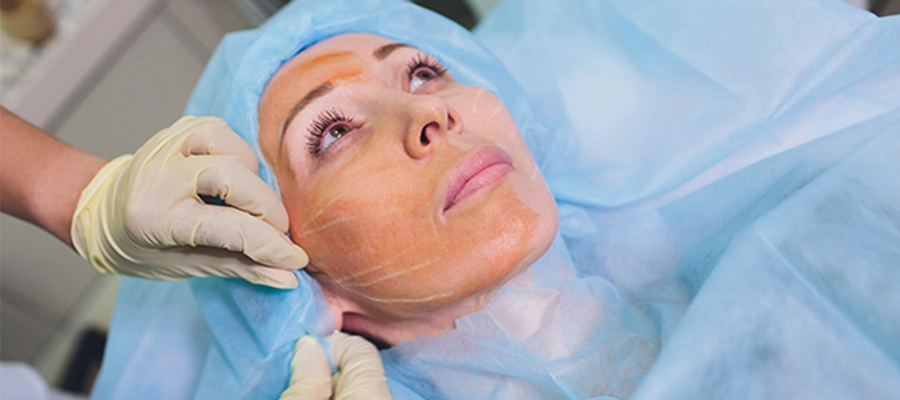
What Is an Endoscopic Deep Plane Midface and Temporal Lift?
Upper and central facial aging often develops across connected anatomical regions rather than within one isolated area. An endoscopic deep plane midface and temporal lift combines deeper cheek repositioning with elevation of selected temporal tissues and the lateral brow through concealed scalp incisions.
The procedure aims to restore cheek position, improve the lower-eyelid-to-cheek transition, and elevate a descended brow tail without relying primarily on skin tension. Endoscopic visualization helps guide deeper tissue release and fixation. It is generally better suited to selected patterns of midface and temporal descent than to advanced jowling, substantial loose facial skin, or significant neck aging.
Why the Midface and Temple Are Often Treated Together
The cheek, temple, outer brow, and lower eyelid form interconnected visual and anatomical regions. When both midface and temporal aging occur, treating only one area can leave an imbalance between the upper and central face.
Cheek descent can flatten midface contours while temporal descent lowers the brow tail and increases heaviness around the outer eye. Coordinated repositioning can create a smoother transition between these regions. Combination treatment is not necessary for everyone. Brow position, cheek descent, skin quality, facial volume, and natural eye anatomy determine whether treating both areas provides an advantage.
Repositioning Descended Cheek Tissue and the Outer Brow in One Procedure
A combined procedure can address two different forms of tissue descent during the same surgical plan. Deep plane cheek repositioning elevates selected midface tissues, while temporal lifting adjusts the outer brow and supporting tissues.
Each area requires a different lifting direction. The cheek should not simply be pulled toward the temple, and the brow should not be elevated according to cheek position. Independent planning helps maintain normal facial proportions. The amount of correction depends on cheek projection, brow height, tissue laxity, natural asymmetry, and the relationship between the eyes and midface.
How Midface Aging Can Affect the Under-Eye and Cheek Junction
The transition between the lower eyelid and cheek can become more noticeable as cheek tissues descend and facial volume changes. Midface aging may create greater separation between these areas, making the under-eye region appear longer, hollow, or tired.
Repositioning descended cheek tissues can improve support beneath the lower eyelid and create a smoother transition. However, prominent lower-eyelid fat, excess skin, pigmentation, or significant volume loss may require additional treatment. Midface lifting should therefore be selected according to the underlying anatomy rather than used as a universal treatment for under-eye concerns.
Temporal Descent and Its Impact on Brow Shape
Temporal descent can cause the outer portion of the eyebrow to move downward with age. This may flatten the brow tail, increase hooding over the outer eyelid, and change the overall expression of the upper face.
In some people, the central brow remains in a good position while only the lateral section descends. In these cases, targeted temporal elevation may be more appropriate than lifting the entire forehead.
Factors that influence brow shape in temporal descent include:
- Lateral brow position
- Flattening of the brow tail
- Outer-eyelid hooding
- Natural brow asymmetry
- Forehead muscle activity
- Forehead height
- Eye shape
- Degree of temporal tissue descent
- Need for targeted temporal elevation
- Maintaining a balanced brow contour
Restoring the Cheek Curve for a More Youthful Facial Contour
Cheek descent and volume loss can flatten the natural curve of the midface and reduce facial projection. A deep plane midface lift can reposition existing cheek tissues and help restore a smoother and more youthful contour.
Lifting alone cannot replace volume that has genuinely been lost. For this reason, some patients may benefit from conservative volume restoration in addition to tissue elevation.
Factors considered when restoring the cheek contour include:
- Degree of cheek descent
- Amount of volume loss
- Cheekbone projection
- Lower-eyelid transition
- Midface shape
Elevating the Brow Tail Without a Full Forehead Lift
When descent primarily affects the outer brow, temporal brow lifting can reposition the brow tail without substantially changing the central forehead.
This targeted approach may reduce lateral heaviness while preserving the natural relationship between the medial brow and eyes. The direction of elevation requires careful planning because excessive upward movement can create an exaggerated arch or change eye expression. A full brow lift may remain more appropriate when descent extends across the entire eyebrow or forehead.
Creating Continuity Between the Temple, Cheek and Lower Eyelid
A balanced upper face depends partly on smooth transitions between the temple, outer eye, lower eyelid, and cheek. Combined midface and temporal rejuvenation can address tissue descent across these connected regions.
The procedure should not attempt to make every transition completely smooth. Natural contours and shadows contribute to normal facial anatomy. Volume loss, skeletal structure, skin thickness, and tissue position must be assessed independently. Repositioning and volume restoration can then be combined selectively when both are required.
Deep Plane Release for More Natural Tissue Repositioning
Retaining structures can limit how freely descended facial tissues move. During deep plane lifting, selected attachments are released so deeper tissues can be repositioned without depending primarily on tight skin closure.
This allows the overlying skin and soft tissues to move more naturally as a unit. The extent of release differs between the temporal and midface regions and should remain anatomically controlled. Excessive dissection can increase surgical trauma, while inadequate release can limit movement. Natural results depend on appropriate release, lifting vectors, fixation, and tissue balance.
How Endoscopic Access Reduces the Need for Long Visible Incisions
An endoscope provides internal visualization through relatively small access points, commonly positioned within or near hair-bearing scalp areas. Endoscopic facial lifting can therefore reduce the need for longer visible facial incisions in appropriately selected procedures.
Limited incisions do not necessarily mean limited internal surgery. Significant tissue dissection and ligament release may still occur beneath the surface. Endoscopic techniques also cannot adequately manage every degree of excess skin. Patients with advanced lower-face or neck laxity may require conventional facelift incisions despite the availability of endoscopic approaches.
The Role of Facial Retaining Ligaments in Midface Elevation
Facial retaining ligaments help secure soft tissues to deeper structures. With aging, surrounding tissues can descend while these attachments continue restricting movement. During midface elevation, selected ligaments may be released to mobilize the cheek effectively.
Controlled release allows repositioning with less surface tension. Not every ligament requires division, and the surgical plan depends on the intended direction and amount of movement. Understanding nearby nerve and vascular anatomy is particularly important during deeper dissection. The objective is sufficient mobility without unnecessary disruption of normal support structures.
Improving Flattened Cheeks and a Tired Upper-Face Appearance
Descended cheeks and a lowered brow tail can contribute to a flatter midface and heavier-looking eye region. An endoscopic midface and temporal lift may improve these features by restoring tissue position rather than simply tightening skin.
Results depend on the source of the apparent flattening. Significant volume deficiency may remain after tissues are elevated, while skeletal flatness cannot be fully corrected through lifting. Treatment should distinguish between descent, volume loss, and underlying bone structure. This helps avoid excessive elevation in an attempt to correct a problem that requires a different approach.
Can This Technique Soften Nasolabial Fold Prominence?
A midface lift can sometimes soften nasolabial folds by reducing downward tissue accumulation above them. The effect varies because these folds also reflect normal facial anatomy, muscle movement, skeletal structure, and volume distribution.
Complete removal of nasolabial folds is neither realistic nor necessarily desirable. Deep folds caused partly by cheek descent may improve more than folds determined primarily by anatomy or facial expression. The procedure should focus on restoring cheek position rather than aggressively pulling tissues simply to eliminate a normal facial crease.
Supporting the Lower Eyelid Through Midface Repositioning
Elevating descended cheek tissues can improve structural support beneath the lower eyelid. This may create a shorter, smoother lower eyelid-cheek transition in appropriately selected patients.
Midface lifting does not directly correct every lower-eyelid problem. Significant skin excess, prominent fat compartments, eyelid laxity, or other anatomical concerns may require blepharoplasty or additional procedures. Lower-eyelid stability should also be evaluated before combined surgery. Treatment aims to maintain natural eyelid position while improving the surrounding midface framework.
Preserving Natural Eye Shape During Temporal Elevation
Temporal lifting can influence tissues around the outer eye, making conservative repositioning important. The goal should generally be to improve brow support without unnecessarily changing natural eye shape.
Excessive lateral tension can create an overly upturned appearance or alter the relationship between the brow and eyelids. Eye shape, brow position, orbital anatomy, and natural asymmetry should be documented before surgery. Surgical planning should distinguish rejuvenation from procedures specifically intended to alter the lateral eye angle.
Endoscopic Deep Plane Midface and Temporal Lift Prices 2026
The Endoscopic Deep Plane Midface and Temporal Lift Prices 2026 vary according to surgical complexity, anesthesia, location, treatment extent, and whether additional facial procedures are included.
Frequently Asked Questions
Avoiding an Over-Lifted Brow or Overfilled Cheek Appearance
Successful combined rejuvenation depends on controlling both tissue elevation and volume. An excessively high brow can produce a surprised expression, while too much cheek volume can make the midface appear heavy or artificial.
Endoscopic Midface and Temporal Lift vs. Traditional Facelift
An endoscopic midface and temporal lift primarily treats the cheeks, temples, and lateral brow. A traditional facelift generally provides broader access to address jowls, jawline laxity, lower-face skin excess, and potentially the neck.
Pairing the Procedure with Lower Blepharoplasty
Lower blepharoplasty with midface lifting may be considered when descended cheek tissues occur alongside lower-eyelid fat prominence, skin excess, or other eyelid changes.
Combining Deep Plane Lifting with Facial Fat Grafting
Deep plane lifting repositions existing tissues, while facial fat grafting can replace selected volume that has been lost. The techniques may therefore complement each other when both descent and deflation contribute to facial aging.
What Happens During Endoscopic Midface and Temporal Lift Surgery?
During endoscopic midface and temporal lift surgery, concealed scalp incisions are created according to the planned access points. A camera and specialized instruments help visualize deeper anatomical planes.
Early Healing Around the Cheeks, Temples and Lower Eyelids
Early recovery commonly includes swelling, bruising, tightness, tenderness, and temporary changes in sensation. After a combined endoscopic facial lift, these effects can involve the cheeks, temples, forehead, and tissues surrounding the eyes.