
What Is Hair Mesotherapy?
Hair mesotherapy is a scalp treatment that uses multiple small injections to deliver selected substances into superficial scalp tissues. Depending on the formulation, Hair Mesotherapy may be used as a supportive approach for thinning hair, reduced hair quality, or scalp-related concerns.
Injected solutions can contain vitamins, amino acids, minerals, peptides, or other ingredients selected for a particular protocol. However, mesotherapy formulas are not universally standardized, and the evidence supporting individual ingredients can vary.
The treatment is generally intended to support existing follicles rather than create new follicles in areas of permanent hair loss. Results depend on the underlying diagnosis, condition of the follicles, product composition, treatment schedule, and individual response. Mesotherapy should therefore be planned after evaluating why the hair is thinning.
How Does Hair Mesotherapy Work?
Mesotherapy delivers small quantities of selected substances directly into the scalp through repeated superficial injections. During Hair Mesotherapy, the goal is usually to support the local scalp environment and existing follicles rather than produce immediate structural changes.
The biological effect depends heavily on what is injected. Some formulations are designed to provide vitamins or amino acids, while others may include peptides, minerals, or additional compounds. Because these mixtures differ, their mechanisms and expected benefits are not identical.
The injection process itself may also create mild local stimulation, but this should not be interpreted as guaranteed hair regeneration.
Mesotherapy cannot correct every cause of hair loss. Genetic thinning, hormonal conditions, nutritional deficiencies, autoimmune disorders, and scarring alopecia may require separate or additional treatment.
What Ingredients May Be Used in Scalp Mesotherapy?
Scalp mesotherapy formulas can contain different combinations of vitamins, amino acids, minerals, peptides, antioxidants, or other injectable substances. Within Hair Mesotherapy, the exact formulation should be selected according to treatment goals and product-specific safety information.
There is no single universally accepted mesotherapy formula for hair loss. Products may differ considerably in concentration, composition, regulatory status, and supporting clinical evidence.
Ingredients promoted for scalp support should not automatically be assumed to stimulate meaningful hair regrowth. The presence of vitamins or biologically active substances does not guarantee that miniaturized follicles will recover.
For this reason, the injected formulation should be clearly identified before treatment. Suitability also depends on allergies, medical history, scalp condition, and the underlying cause of thinning.
Which Types of Hair Thinning Can Be Trereated with Mesotherapy?
Mesotherapy may be considered as a supportive treatment in selected cases of nonscarring hair thinning where follicles remain present. For some patients, Hair Mesotherapy is incorporated into broader management of diffuse thinning or early pattern hair loss.
The treatment is not appropriate for every cause of shedding. Hair loss associated with iron deficiency, thyroid disorders, medications, autoimmune disease, or inflammatory scalp conditions requires management of the underlying problem.
Scarring alopecia deserves particular caution because inflammation can permanently destroy hair follicles. Mesotherapy cannot restore follicles after they have been replaced by scar tissue.
Accurate diagnosis is therefore more important than selecting injections based only on visible thinning. The expected benefit should reflect follicle condition and the actual cause of hair loss.
Who Is a Suitable Candidate for Hair Mesotherapy?
Suitable candidates are generally people with thinning hair or reduced hair quality who still have active follicles in the treatment area. After appropriate assessment, Hair Mesotherapy may be considered as a supportive option when the scalp is healthy and the cause of thinning has been identified.
Candidates should understand that mesotherapy is not a universal replacement for medical hair-loss treatment. Some forms of androgenetic alopecia require diagnosis-specific medication, while nutritional or hormonal causes need separate management.
Active scalp infection, significant inflammation, allergy to a product ingredient, or certain medical conditions can affect suitability.
The treatment is also less likely to help areas that have been completely bald for many years. Expectations should therefore focus on support for existing hair rather than guaranteed regrowth.
Hair Mesotherapy for Weak and Thinning Hair
Weak and thinning hair can result from follicle miniaturization, nutritional factors, illness, stress, hormonal influences, or other causes. When active follicles remain, Hair Mesotherapy may be used as an adjunctive treatment within a broader hair-care plan.
The intended goal is usually to support scalp condition and improve the appearance or quality of existing hair. Any measurable change depends on whether the underlying follicles are capable of responding.
Mesotherapy should not delay diagnosis of progressive hair loss. If thinning results from androgenetic alopecia or another medical condition, treatment directed at that cause may be more important than supportive injections alone.
Monitoring photographs and changes in shedding can help determine whether the approach is providing any practical benefit over time.
Can Scalp Mesotherapy Support Hair Density?
Mesotherapy may support visible density in selected patients when existing follicles remain active and the underlying cause of thinning is appropriately managed. However, Hair Mesotherapy does not create entirely new follicles and cannot reliably reverse permanent baldness.
Any improvement in density would usually depend on miniaturized hairs becoming stronger, thicker, or more visible. The extent of this response varies considerably.
Results are also difficult to generalize because mesotherapy formulas and treatment schedules are not standardized. Evidence for one preparation should not automatically be applied to another.
If significant density loss is caused by advanced follicle destruction, alternative strategies may be required. Medical therapy or hair transplantation can be more relevant depending on diagnosis, donor availability, and the pattern of hair loss.
How Is Mesotherapy Applied to the Scalp?
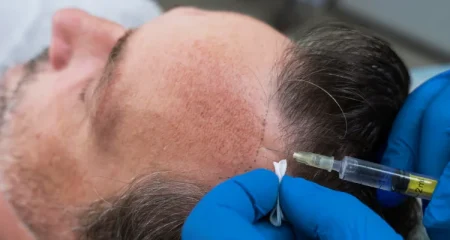
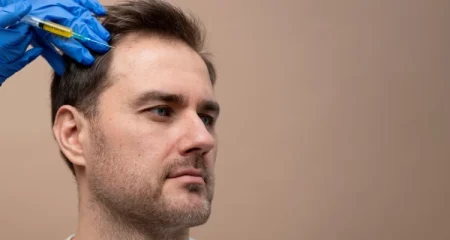
Mesotherapy is usually performed by making multiple small injections across selected areas of the scalp. During Hair Mesotherapy, a fine needle is used to place small quantities of the chosen formulation at planned intervals.
The scalp is cleaned before treatment, and the injection pattern is adjusted according to the distribution of thinning. Some protocols treat localized areas, while others cover a broader region.
Patients may experience mild stinging, pressure, or temporary tenderness. Small spots of bleeding, redness, or swelling can also occur around injection sites.
Application technique and injection depth can vary according to the formulation being used. Sterile technique is important because repeated injections create multiple temporary breaks in the skin barrier.
Which Areas of the Scalp Can Be Treated?
Hair Mesotherapy can be applied to several scalp areas affected by diffuse or patterned thinning. Depending on the distribution of hair loss, treatment may target the frontal scalp, mid-scalp, crown, temporal regions, or other areas where viable follicles are still present.
Treatment should follow the actual pattern of thinning rather than being performed uniformly across unaffected scalp. Areas that are completely bald and no longer contain active follicles are less likely to benefit from supportive injection treatment.
Scalp areas that may be treated with Hair Mesotherapy include:
- Frontal scalp
- Mid-scalp
- Crown area
- Temporal regions
- Receding hairline areas
- Diffuse thinning zones
- Areas with miniaturized hairs
- Regions with viable follicles
- Selected areas identified during scalp examination
- Scalp zones with realistic treatment potential
How Many Hair Mesotherapy Sessions May Be Needed?
The number of Hair Mesotherapy sessions varies because there is no universally standardized treatment schedule for hair loss. Depending on the protocol, treatment may involve an initial series of repeated sessions followed by reassessment.
Session frequency can depend on the formulation used, degree of thinning, scalp response, and whether other hair-loss treatments are being used at the same time. More sessions do not necessarily produce better results if there is no measurable improvement.
Factors that influence the number of Hair Mesotherapy sessions include:
- Severity of hair thinning
- Treatment protocol
- Mesotherapy formulation
- Scalp response
- Pattern of hair loss
- Use of other hair-loss treatments
- Changes in hair shedding
- Photographic evidence of improvement
- Scalp examination findings
How Often Is Hair Mesotherapy Performed?
Treatment intervals differ according to the formulation and overall protocol. During an initial Hair Mesotherapy program, sessions are usually spaced apart rather than performed continuously over very short intervals.
Some programs begin with more frequent treatments and later extend the interval, while others use a different schedule entirely. There is no single evidence-based frequency that applies to every mesotherapy product.
The scalp should also have enough time to recover between sessions. Persistent irritation, inflammation, or tenderness may require treatment to be postponed.
Long-term repetition should depend on measurable benefit. If no meaningful improvement occurs after an appropriate trial period, the diagnosis and treatment strategy should be reconsidered rather than automatically continuing injections.
What to Expect After a Hair Mesotherapy Session
Mild redness, tenderness, swelling, bruising, or pinpoint bleeding can occur after scalp injections. Following Hair Mesotherapy, these effects are usually temporary and should gradually settle as the injection sites heal.
Some people may notice temporary itching, tightness, or sensitivity. Hair washing and scalp-product instructions can vary according to the formulation and treatment technique.
Aggressive scratching, rubbing, or irritating products should generally be avoided during the early recovery period. Keeping the scalp clean also reduces unnecessary irritation.
Worsening pain, spreading redness, significant swelling, drainage, fever, or other unusual symptoms should be medically assessed. These findings can indicate infection or another complication rather than a normal post-treatment reaction.
When Can Changes in Hair Quality Become Noticeable?
Changes in hair quality usually require time because hair grows slowly and follows a biological cycle. After starting Hair Mesotherapy, any visible improvement is generally evaluated over months rather than immediately after the first session.
Some patients may first notice changes in shedding or hair texture. Improvements in overall density or shaft thickness, if they occur, take longer because existing hairs must grow sufficiently to affect appearance.
Response depends on the underlying cause of thinning, follicle viability, formulation used, treatment consistency, and individual biology.
Standardized photographs can help evaluate progress more accurately. Lighting, hair length, hairstyle, and styling products should remain similar when comparing results over time.
Combining Hair Mesotherapy with Other Hair Treatments
Mesotherapy can sometimes be incorporated into a broader treatment plan alongside medical therapy, PRP, scalp care, or correction of nutritional deficiencies. When Hair Mesotherapy is combined with other approaches, each component should have a clear purpose rather than being added automatically.
For example, androgenetic alopecia may require diagnosis-specific medical treatment while mesotherapy is used only as supportive care. Nutritional deficiencies should be corrected independently when they contribute to shedding.
PRP and mesotherapy may also be used within the same overall program, but combining procedures does not guarantee stronger results.
Treatment timing should minimize unnecessary scalp irritation. Monitoring progress makes it easier to determine whether individual components are actually contributing to improvement.
Hair Mesotherapy Prices 2026
Treatment costs vary according to the injectable formulation, size of the treatment area, number of sessions, and whether mesotherapy is combined with other procedures. When estimating Hair Mesotherapy prices, both the initial treatment series and possible maintenance sessions should be considered.
Frequently Asked Questions
Does hair mesotherapy help with hair loss?
Mesotherapy may provide supportive benefits in selected cases where active follicles remain, but results vary. When Hair Mesotherapy is used, the underlying cause of thinning still needs to be identified because genetic, hormonal, nutritional, or inflammatory hair loss may require separate treatment.
Can mesotherapy help regrow lost hair?
Miniaturized follicles may potentially produce stronger or more visible hairs if they remain active. However, Hair Mesotherapy cannot reliably recreate follicles that have been permanently destroyed or replaced by scar tissue.
What is injected during hair mesotherapy?
Formulations can include vitamins, amino acids, minerals, peptides, antioxidants, or other substances depending on the product. During Hair Mesotherapy, the exact injected mixture should be identified because formulations differ in composition, evidence, and regulatory status.
How many hair mesotherapy sessions are usually needed?
There is no universal session number because protocols and formulations vary. With Hair Mesotherapy, an initial series may be followed by reassessment, and further sessions should depend on scalp response and measurable improvement rather than a fixed schedule.
How often should scalp mesotherapy be performed?
Treatment frequency depends on the specific formulation and protocol being used. During Hair Mesotherapy, sessions are generally spaced to allow scalp recovery, while longer-term repetition should be based on response rather than performed automatically.
When can I expect to see results from hair mesotherapy?
Visible changes usually require time because hair growth occurs slowly. Following Hair Mesotherapy, any improvements in shedding, thickness, or overall hair quality are generally evaluated over several months rather than after only one or two sessions.
Can hair mesotherapy make existing hair thicker?
Existing miniaturized hairs may appear stronger or thicker in some patients if viable follicles remain. With appropriately selected Hair Mesotherapy, the extent of improvement depends on the cause of thinning, product formulation, follicle condition, and individual response.