
What Is Hairline Lowering Surgery?
Hairline lowering surgery is a procedure that reduces visible forehead height by advancing the hair-bearing scalp toward a newly designed position. It is also commonly described as surgical forehead reduction or hairline advancement.
The procedure can be suitable for selected people with a naturally high, stable hairline and adequate scalp flexibility. Planning considers forehead proportions, hair density, scalp mobility, hairline shape, future hair-loss risk, and individual aesthetic goals. The objective is not simply to create the lowest possible hairline but to establish a position that remains proportional and natural.
How a High Hairline Can Affect Facial Proportions
A high hairline increases the visible distance between the eyebrows and scalp. When this distance is relatively large compared with the middle and lower face, the upper facial third can appear elongated.
Forehead height is only one part of facial balance. Brow position, facial length, forehead width, hairline shape, and skeletal anatomy also affect perception. For this reason, surgical planning should consider the entire face instead of relying on one standardized forehead measurement.
Shortening the Forehead by Advancing the Hairline
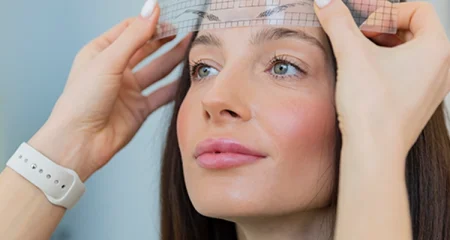
Surgical forehead shortening involves mobilizing the hair-bearing scalp and advancing it toward the eyebrows. Excess forehead skin is removed according to the planned new hairline.
The achievable movement depends primarily on scalp elasticity and tissue mobility. Greater advancement is not automatically better because excessive tension can affect scar quality and healing. The goal is to achieve meaningful shortening while maintaining healthy scalp circulation and a natural relationship between the hairline and eyebrows.
Who Usually Considers Surgical Hairline Lowering?
People may consider the procedure when a naturally high hairline makes the forehead appear disproportionately long. Candidates generally need stable hair density near the frontal scalp and enough tissue mobility to permit advancement.
Progressive hair loss is an important consideration. Someone with active frontal recession may not be an ideal candidate because future thinning could expose the incision scar. Previous scalp operations, brow surgery, hair transplantation, and individual scar history can also influence suitability.
Forehead Height, Hairline Shape and Facial Balance
Forehead proportion depends on both vertical height and the shape of the frontal hairline. Two people with similar measurements can have very different appearances because their brow positions, facial widths, and hairline contours differ.
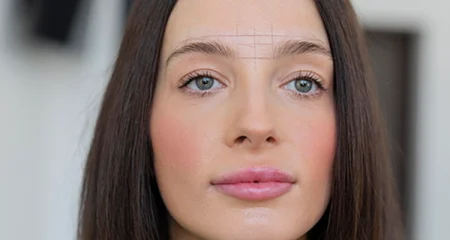
Assessment can include frontal, profile, and three-quarter views. Rather than targeting a fixed measurement, planning focuses on creating better continuity between the hairline, forehead, brows, and remaining facial features.
Designing a New Hairline That Matches the Face
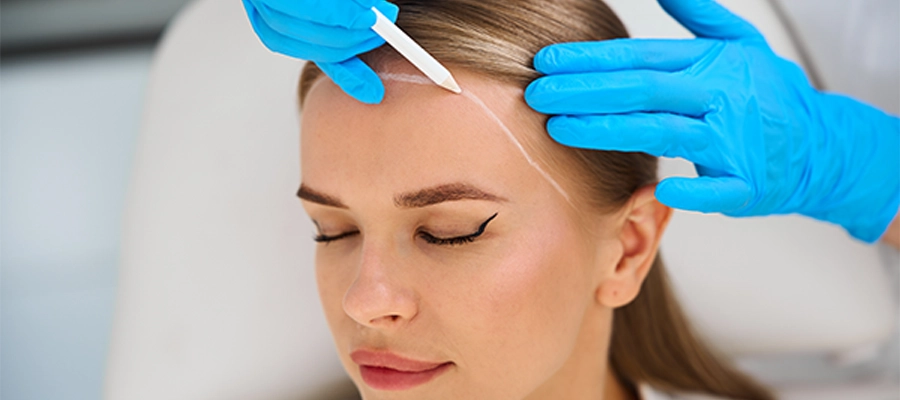
A natural hairline design should complement forehead width, facial shape, temples, brow position, and existing hair-growth patterns.
Completely straight or perfectly symmetrical designs can appear artificial. Natural hairlines typically contain subtle irregularities and transitions. The planned border may therefore incorporate gentle variations while correcting unwanted height or asymmetry. Existing widow’s peaks and temporal contours should also be considered before finalizing the design.
How Scalp Flexibility Influences the Amount of Advancement
Scalp flexibility is one of the most important factors determining how much surgical advancement can be achieved.
A mobile scalp can generally move farther than a tight scalp without creating excessive closure tension. Previous surgery and scar tissue may reduce mobility. Preoperative examination can provide an estimate, but the safe final advancement may depend on tissue behavior during surgery. Conservative movement can sometimes provide better long-term scar quality than maximum advancement.
Hairline Lowering for Naturally Long Foreheads
Patients with naturally long foreheads and stable frontal hair may benefit from hairline lowering surgery when forehead height is the main concern.
This situation should be distinguished from an apparently high forehead caused by hair loss. Surgical advancement changes the physical position of the scalp but does not prevent future recession. Family history, age, hair density, and evidence of progressive thinning are therefore important considerations before surgery.
Correcting an Uneven or Asymmetrical Hairline
A hairline may naturally sit higher on one side or contain irregular temporal recessions. Surgical design can sometimes reduce these differences while simultaneously shortening the forehead.
Complete symmetry is not always desirable because natural hairlines contain minor variations. The objective is usually to correct obvious imbalance without creating an unnaturally geometric border. Differences in scalp mobility between sides may also limit how precisely symmetry can be achieved.
Feminine and Masculine Hairline Design Considerations
Hairline design can be adapted to facial anatomy and the patient’s desired aesthetic characteristics. Traditionally feminine hairlines may have softer curves and less pronounced temporal recession, while masculine patterns may be flatter or include stronger temporal transitions.
These patterns are not fixed rules. Existing facial structure, age, hair density, personal preference, and potential future hair loss matter more than standardized gender templates. The final design should look appropriate for the individual face.
Creating a Softer Hairline Without Making It Look Artificial
A believable hairline usually contains subtle irregularities rather than a perfectly straight boundary. These details help create a softer transition between forehead skin and hair-bearing scalp.
Existing hair direction and density should guide the design. Lowering the hairline excessively can make the forehead appear disproportionately short, while an unnaturally regular border may make surgery more noticeable. Proportional placement and controlled irregularity can support a more natural appearance.
Hairline Lowering vs. Forehead Reduction Surgery
Hairline lowering and forehead reduction surgery usually describe closely related procedures. Both involve advancing the scalp to reduce the visible vertical height of the forehead.
Terminology can vary between surgeons and clinics, so patients should focus on what the proposed operation actually involves rather than the procedure name alone. Important details include incision position, expected advancement, fixation, scalp mobilization, scar location, and whether other forehead or brow procedures will be performed.
Hairline Lowering vs. Hair Transplantation
Surgical advancement moves an existing section of hair-bearing scalp forward, while hair transplantation relocates individual follicles into a newly designed frontal area.
Advancement can create an immediate change in forehead height when scalp mobility is adequate. Transplantation develops gradually as implanted follicles enter their growth cycle. Hair transplantation can also offer greater flexibility for filling temples or refining smaller areas, although sufficient donor hair is required.
When Hair Transplantation May Be a Better Option
Hair transplantation may be preferable when scalp mobility is limited, smaller hairline modifications are required, or the primary concern involves temporal recession rather than overall forehead height.
It may also help camouflage a previous surgical scar. However, transplantation does not provide the same immediate movement of the entire frontal hairline as scalp advancement. Hair-loss pattern, donor density, desired change, age, and long-term stability should guide the choice between techniques.
Hairline Lowering Surgery Prices 2026
Hairline Lowering Surgery Prices 2026 vary according to the required advancement, surgical complexity, anesthesia, geographic location, previous scalp surgery, and whether additional procedures are included.
Can Hair Grow Through the Hairline Lowering Scar?
Hair near the incision can sometimes help camouflage the scar as healing progresses. Certain incision designs may also be planned with follicle direction in mind to encourage a less obvious transition.
Temporary Hair Shedding After Hairline Advancement
Temporary shedding can occur around the surgical area after scalp advancement. This phenomenon can result from surgical stress affecting nearby hair follicles.
Scalp Tightness and Numbness During Recovery
Scalp tightness is common during early recovery because tissues have been mobilized and secured in a new position. Swelling, tenderness, itching, tingling, and temporary numbness can also occur.
How the Hairline Changes as Swelling Settles
The hairline can initially appear unusually tight or sharply defined because of swelling and early incision healing.
When the New Forehead Proportion Starts to Look Natural
The new forehead proportion becomes increasingly natural as swelling resolves, the scalp relaxes, and the incision matures.
Long-Term Stability of the Lowered Hairline
The surgically advanced scalp can maintain its new position long term after adequate healing, but surrounding hair remains subject to normal aging and genetic hair loss.