
What Is Vitamin Mesotherapy for Hair?
Vitamin mesotherapy for hair is a scalp injection approach that delivers selected vitamins, amino acids, minerals, and other supportive ingredients into superficial scalp tissues. Depending on the formulation and underlying concern, Vitamin Mesotherapy for Hair may be used as an adjunctive treatment for weak hair, reduced hair quality, or selected forms of thinning.
The procedure uses multiple small injections distributed across targeted scalp areas. Unlike hair transplantation, it does not move follicles or replace follicles that have been permanently lost.
There is no single standardized vitamin mesotherapy formula. Products can contain different ingredients, concentrations, and combinations, while clinical evidence may vary between preparations. Treatment should therefore follow an appropriate hair-loss assessment rather than assuming that vitamin injections can correct every cause of thinning or shedding.
How Does Vitamin Mesotherapy Support the Scalp and Hair?
Vitamin mesotherapy aims to deliver selected supportive substances directly into the scalp through multiple superficial injections. During Vitamin Mesotherapy for Hair, the intended effect depends largely on the ingredients used and the biological condition of existing follicles.
Vitamins, amino acids, minerals, and other components may participate in processes related to normal hair and skin biology. However, injecting these substances does not automatically stimulate significant hair regrowth, particularly when no deficiency exists.
The procedure may be considered as part of a broader plan for improving scalp or hair quality. It cannot reliably recreate follicles destroyed by scarring or advanced permanent hair loss.
Genetic thinning, hormonal conditions, nutritional deficiencies, and inflammatory scalp disorders should still receive diagnosis-specific management when necessary.
Which Vitamins and Nutrients May Be Used in Hair Mesotherapy?
Mesotherapy formulations can contain B-group vitamins, amino acids, minerals, antioxidants, peptides, or other ingredients intended to support scalp and hair quality. Within Vitamin Mesotherapy for Hair, the precise composition varies considerably between injectable preparations.
Some formulations may contain nutrients involved in normal keratin production or cellular metabolism. However, a nutrient being important for normal hair biology does not mean that injecting additional amounts will necessarily increase hair growth.
There is no universally accepted combination of vitamins for scalp mesotherapy. Concentrations, ingredients, evidence, and regulatory status can differ according to the preparation being used.
For this reason, the exact product composition should be known before treatment. Allergies, medical history, medications, and existing scalp conditions should also be considered.
Who Is a Suitable Candidate for Vitamin Hair Mesotherapy?
Suitable candidates are generally adults with active hair follicles who want supportive treatment for reduced hair quality, mild thinning, or selected shedding concerns. After the cause of hair loss is assessed, Vitamin Mesotherapy for Hair may be incorporated into a broader management plan when appropriate.
Patients with nutritional deficiencies should first have the deficiency identified and appropriately corrected. Genetic pattern hair loss may require established medical treatments rather than vitamin injections alone.
Long-standing completely bald areas are unlikely to respond because mesotherapy cannot create new follicles. Active scalp infections or significant inflammatory conditions can also affect treatment suitability.
Realistic expectations are essential. Mesotherapy should be viewed as a supportive option rather than a guaranteed method for restoring lost hair.
Which Hair and Scalp Concerns Can Be Addressed?
Scalp mesotherapy may be considered for weak-looking hair, reduced hair quality, mild thinning, or certain forms of increased shedding. When follicles remain viable, Vitamin Mesotherapy for Hair may provide supportive care alongside treatments directed at the underlying diagnosis.
Different causes of hair loss require different approaches. Androgenetic alopecia involves progressive follicle miniaturization, while telogen effluvium causes increased shedding that may follow illness, stress, nutritional changes, or other triggers.
Scalp inflammation and medical conditions can also affect hair growth and require specific management.
Mesotherapy cannot treat every problem simply by supplying vitamins. Identifying whether the concern involves the hair shaft, follicle, scalp, or a systemic condition helps determine whether this approach is appropriate.
Vitamin Mesotherapy for Weak and Fragile Hair
Weak or fragile-looking hair can be influenced by nutritional status, chemical processing, heat damage, hair-shaft disorders, or changes in follicle activity. For selected patients, Vitamin Mesotherapy for Hair may be considered to support scalp and hair-quality goals.
Treatment cannot directly repair the portion of a hair shaft that has already been physically damaged. Hair above the scalp consists of nonliving keratin, so external damage often requires appropriate grooming practices and time for healthier hair to grow.
When weakness originates from follicle miniaturization, the underlying cause should also be treated. Genetic hair loss, for example, may require medical management.
A supportive mesotherapy program should therefore be combined with realistic expectations and appropriate care for both the scalp and existing hair shafts.
Supporting Hair Thickness and Quality with Scalp Mesotherapy
Hair can appear denser when existing follicles produce thicker and stronger shafts. In suitable patients, Vitamin Mesotherapy for Hair may be included in a treatment program intended to support the quality of hairs produced by active follicles.
The potential for improvement depends on why individual hairs have become finer. Nutritional problems, follicle miniaturization, illness, and genetic factors do not respond identically to treatment.
Mesotherapy cannot increase thickness beyond the biological capacity of existing follicles. It also cannot replace follicles that have permanently disappeared.
Changes in hair quality require time because newly produced hair must grow long enough to become visible. Progress should therefore be evaluated over months using consistent photographs and clinical assessment rather than immediately after injections.
Can Vitamin Mesotherapy Help with Seasonal Hair Shedding?
Seasonal changes in shedding can occur in some individuals, although noticeable hair loss should not automatically be assumed to be seasonal. When Vitamin Mesotherapy for Hair is considered for increased shedding, other possible causes should first be evaluated.
Telogen effluvium can follow illness, significant stress, rapid weight changes, nutritional deficiency, hormonal changes, or other physiological events. Treating the underlying trigger is generally more important than relying on supportive injections alone.
Mesotherapy may be incorporated into selected scalp-care plans, but it cannot guarantee that shedding will stop.
Persistent, severe, or unexplained hair loss deserves appropriate evaluation. This helps distinguish temporary shedding from progressive pattern hair loss or another condition requiring specific treatment.
How Are Vitamin Mesotherapy Injections Applied to the Scalp?
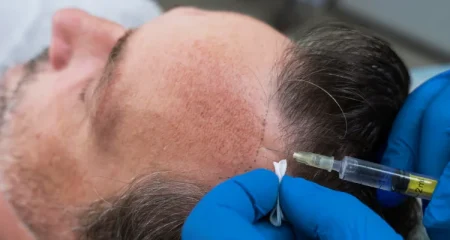
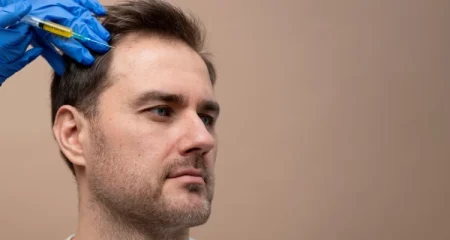
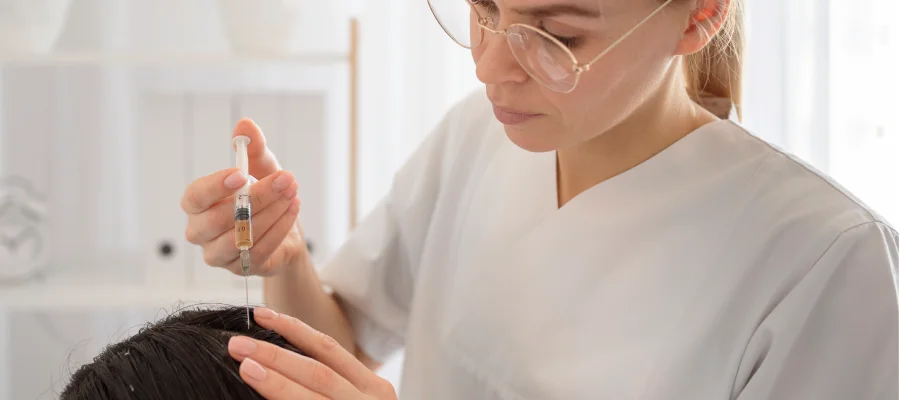
Vitamin mesotherapy is generally performed using a fine needle to make multiple small injections across selected scalp areas. During Vitamin Mesotherapy for Hair, small quantities of the chosen formulation are placed at planned intervals according to the treatment protocol.
The scalp is cleaned beforehand, and the injection pattern follows the areas requiring treatment. The frontal scalp, mid-scalp, crown, or more diffuse regions may be addressed when appropriate.
Patients can experience mild stinging or pressure with each injection. Pinpoint bleeding, temporary redness, and tenderness are also possible.
Injection depth and product quantity can vary according to the formulation. Sterile technique is particularly important because the procedure creates multiple temporary openings in the skin.
What Happens During a Vitamin Hair Mesotherapy Session?
A typical session begins with assessment of the scalp and identification of the areas selected for injection. Before Vitamin Mesotherapy for Hair is administered, the scalp is prepared and cleaned according to the planned protocol.
The selected solution is then delivered through a series of small injections. Treatment time varies according to the size of the scalp area and the number of injection points required.
Temporary discomfort, stinging, or pressure can occur. Pain sensitivity differs between individuals, and appropriate comfort measures may be considered when necessary.
After treatment, small areas of redness or pinpoint bleeding may remain temporarily visible. Most recovery is related to these injection sites rather than the prolonged downtime associated with surgical hair-restoration procedures.
How Many Sessions May Be Recommended?
The number of sessions depends on the formulation, reason for treatment, severity of the concern, and individual response. Because protocols are not standardized, Vitamin Mesotherapy for Hair may involve a series of treatments followed by a period of reassessment.
Some programs use more frequent sessions initially and increase the interval later. However, no universal number of treatments can guarantee thicker hair or reduced shedding.
Enough time should be allowed to evaluate changes in the hair-growth cycle. Automatically continuing injections without measurable improvement may not provide additional benefit.
Progress can be monitored using standardized photographs, shedding patterns, scalp examination, and changes in hair quality. Maintenance should be considered only when the initial approach has produced a useful response.
What Should You Expect After Scalp Mesotherapy?
Temporary redness, tenderness, itching, swelling, bruising, or pinpoint bleeding may occur after scalp injections. Following Vitamin Mesotherapy for Hair, these effects are generally mild and should gradually improve as the injection sites recover.
Patients should avoid unnecessary scratching or aggressive rubbing of the scalp. Aftercare instructions for hair washing, styling products, exercise, and scalp care may vary according to the formulation and injection technique used.
Common recovery considerations after scalp mesotherapy include:
- Temporary redness
- Scalp tenderness
- Mild itching
- Localized swelling
- Bruising
- Pinpoint bleeding
- Avoiding scratching
- Avoiding aggressive scalp rubbing
- Following hair-washing instructions
- Following scalp-care recommendations
- Monitoring for increasing pain
- Monitoring for spreading redness
- Watching for unusual drainage or fever
- Seeking medical assessment for worsening symptoms
When Can Improvements in Hair Quality Become Noticeable?
Changes in hair quality after Vitamin Mesotherapy for Hair usually develop gradually because hair follows a slow growth cycle. Potential improvement should therefore be assessed over several months rather than immediately after treatment.
Changes in shedding may appear before visible differences in hair thickness or density. The timeline varies according to follicle health, diagnosis, treatment formulation, age, nutrition, and individual response.
Factors that influence when hair improvements become noticeable include:
- Hair growth cycle
- Follicle health
- Underlying diagnosis
- Treatment formulation
- Individual treatment response
- Age
- Nutritional factors
- Changes in hair shedding
- Hair thickness
- Hair density
- Time needed for new hair growth
- Consistent photographic monitoring
Combining Vitamin Mesotherapy with Other Hair Treatments
Mesotherapy can sometimes be combined with medical therapy, PRP, scalp treatments, or correction of identified nutritional deficiencies. Within a personalized plan, Vitamin Mesotherapy for Hair should have a defined supportive role rather than being combined with multiple treatments without a clear reason.
For androgenetic alopecia, diagnosis-specific medical therapy may remain important for controlling progressive miniaturization. PRP may also be considered separately in suitable patients.
When a nutritional deficiency contributes to shedding, correcting that deficiency systemically is important. Scalp injections should not substitute for appropriate medical management.
Combination treatments may also require careful scheduling to avoid excessive scalp irritation. Progress should be monitored so that unnecessary or ineffective components can be modified or discontinued.
Vitamin Mesotherapy for Hair Prices 2026
Treatment costs vary according to the formulation used, number of sessions, treatment area, and whether additional hair therapies are included. When evaluating Vitamin Mesotherapy for Hair prices, both the initial treatment course and possible maintenance requirements should be considered.
Frequently Asked Questions
What vitamins are used in hair mesotherapy?
Formulations may contain B-group vitamins, amino acids, minerals, antioxidants, peptides, and other supportive ingredients. During Vitamin Mesotherapy for Hair, the exact combination varies by preparation, and there is no single standardized vitamin formula used for every patient.
Does vitamin mesotherapy help reduce hair shedding?
Reduced shedding may occur in selected cases, but the underlying cause strongly influences the outcome. When Vitamin Mesotherapy for Hair is used, nutritional deficiencies, hormonal changes, genetic thinning, illness, and other potential triggers should still be appropriately evaluated.
Can vitamin mesotherapy make hair thicker?
Existing hairs may appear stronger or thicker if viable follicles respond and the underlying cause is manageable. However, Vitamin Mesotherapy for Hair cannot reliably restore permanently destroyed follicles, and improvements in thickness vary between individuals.
Is vitamin mesotherapy suitable for thinning hair?
Selected patients with active follicles and mild thinning may consider mesotherapy as supportive care. Before Vitamin Mesotherapy for Hair is started, the cause of thinning should be identified because some conditions require medical or other diagnosis-specific treatments.
How many vitamin mesotherapy sessions are usually needed?
Session numbers vary according to the formulation, scalp condition, treatment goals, and individual response. With Vitamin Mesotherapy for Hair, an initial series may be followed by reassessment rather than using one fixed session number for every patient.
How often should vitamin mesotherapy for hair be performed?
Treatment intervals depend on the specific formulation and protocol. During a course of Vitamin Mesotherapy for Hair, sessions should be spaced appropriately for scalp recovery, while continued treatment should depend on measurable benefit and individual response.
When can I expect to notice results?
Hair changes develop gradually because new growth requires time to become visible. Following Vitamin Mesotherapy for Hair, potential improvements in shedding or hair quality are generally assessed over several months rather than immediately after the first treatment.