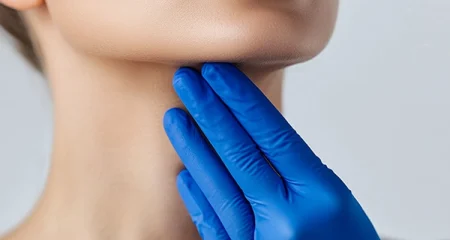


What Is Mandibular Border Fat Grafting?
Mandibular border fat grafting is a facial contouring procedure that uses a patient’s own purified fat to add volume and definition along selected areas of the lower jaw. Fat is harvested from another part of the body, processed, and carefully placed along the mandibular border to improve contour, proportion, or asymmetry.
Unlike procedures that remove lower-face volume, mandibular fat grafting adds strategically positioned volume. It may be useful when the jawline appears weak because of soft-tissue deficiency, age-related volume loss, or asymmetrical contours.
Fat grafting cannot reproduce every effect of a skeletal implant or jaw surgery. Successful treatment depends on understanding whether the lack of definition comes from volume deficiency, jowling, neck fullness, or underlying bone structure.
How Does Mandibular Border Fat Grafting Work?
The procedure works through autologous fat transfer. A small amount of fat is collected from an appropriate donor area and prepared to create material suitable for facial injection.
The surgeon then distributes small amounts of processed fat along predetermined areas of the mandibular border. Multiple small deposits are generally preferable to placing a large volume in one location because transferred fat requires access to surrounding blood supply.
Some transferred fat survives and becomes integrated into the surrounding tissues, while another portion is naturally resorbed during healing.
Why Does the Mandibular Border Lose Definition?
Jawline definition can decrease because of aging, genetics, skeletal anatomy, facial volume changes, jowling, skin laxity, or increased fullness beneath the jaw.
Age-related changes can produce volume loss in some lower-face regions while tissues descend in others. This combination can create an irregular mandibular border.
A relatively small or underprojected mandible can also produce limited definition from a younger age. Identifying the cause is essential because adding fat is helpful for selected volume deficiencies but may worsen a jawline that already appears heavy.
Who Is a Good Candidate for Mandibular Border Fat Grafting?
Potential candidates generally have localized volume deficiency, mild mandibular asymmetry, or inadequate soft-tissue support along selected portions of the jaw.
Candidates must also have sufficient donor fat available for harvesting.
Patients with significant jowling, substantial neck fullness, or loose lower-face skin may require lifting or neck contouring rather than additional volume alone. General health, facial anatomy, previous procedures, and realistic expectations also influence candidacy.
What Concerns Can Mandibular Border Fat Grafting Address?
Mandibular border fat grafting can address selected contour depressions, soft-tissue deficiency, asymmetry, and age-related volume loss along the jaw.
Fat can also be placed strategically to improve continuity between the chin, mandibular body, and angle.
The technique is less suitable when poor definition results primarily from excess tissue rather than insufficient volume. Comprehensive facial assessment helps prevent inappropriate overfilling of the lower face.
How Is Fat Harvested for Mandibular Border Fat Grafting?
Fat is usually harvested through small liposuction access points from an area with suitable donor tissue. Common donor regions can include the abdomen, flanks, or thighs.
The surgeon removes the fat using controlled suction and then processes it according to the chosen technique.
Preparation aims to separate usable fat from unwanted fluid and other components while minimizing unnecessary trauma to the graft. Harvesting technique varies among surgeons and according to the volume required.
How Is Fat Injected Along the Mandibular Border?
After processing, fat is transferred into small syringes and placed using fine cannulas.
The surgeon distributes small amounts at carefully selected locations and tissue depths along the mandibular border. Placement can be customized to strengthen particular segments rather than uniformly enlarging the entire jaw.
Precision is important because excessive volume can make the lower face appear broad or heavy. Injection anatomy is also critical because the face contains important nerves and blood vessels.
What Are the Benefits of Mandibular Border Fat Grafting?
One advantage is that the procedure uses the patient’s own tissue rather than a synthetic filler or permanent implant.
Fat can be distributed across several areas and blended gradually into surrounding tissues, allowing customized three-dimensional contouring.
Another benefit is the potential longevity of surviving transferred fat. Once successfully integrated, that portion can behave similarly to fat elsewhere in the body, although it remains affected by aging and weight changes.
Can Fat Grafting Create a More Defined Jawline?
Fat grafting can create a more defined jawline when carefully placed volume improves the outline of the mandibular border.
Strategic augmentation can strengthen areas where insufficient soft-tissue volume creates depressions or interruptions in the jawline.
However, adding volume is not always the correct way to create definition. When jowls or submental fullness are responsible for poor definition, lifting or reducing unwanted tissue may provide a better result.
Can Mandibular Border Fat Grafting Improve a Weak Jawline?
Fat transfer can improve selected weak jawline concerns by increasing soft-tissue projection around the mandibular border.
It may be useful when only modest augmentation is required or when age-related volume loss has reduced definition.
A substantially underdeveloped mandible is a skeletal issue. Fat grafting cannot produce the same structural change as an implant or skeletal surgery when significant bony projection is required.
Can Fat Grafting Improve Jawline Asymmetry?
Fat grafting can improve soft-tissue asymmetry by placing different amounts of volume on each side of the jaw.
This customized approach can be useful when one mandibular border has a depression or less soft-tissue fullness than the other.
Perfect symmetry cannot be guaranteed. Skeletal asymmetry, muscle differences, and unequal fat survival can continue to create subtle differences after treatment.
Can Mandibular Border Fat Grafting Improve Lower-Face Proportions?
Strategic fat placement can improve the visual relationship between the chin, jawline, cheeks, and neck.
For example, carefully filling a deficient mandibular segment can create smoother continuity between the chin and jaw angle. The objective should be proportional improvement rather than simply increasing lower-face volume.
Planning should consider the entire face because an overly augmented jawline can make the lower third appear disproportionately wide or heavy.
Mandibular Border Fat Grafting vs. Jawline Fillers
Both treatments add volume, but the materials and treatment characteristics differ.
Jawline fillers use manufactured injectable materials and can provide relatively predictable immediate volume depending on the product. Many fillers are temporary and require future maintenance.
Fat grafting uses autologous tissue and requires a harvesting procedure. Initial swelling and variable fat survival make the early volume less predictable, but successfully integrated fat can provide long-lasting correction.
Fat Grafting vs. Jawline Implants: What Is the Difference?
Jawline implants provide a manufactured structure placed surgically to increase projection or alter mandibular contour.
Fat grafting adds soft-tissue volume rather than a rigid skeletal substitute. It can create subtle, blended augmentation but cannot provide the same degree of structural projection as an implant.
Implants and fat transfer also have different risk profiles. The appropriate choice depends on whether the desired change is primarily soft-tissue refinement or significant structural augmentation.
Can Mandibular Border Fat Grafting Be Combined with a Facelift?
Mandibular fat grafting can be combined with a facelift when tissue descent and volume deficiency occur together.
The facelift repositions descended tissues and improves jowls, while fat transfer can restore selected areas where volume loss contributes to an irregular jawline.
Careful planning is essential because repositioning tissues changes facial contours. Fat should therefore be added only where volume remains deficient after considering the lifting effect.
Can Jawline Fat Grafting Be Combined with Neck Contouring?
Jawline fat grafting can be combined with neck contouring when the areas above and below the mandibular border require different treatments.
For example, selected fat can be added along a deficient mandibular contour while unwanted submental fat is reduced beneath it. This can increase visual separation between the jaw and neck.
The procedures have opposite volume goals, making accurate anatomical planning particularly important.
Mandibular Border Fat Grafting Prices 2026
Mandibular Border Fat Grafting Prices 2026 vary because the procedure is customized according to the amount of augmentation required, number of jawline areas treated, donor-fat harvesting, processing technique, anesthesia, and whether additional facial procedures are performed.
Frequently Asked Questions
How Should You Prepare for Mandibular Border Fat Grafting?
Preparation includes evaluation of the jawline, chin, lower-face volume, jowls, neck anatomy, asymmetry, skin quality, and potential donor areas.
What Is the Recovery Process After Mandibular Border Fat Grafting?
Swelling is expected around both the jawline and donor area during early recovery. Bruising, tenderness, temporary numbness, and uneven fullness can also occur.
How Long Does Swelling Last After Jawline Fat Grafting?
Significant swelling usually improves progressively during the first two to three weeks, although individual recovery varies.
When Can You Return to Work After Mandibular Border Fat Grafting?
Many patients plan approximately one to two weeks of social recovery after isolated facial fat grafting, depending on bruising and swelling.
When Do Mandibular Border Fat Grafting Results Become Visible?
An immediate increase in jawline volume is visible after treatment, but this should not be considered the final result.
How Much Fat Survives After Mandibular Border Fat Grafting?
Not all transferred fat survives permanently. A portion is naturally resorbed as the tissues heal.
How Long Do Mandibular Border Fat Grafting Results Last?
The portion of transferred fat that successfully establishes a blood supply can provide long-lasting jawline augmentation.
What Are the Risks and Side Effects of Mandibular Border Fat Grafting?
Expected temporary effects include swelling, bruising, tenderness, numbness, firmness, and temporary asymmetry at both the recipient and donor areas.