
What Is Earlobe Reduction?
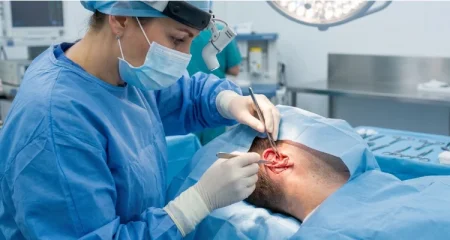
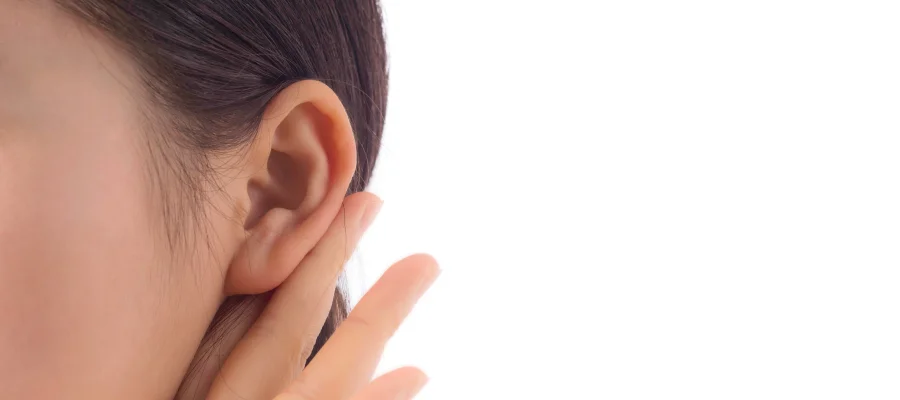
Earlobe Reduction is a surgical procedure that decreases the size, length, or overall prominence of large or elongated earlobes. The operation removes a carefully planned amount of soft tissue and reshapes the remaining earlobe to create a smaller, more balanced contour.
Unlike otoplasty, which primarily changes the position or cartilage structure of the ear, earlobe surgery focuses on the soft, cartilage-free lower portion. Treatment can involve one or both ears depending on anatomy and asymmetry.
The objective is not simply to create the smallest possible earlobe. Appropriate width, length, attachment, and relationship with the rest of the ear should be preserved. Careful planning can help maintain a natural transition between the earlobe, cheek, and lower ear while improving overall facial proportions.
Why Do Earlobes Become Large or Elongated?
Large earlobes can develop because of genetics, natural aging, tissue elasticity, previous stretching, or long-term use of heavy earrings. Some people naturally have longer or wider lobules even at a younger age.
As tissues lose elasticity with age, the lower ear can gradually stretch and appear longer. Repeated pulling from jewelry may accelerate this process, particularly when the piercing hole has already enlarged.
Patients considering Earlobe Reduction may therefore have naturally large lobes, age-related elongation, or acquired stretching. Identifying the underlying cause helps determine how much tissue should be removed and whether the piercing hole also requires correction.
Who Is a Suitable Candidate for Earlobe Reduction?
Suitable candidates for Earlobe Reduction generally have earlobes that appear excessively long, wide, stretched, sagging, or disproportionate to the rest of the ear.
Candidates should have realistic expectations and understand that reducing the lobule creates a permanent surgical scar. Skin quality, previous piercings, existing scars, asymmetry, and healing characteristics should be evaluated before surgery.
Patients with stretched piercing holes or previous earlobe injuries may require additional repair during reshaping. A history of hypertrophic or keloid scarring is also important because the ears can be susceptible to abnormal scar formation.
The treatment plan should consider both ears even when only one side appears significantly different.
How Is Earlobe Reduction Surgery Performed?
During Earlobe Reduction, the surgeon marks the amount and location of tissue that should be removed while considering the desired final size and shape.
A carefully designed section of excess skin and soft tissue is removed. The remaining edges are then repositioned and closed to create a smaller, smoother earlobe contour.
The exact incision pattern varies according to whether excess tissue is concentrated vertically, horizontally, or throughout the lobule. Existing piercing holes can sometimes be removed or repositioned as part of the procedure.
Precision is important because excessive tissue removal can make the lobule look too small, tight, or unnatural compared with the rest of the ear.
Different Techniques Used to Reduce Earlobe Size
Several surgical patterns can be used for Earlobe Reduction, and the appropriate method depends on the original shape and the desired correction.
Wedge-shaped tissue removal can reduce selected areas while maintaining the surrounding contour. Peripheral excision techniques may reduce excessive length or width along the outer edge. Other designs can address both dimensions simultaneously.
Attached and detached earlobes may also require different planning because their relationship with the cheek varies.
No single technique is appropriate for every ear. The incision should be designed to reduce excess tissue while preserving natural curves and placing the resulting scar as discreetly as possible.
Earlobe Reshaping for Better Facial Proportions
Earlobe Reduction can improve facial proportions when unusually long or large lobules draw excessive attention to the lower ears.
The ideal earlobe size cannot be determined using one measurement because ear length, facial dimensions, jawline shape, age, and individual anatomy differ considerably.
Both ears should also be evaluated together. One lobule may be longer, wider, or attached differently from the other.
Reshaping aims to create a proportionate transition from the cartilaginous ear into the soft lobule. The final result should complement the existing ear rather than make the lower portion appear surgically shortened or excessively small.
Can Stretched or Sagging Earlobes Be Reduced?
Stretched or sagging earlobes can often be improved with Earlobe Reduction when sufficient healthy tissue remains for reconstruction.
Long-term use of heavy earrings, gauges, aging, and repeated pulling can enlarge both the lobule and piercing hole. Surgery can remove stretched tissue and reconstruct a more compact contour.
Significantly enlarged piercing holes may require closure as part of the operation. New piercing should usually be delayed until healing is sufficiently advanced.
The amount of correction depends on tissue quality and the degree of stretching. Severely damaged or previously repaired lobules may require a more complex reconstructive approach than straightforward cosmetic reduction.
What to Expect Before Earlobe Reduction Surgery
Preparation for Earlobe Reduction starts with examination of lobule size, thickness, attachment, symmetry, skin quality, piercing holes, and previous scars.
The surgeon should evaluate how much tissue can be removed without creating excessive tension or an unnatural lower-ear contour. Preoperative photographs can help document asymmetry and support surgical planning.
Patients should provide information about medications, supplements, allergies, nicotine use, previous ear procedures, bleeding problems, and abnormal scarring.
Instructions regarding medications and wound preparation depend on individual health factors. Patients should not independently stop prescribed medication unless appropriately advised by their healthcare professional.
Anesthesia Used for Earlobe Reduction
Earlobe Reduction is commonly performed using local anesthesia because the treatment area is relatively small and does not involve deep ear cartilage.
Local anesthetic temporarily numbs the earlobe, allowing tissue removal and suturing without significant surgical pain. Patients may still notice pressure, movement, or pulling sensations.
More extensive reconstruction or combination surgery may require a different anesthesia plan. Sedation or general anesthesia can sometimes be considered when additional procedures are being performed simultaneously.
The appropriate approach depends on surgical complexity, patient comfort, medical history, and whether treatment involves one or both ears.
Healing Process After Earlobe Reduction
Early healing after Earlobe Reduction commonly involves mild swelling, tenderness, bruising, and temporary tightness around the incision.
These effects are generally most noticeable during the first several days and gradually improve. Patients should avoid unnecessary pulling, pressure, and friction while the wound is closing.
External healing occurs relatively quickly, but deeper scar tissue continues developing and remodeling for months. Temporary firmness around the incision can therefore remain after the surface appears healed.
Exercise, hair care, sleeping position, and wound cleaning should follow individualized postoperative instructions. Any increasing redness, drainage, severe pain, or unusual swelling should receive appropriate medical assessment.
Scar Appearance After Earlobe Reduction Surgery
A permanent scar is expected after Earlobe Reduction because the procedure requires tissue removal and surgical closure of the remaining edges. During early healing, the scar may appear pink, red, firm, slightly raised, or darker than the surrounding skin.
As scar maturation progresses, the incision usually becomes softer and less noticeable. Careful incision placement can help reduce scar visibility, but completely invisible healing cannot be guaranteed.
Factors that influence scar appearance after Earlobe Reduction include:
- Genetic healing tendencies
- Skin type
- Incision placement
- Wound tension
- Scar maturation
- Postoperative care
- Nicotine exposure
- Infection
- Previous hypertrophic scars
- History of keloid formation
- Individual healing response
- Quality of wound closure
When Can You Wear Earrings After Earlobe Reduction?
Earrings should generally be avoided during the early healing period after Earlobe Reduction because jewelry can place additional weight and tension on newly repaired tissue. The appropriate waiting period depends on the incision location, amount of tissue removed, piercing position, and healing progress.
If the original piercing was removed during surgery, repiercing should wait until sufficient tissue strength has returned. A new piercing should avoid weak scar tissue when possible, while heavy earrings may need to be limited to reduce recurrent stretching.
Factors that influence when earrings can be worn again include:
- Incision location
- Amount of tissue removed
- Whether the original piercing was preserved
- Wound healing progress
- Tissue strength
- Scar maturity
How Natural Do Earlobes Look After Reduction Surgery?
Well-planned Earlobe Reduction can produce natural-looking lobules when tissue removal respects the proportions of the entire ear.
During early recovery, swelling and incision firmness may temporarily make the earlobes look uneven or overly tight. These changes usually become less noticeable as healing progresses.
The final contour should maintain smooth curves rather than obvious angles or abrupt transitions. Some natural asymmetry can remain because the two ears are rarely identical before surgery.
Results depend on the original anatomy, amount of reduction, surgical design, scar formation, and individual healing response. Final appearance should therefore be evaluated after the tissues have softened and matured.
Are Earlobe Reduction Results Permanent?
Results from Earlobe Reduction are generally long lasting because excess tissue is surgically removed rather than temporarily repositioned.
The removed tissue does not normally regenerate to restore the previous earlobe size. However, the remaining tissue continues to age and can gradually lose elasticity over time.
Heavy earrings, repeated pulling, trauma, new piercings, and gauges can stretch the lobules again. Natural aging may also cause some future elongation.
Maintaining the result therefore depends partly on protecting the earlobes from repeated mechanical stress. The procedure creates a lasting structural reduction but cannot prevent every future age-related or lifestyle-related change.
Earlobe Reduction Prices 2026
Earlobe Reduction Prices 2026 vary according to the amount of tissue removal, surgical technique, degree of asymmetry, and whether one or both earlobes require treatment.
Frequently Asked Questions
How much smaller can earlobes be made?
The amount of reduction possible with Earlobe Reduction depends on the original size, tissue thickness, attachment pattern, and desired proportions. There is no standard percentage or measurement suitable for every patient.
Is earlobe reduction surgery painful?
Significant pain is generally not expected during Earlobe Reduction because the area is typically numbed with local anesthesia before tissue removal begins.
How long does earlobe reduction take?
An isolated Earlobe Reduction is usually a relatively short surgical procedure, although operating time depends on whether one or both earlobes require treatment and how much reshaping is necessary.
Can both earlobes be reduced at the same time?
Both ears can usually undergo Earlobe Reduction during the same surgical session when bilateral treatment is appropriate.
How long does swelling last after earlobe reduction?
Swelling following Earlobe Reduction is generally most noticeable during the first few days and gradually decreases during the following one to two weeks.
Does earlobe reduction leave a visible scar?
A scar remains after Earlobe Reduction because the procedure requires surgical removal of tissue and closure of the remaining edges.
Can stretched earlobes return to a normal shape?
Significantly stretched earlobes often do not completely return to their previous shape without treatment, particularly when prolonged stretching has permanently changed the skin and soft tissues.
When are stitches removed after earlobe reduction?
Stitch removal after Earlobe Reduction depends on the type of sutures used, incision design, wound condition, and individual healing progress.