
What Is a Direct Brow Lift?
A direct brow lift is a surgical procedure that raises a low or descended eyebrow through an incision placed immediately above or very close to the brow. It provides direct access to the tissues responsible for eyebrow position and can allow relatively precise control over the amount of elevation.
The technique may be considered when significant brow drooping, asymmetry, or upper-eyelid heaviness is present. Unlike endoscopic approaches, it does not rely on hidden scalp incisions. The trade-off is that the scar lies closer to the eyebrow, making scar quality and placement important parts of surgical planning.
Why Direct Brow Lift Surgery Uses an Incision Above the Eyebrow
Placing the incision directly above the brow gives the surgeon immediate access to the skin and soft tissues that influence eyebrow height. This can make direct brow lift surgery particularly useful when precise elevation is required.
The incision can also allow different amounts of skin to be removed from different parts of the brow. This provides control over shape as well as height. Because the scar is located near the eyebrow, incision design should follow natural transitions and take eyebrow density, skin type, forehead lines, and healing characteristics into account.
Precise Brow Repositioning for Significant Brow Droop
More pronounced brow descent can create heaviness around the upper eyelids and reduce the space between the eyebrow and eye. A direct approach can provide controlled repositioning when a meaningful degree of correction is required.
The surgeon can tailor elevation along different portions of the eyebrow rather than moving the entire forehead as one unit. This is useful when the inner, central, and outer brow have descended by different amounts. Excessive lifting should still be avoided because natural brow proportions and facial expression need to remain balanced.
Treating Brow Ptosis That Creates a Heavy Upper-Eyelid Appearance
Brow ptosis can push skin and soft tissue downward toward the upper eyelids, creating a heavy or hooded appearance. Raising the brow can reduce this contribution when the problem originates partly from eyebrow descent.
Upper-eyelid skin excess may still remain after the brow is repositioned. For that reason, brow position and eyelid anatomy should be assessed together. Treating only the eyelids without addressing a markedly low brow can leave part of the original heaviness unchanged.
Direct Brow Lift for Uneven Eyebrow Height
A direct brow lift for eyebrow asymmetry can allow one side to be elevated differently from the other. This can be useful when one eyebrow naturally sits lower or when age-related descent has progressed unevenly.
Perfect symmetry cannot be guaranteed because brow position is influenced by bone structure, forehead muscles, facial nerve function, and natural asymmetry. The goal is generally to reduce a noticeable imbalance rather than create identical eyebrows. Early swelling may also temporarily make one side appear higher during recovery.
Adjusting Each Brow Independently for Better Symmetry
The direct technique allows each eyebrow to be treated according to its individual height and shape. Different amounts of tissue can be removed or repositioned on each side when asymmetry is present.
This flexibility can be valuable when the brows differ substantially before surgery. However, symmetry planning must consider facial movement as well as resting position. One brow may rise more strongly during expression because of differences in forehead muscle activity. Surgical correction should therefore account for both static and dynamic anatomy.
When Precise Brow Control Matters More Than Hidden Incisions
Some patients require highly controlled brow elevation that may be difficult to achieve through remote scalp incisions. In these cases, a direct brow lift may provide better access even though the incision is closer to the eyebrow.
This trade-off is particularly relevant when brow asymmetry is substantial or previous forehead surgery has changed normal tissue planes. Scar visibility becomes an important consideration, especially in patients with sparse eyebrows or smooth forehead skin. Procedure selection should balance positional control, scar location, anatomy, and treatment goals.
How Much Brow Elevation Can Be Achieved with a Direct Technique?
The amount of brow elevation depends on the quantity and location of tissue removed, skin elasticity, forehead anatomy, and the degree of existing descent. A direct technique can provide meaningful elevation because adjustment occurs immediately adjacent to the brow.
The objective is not to raise the eyebrow as high as technically possible. Excessive elevation can produce an unnatural arch, increase upper-eyelid exposure, or create a permanently surprised expression. Brow height should remain proportional to forehead dimensions, eye anatomy, and the opposite side.
Preserving Natural Brow Shape During Surgical Elevation
A natural eyebrow has a gradual relationship between its medial, central, and lateral portions. During direct brow lift surgery, the incision and amount of tissue removal can be adjusted to preserve this contour.
Removing equal amounts along the entire brow is not always appropriate. The outer brow may require greater elevation than the inner portion, or the reverse may occasionally be true. Careful planning helps avoid an overly peaked or straight eyebrow shape and maintains a more natural relationship with the eyes.
Direct Brow Lift for Age-Related Upper-Face Heaviness
Age-related brow descent can contribute to a heavy forehead and crowded upper-eye appearance. A direct brow lift may improve this by restoring the eyebrow toward a more supported position.
The procedure primarily addresses brow height rather than forehead wrinkles, skin texture, or eyelid fat. Other aging changes may therefore remain and require separate treatment if they are significant. Treatment planning should identify which portion of the upper-face heaviness is actually caused by brow descent.
Using Existing Forehead Lines to Help Conceal Brow Lift Scars
In selected patients, existing forehead creases or natural skin transitions can sometimes influence incision placement. This can help make a brow lift scar less conspicuous once healing is complete.
Not every patient has suitable forehead lines near the desired surgical location. Scar appearance also depends on skin thickness, pigmentation, tension, wound healing, and individual scar tendency. Incision placement should therefore prioritize safe and effective brow repositioning while also considering opportunities for scar camouflage.
Scar Placement Along the Natural Upper Brow Border
A direct incision is commonly placed close to the upper margin of the eyebrow, where differences in skin texture and hair can help camouflage the scar. Direct brow lift scar placement must be carefully planned because the incision remains on a visible part of the face.
The exact line may vary according to eyebrow shape and the amount of elevation required. Scar maturation can take several months, and the incision may initially look pink, firm, or more noticeable. Final visibility depends on hair coverage, skin characteristics, tension, and individual healing.
How Skin Type and Eyebrow Density Affect Scar Visibility
Dense eyebrow hair may help conceal part of the incision, while sparse brows can leave more of the scar exposed. Skin pigmentation, thickness, oiliness, and individual healing behavior also influence visibility.
A person with a strong tendency toward raised or pigmented scars may require additional consideration before surgery. No incision can be guaranteed to become invisible. Scar-conscious planning should therefore include skin type, brow density, previous scar history, and the location where the incision will mature.
Direct Brow Lift vs. Endoscopic Brow Lift
A direct brow lift vs. endoscopic brow lift comparison mainly involves incision placement and degree of control. The direct approach uses an incision near the brow, while endoscopic surgery typically uses several small scalp incisions.
Direct surgery can offer precise adjustment of individual brow segments. Endoscopic techniques provide more concealed scars and broader forehead access but may offer less localized control in certain asymmetric cases. The appropriate choice depends on brow descent, forehead anatomy, hairline position, scar concerns, and previous surgery.
Direct Brow Lift vs. Temporal Brow Lift
A direct brow lift vs. temporal brow lift comparison involves different treatment zones. Temporal lifting primarily focuses on the lateral eyebrow and temple, while a direct approach can address the inner, central, and outer brow individually.
Temporal treatment may be sufficient when only the brow tail has descended. A direct technique can be more suitable when the entire eyebrow is low or when asymmetry requires separate correction across different segments. Procedure selection depends on where the brow has descended and how much control is required.
Direct Brow Lift vs. Internal Browpexy
Internal browpexy generally supports or modestly repositions the brow through an eyelid incision, often during upper blepharoplasty. A direct brow lift usually provides greater elevation because it works directly above the eyebrow.
Browpexy may be appropriate for mild descent when only limited support is needed. More significant brow ptosis may exceed what an internal approach can reliably correct. The choice depends on brow height, eyelid anatomy, desired elevation, scar preferences, and whether eyelid surgery is already planned.
Choosing a Direct Approach After Previous Forehead or Brow Surgery
Previous surgery can alter forehead tissues, scar planes, fixation points, and brow movement. In some revision cases, a direct brow lift provides a more predictable route because the surgeon can work close to the structure requiring correction.
Existing scalp scars, reduced tissue mobility, or previous endoscopic fixation may influence the new surgical plan. The direct approach can sometimes avoid scarred deeper planes, although the visible brow-level incision remains an important consideration. Previous operative details and current anatomy should guide technique selection.
When Upper Blepharoplasty Alone Cannot Correct Low Brows
Upper blepharoplasty removes selected eyelid skin but does not raise a genuinely low eyebrow. When brow ptosis is significant, treating the eyelid alone may leave heaviness above the eye.
Removing too much eyelid skin without considering brow position can also create tightness or alter the natural upper-eyelid fold. A combined assessment helps determine whether the problem originates from the eyelid, brow, or both. Brow correction may therefore be necessary before deciding how much eyelid skin should be removed.
Direct Brow Lift Prices 2026
Direct Brow Lift Prices 2026 vary according to surgical complexity, anesthesia, location, degree of asymmetry, and whether additional procedures are performed.
Combining Direct Brow Lift with Eyelid Rejuvenation
A direct brow lift with eyelid surgery can address brow descent and genuine upper-eyelid skin excess during the same treatment plan. This can be useful when both structures contribute to a heavy upper-eye appearance.
Brow Symmetry Planning Before Direct Brow Lift Surgery
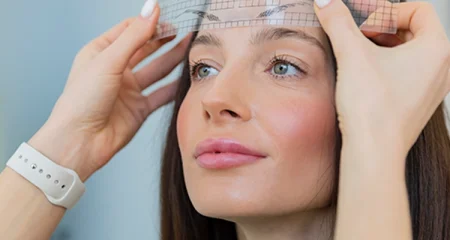
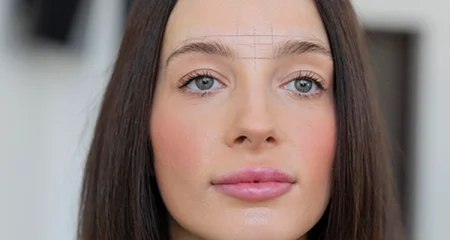
Preoperative planning includes comparing eyebrow height, arch, muscle activity, eye position, and forehead proportions on both sides. Brow symmetry planning helps determine whether different amounts of elevation are needed.
What Happens During a Direct Brow Lift Procedure?
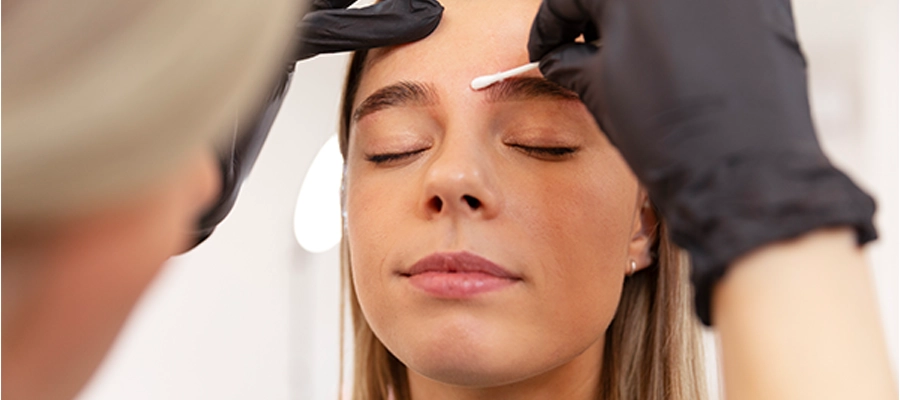
During a direct brow lift procedure, the planned incision is marked immediately above or close to the eyebrow. A carefully measured strip of skin and, when appropriate, selected deeper tissues are adjusted to allow the brow to move upward.
Local Anesthesia Options for Direct Brow Surgery
A direct approach can sometimes be performed using local anesthesia, with or without additional sedation, depending on treatment extent and individual circumstances.
Eyebrow Swelling and Bruising During Early Healing
Swelling, bruising, tenderness, and temporary numbness can occur around the eyebrows and forehead during early recovery. These changes may make the brows look higher or more asymmetric than expected at first.
How the Brow Position Evolves as the Incision Heals
The eyebrow may initially appear slightly higher or tighter because swelling and early tissue tension influence its position. During healing, some softening and settling generally occur.
Managing and Maturing a Direct Brow Lift Scar
A direct brow lift scar generally changes considerably during the months after surgery. Early redness, firmness, or visibility may gradually decrease as the incision matures.
When the Final Brow Height Can Be Evaluated
Brow height should not be judged during the earliest recovery period because swelling, tissue tension, and scar formation can temporarily alter appearance. A more reliable evaluation becomes possible as these effects decrease.