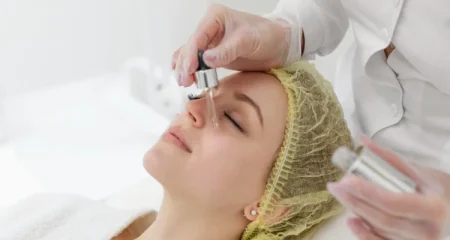


What Is Full-Face Fat Grafting?
Full-Face Fat Grafting is a facial rejuvenation procedure that uses a patient’s own fat to restore volume, improve contours, and create more balanced facial proportions. Fat is usually harvested from another body area, processed, and then injected into selected regions of the face.
Unlike treatment focused on one isolated area, Full-Face Fat Grafting can address several zones during the same procedure. Common targets include the temples, cheeks, under-eye hollows, nasolabial area, chin, and jawline.
The goal is not simply to make the face look fuller. Careful placement aims to replace age-related volume loss while maintaining natural facial structure. Because some transferred fat is reabsorbed during healing, the early result may appear fuller than the final long-term outcome.
How Does Full-Face Fat Grafting Work?
Full-Face Fat Grafting works by transferring carefully processed fat from a donor area into multiple facial regions where volume has decreased or contours need improvement.
The procedure begins with gentle fat harvesting, usually through small-volume liposuction. The collected tissue is then processed to remove excess fluid, oil, and damaged material before being placed into syringes for facial injection.
Small amounts of fat are distributed through different tissue layers using fine cannulas. This layered technique helps improve contact between the grafted fat and surrounding tissues.
Not every transferred fat cell survives permanently. Some is naturally absorbed, while successfully integrated cells can remain as living tissue and provide long-term volume.
Which Areas Can Be Enhanced with Full-Face Fat Transfer?
Full-Face Fat Grafting can enhance several facial areas when volume loss affects overall balance rather than one isolated feature.
Common treatment zones include the temples, forehead, under-eye hollows, cheeks, nasolabial folds, areas around the mouth, chin, jawline, and selected facial depressions. The exact areas treated depend on anatomy and individual volume loss.
Some regions require structural support, while others need only small amounts to soften transitions between facial features. Thin areas such as the lower eyelids require especially conservative placement.
A full-face approach should focus on proportion rather than treating every region equally. The amount of fat placed in each area should reflect the natural structure of the face.
Who Is a Suitable Candidate for Full-Face Fat Grafting?
Suitable candidates for Full-Face Fat Grafting generally have facial volume loss, hollowing, contour imbalance, or age-related deflation affecting several facial areas.
Patients should have enough donor fat available for harvesting and should be in suitable general health for the procedure. Stable weight, realistic expectations, and good healing characteristics are also important.
Smoking, certain medical conditions, medications, previous facial procedures, and skin quality can influence candidacy and recovery. Patients with severe skin laxity may require lifting procedures in addition to fat transfer.
Full-Face Fat Grafting is most appropriate when volume restoration is a major part of the facial concern rather than skin tightening alone.
Restoring Facial Volume Loss with Autologous Fat
Full-Face Fat Grafting can restore facial volume using autologous fat, meaning tissue taken from the patient’s own body.
Facial aging involves changes in skin, bone, muscles, and fat compartments. Loss of soft-tissue volume can create hollow temples, flatter cheeks, deeper under-eye shadows, and less defined facial transitions.
Fat grafting allows these areas to be replenished selectively. Because the material is the patient’s own tissue, successfully integrated fat can behave similarly to existing facial fat.
The amount placed must be controlled carefully. Excessive filling can make facial features appear heavy or unnatural, while conservative placement aims to restore lost structure without changing the patient’s basic identity.
Full-Face Fat Grafting for Facial Contouring and Balance
Full-Face Fat Grafting can improve facial contour by redistributing volume across several areas rather than focusing on one feature alone.
For example, restoring the temples and cheeks may improve the transition through the upper and middle face. Small amounts placed in the chin or jawline can also support lower-face balance when appropriate.
The goal is to improve proportion between facial regions. This requires careful assessment of skeletal structure, soft-tissue thickness, existing asymmetry, and age-related changes.
Perfect symmetry should not be expected because natural faces are not completely symmetrical. Full-Face Fat Grafting aims for smoother, more balanced contours while preserving normal facial movement and expression.
How Is Fat Harvested and Prepared for Facial Grafting?
Fat used in Full-Face Fat Grafting is collected through a gentle liposuction technique designed to obtain viable tissue for transfer.
Small incisions are made in the chosen donor area, and fat is removed with a cannula. The harvested material is then processed to separate usable fat from excess fluid, blood, oil, and damaged cells.
Preparation methods may involve filtration, washing, settling, or centrifugation depending on the technique. The goal is to preserve suitable fat for controlled facial placement.
After processing, the graft is transferred into smaller syringes. Fine cannulas are then used to inject small amounts into different facial layers according to the treatment plan.
Where Is the Fat Usually Taken From?
Fat for Full-Face Fat Grafting is usually harvested from body areas with enough accessible fatty tissue, such as the abdomen, thighs, flanks, hips, or waist.
The best donor area depends on body shape, available fat, previous liposuction, and the amount required for facial treatment. Full-face procedures may need more donor tissue than a small isolated facial correction, but the amount is still usually modest compared with body-contouring liposuction.
Donor-site selection should prioritize safe harvesting and tissue availability rather than one specific location.
Temporary bruising, swelling, tenderness, or firmness can occur where the fat is collected. These effects usually improve gradually as both the donor area and face heal.
How Is Fat Distributed Across Different Facial Areas?
During Full-Face Fat Grafting, fat is distributed according to the anatomy and volume needs of each facial region rather than being injected in equal amounts throughout the face. Deeper layers may receive fat for structural support, while more superficial placement can help soften contour transitions.
Different areas require different quantities and injection depths. Cheeks and temples may need more volume than delicate regions such as the under-eye or perioral area, so careful planning is important for maintaining facial balance.
Factors that influence facial fat distribution include:
- Facial anatomy
- Amount of volume loss
- Treatment area
- Injection depth
- Need for structural support
- Need for superficial contour refinement
- Cheek volume requirements
- Temple volume requirements
- Under-eye anatomy
- Perioral anatomy
- Multiple small fat deposits
- Contact with surrounding tissue
- Blood supply to the graft
- Risk of overfilling
- Overall facial balance
What to Expect During the Procedure
A Full-Face Fat Grafting procedure generally begins with facial assessment, marking of treatment areas, and preparation of the donor site.
Fat is harvested first and then processed for transfer. The prepared graft is injected into selected facial regions using fine cannulas and multiple controlled passes.
Procedure duration varies depending on how many areas are treated, how much fat is needed, and whether another operation is performed at the same time.
Anesthesia may range from local anesthesia with sedation to general anesthesia depending on treatment extent. After the procedure, swelling is expected in the face, and the donor area may also feel sore or bruised.
Recovery Timeline After Full-Face Fat Grafting
Recovery after Full-Face Fat Grafting usually involves the most noticeable swelling and bruising during the first several days.
Facial puffiness often improves significantly during the first one to two weeks, although mild residual swelling can continue longer. The donor site may also remain tender, bruised, or swollen during early recovery.
Many patients can return to light daily activities within several days, but social recovery may take one to two weeks or longer depending on swelling.
Strenuous exercise and pressure on treated areas may need to be limited temporarily. Healing continues for several months as swelling resolves and transferred fat stabilizes.
Swelling and Bruising After Facial Fat Transfer
Swelling and bruising are common after Full-Face Fat Grafting because multiple facial areas may be treated during the same session.
The cheeks and under-eye region can appear especially puffy during early recovery. Swelling may also be uneven, which can create temporary asymmetry.
Bruising can occur around injection sites and at the donor area. Most visible changes improve over the first one to two weeks, although subtle swelling may remain longer.
Patients should avoid judging their final facial volume during this period. Early fullness reflects both transferred fat and postoperative swelling, while some grafted fat will also be naturally absorbed during the following months.
When Are the Final Results Visible?
Final results from Full-Face Fat Grafting become clearer gradually as swelling decreases and the transferred fat stabilizes.
Initial fullness is visible immediately, but the early appearance does not represent the permanent outcome. During the first few months, swelling resolves and some of the transferred fat is reabsorbed.
A more reliable assessment is generally possible after several months, when facial contours have settled and surviving fat has integrated with surrounding tissues.
Subtle changes can continue beyond this period. Long-term appearance is also influenced by aging, weight changes, skin quality, and individual fat retention. The final result should therefore be evaluated after adequate healing rather than during the early postoperative phase.
Full-Face Fat Grafting Prices 2026
Full-Face Fat Grafting Prices 2026 vary according to the number of facial areas treated, the amount of fat harvested, anesthesia requirements, procedure duration, surgical setting, and complexity of the treatment plan.
Frequently Asked Questions
How much fat is needed for full-face fat grafting?
Some people need relatively small amounts distributed across the temples, cheeks, and under-eye region. Others with more extensive facial deflation may require greater quantities across several areas. Surgeons may also harvest more fat than they ultimately inject because processing removes fluid, oil, and unsuitable tissue.
How long does full-face fat grafting last?
Full-Face Fat Grafting can provide long-lasting volume because successfully integrated fat cells remain as living tissue within the treated facial areas. The stable portion may remain for many years.
How much of the transferred fat survives?
Fat survival after Full-Face Fat Grafting varies considerably between patients, treatment areas, and surgical techniques, so an exact percentage cannot be guaranteed before treatment.
Can full-face fat grafting look natural?
Natural-looking results are possible with Full-Face Fat Grafting when fat is distributed according to facial anatomy and existing volume loss rather than simply increasing overall facial fullness.
Which parts of the face can receive transferred fat?
Several areas can receive transferred fat during Full-Face Fat Grafting, allowing treatment to address volume loss across the upper, middle, and lower face.
Is one fat grafting session usually enough?
One Full-Face Fat Grafting session may provide sufficient correction for many patients, but additional treatment can sometimes be necessary.