What Is Full Periorbital Rejuvenation?
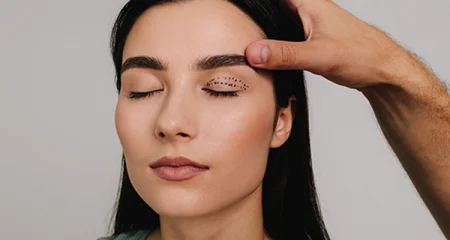
Full periorbital rejuvenation is a comprehensive approach to improving age-related and structural changes around the eyes, including the upper eyelids, lower eyelids, eyebrows, tear troughs, temples, and the transition between the lower eyelid and cheek. Rather than treating one isolated concern, the treatment plan considers the entire eye area as a connected aesthetic unit.
Depending on individual anatomy, treatment may include upper or lower blepharoplasty, brow lifting, lower-eyelid fat repositioning, canthopexy or canthoplasty, fat grafting, and selected non-surgical skin treatments.
The objective is generally to create a more rested and balanced appearance without unnecessarily changing natural eye shape or facial expression. Because patients age differently, full rejuvenation does not mean performing every available procedure.
What Areas Does Full Periorbital Rejuvenation Treat?
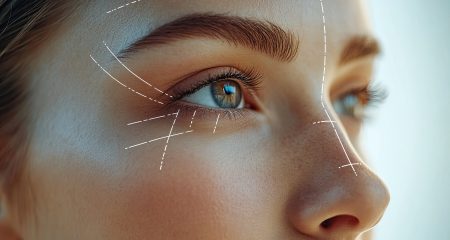
The periorbital region includes more than the eyelids themselves. It extends across the eyebrows and upper orbital area, lateral eye region, lower eyelids, tear troughs, and upper cheek.
Treatment can therefore address upper-eyelid hooding, descended brows, under-eye bags, hollows, volume loss, skin laxity, and selected lateral eyelid-support problems.
The temples and upper cheeks may also be considered because volume loss in these regions can affect how youthful or tired the eyes appear.
What Are the Signs of Periorbital Aging?
Common signs include upper-eyelid hooding, lower-eyelid bags, tear-trough hollows, fine lines, reduced skin elasticity, brow descent, and loss of volume around the orbital region.
Changes in the cheek can make the boundary between the lower eyelid and midface more noticeable. Shadows created by under-eye bags and hollows may also contribute to a darker appearance.
Periorbital aging is not purely a skin problem. Changes occur in fat, muscle, connective tissues, ligaments, bone, and surrounding facial volume. Comprehensive treatment should consider these different anatomical layers.
Who Is a Good Candidate for Full Periorbital Rejuvenation?
Potential candidates generally have several concerns around the eyes rather than one isolated problem. For example, a patient may have brow descent, upper-eyelid hooding, under-eye bags, and tear-trough hollowing simultaneously.
Suitability depends on eyelid anatomy, eye health, brow position, skin quality, lower-lid support, tear production, facial volume, previous surgery, and general health.
Patients should also have realistic expectations. The goal is improvement and better facial balance rather than eliminating every line or creating perfectly symmetrical eyes.
How Is Full Periorbital Rejuvenation Performed?
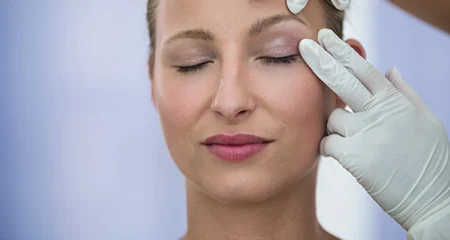
Treatment begins with a detailed assessment of the brows, eyelids, lateral canthus, tear troughs, cheeks, temples, and surrounding skin.
Surgical treatment may reposition a descended brow, remove conservative amounts of upper-eyelid skin, redistribute lower-eyelid fat, or reinforce a weak lower lid. Volume can also be restored where necessary.
Not every component needs surgery. Skin texture, pigmentation, dynamic wrinkles, and certain volume deficiencies may be better addressed through complementary non-surgical procedures.
What Treatments Are Included in Full Periorbital Rejuvenation?
There is no standardized combination. A personalized plan can include upper blepharoplasty, lower blepharoplasty, fat repositioning, brow or temporal lifting, canthopexy, canthoplasty, and facial fat grafting.
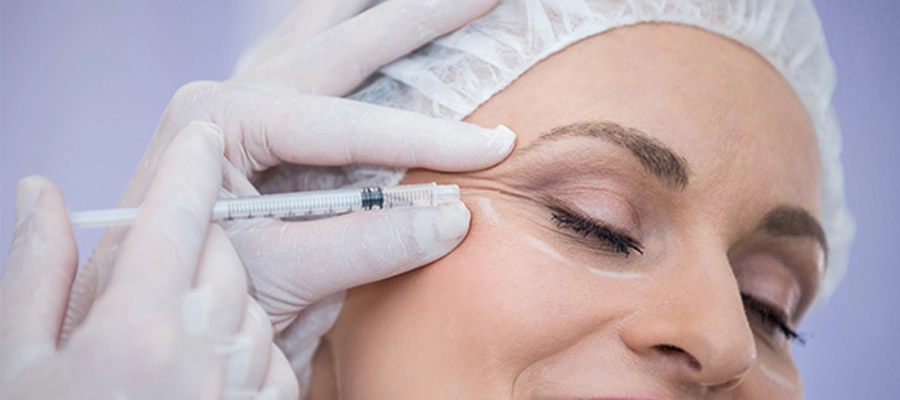
Non-surgical treatment may include carefully selected resurfacing, injectable, or skin-quality procedures when appropriate.
The combination depends on the underlying cause of each concern. Performing additional procedures without a clear anatomical indication can increase recovery and risk without necessarily improving the result.
What Are the Benefits of Full Periorbital Rejuvenation?
The main benefit is the ability to address several interconnected causes of a tired or aged eye appearance rather than concentrating on one feature.
For example, removing upper-eyelid skin without recognizing a low brow can leave significant heaviness. Similarly, removing lower-eyelid fat without addressing an adjacent tear trough may create or exaggerate hollowness.
Comprehensive planning can produce smoother transitions between the brow, eyelids, temples, and cheeks while preserving the patient’s natural facial identity.
Can Full Periorbital Rejuvenation Treat Droopy Upper Eyelids?
Treatment can improve upper-eye heaviness when it results from excess eyelid skin, brow descent, or a combination of both.
Upper blepharoplasty addresses genuine eyelid skin redundancy, while brow lifting can reposition tissues that have descended from above.
True upper-eyelid ptosis is different. When the eyelid margin itself sits abnormally low, dedicated ptosis repair may be necessary. Correct diagnosis prevents excessive skin removal when the primary problem originates elsewhere.
Can Full Periorbital Rejuvenation Reduce Under-Eye Bags?
Under-eye bags caused by prominent lower-eyelid fat can be treated as part of a comprehensive rejuvenation plan.
Rather than automatically removing the fat, modern lower-eyelid surgery may preserve or reposition useful volume. Fat can sometimes be redistributed into the tear-trough region to smooth the transition between the lower eyelid and cheek.
When skin laxity or weak lower-lid support accompanies the bags, additional treatment may be necessary.
Can Full Periorbital Rejuvenation Improve Dark Circles and Tear Troughs?
Structural tear-trough hollows can often be improved through fat repositioning, fat grafting, or carefully selected volume-restoration techniques.
Reducing the depth of a hollow can decrease shadowing, which may make the under-eye region appear brighter. However, this does not necessarily remove true skin pigmentation.
Dark circles can have several causes, including pigmentation, thin skin, visible vessels, shadowing, and anatomy. Treatment must therefore target the actual cause rather than treating all dark circles in the same way.
Can Full Periorbital Rejuvenation Improve Fine Lines and Wrinkles?
Fine lines around the eyes may improve through selected skin treatments, but eyelid surgery itself is not designed to eliminate every wrinkle.
Blepharoplasty can reduce certain folds associated with excess skin, while resurfacing and other skin-quality treatments may target superficial texture more directly.
Dynamic crow’s feet caused by muscle movement require a different approach from loose skin. Combining appropriate treatments can therefore produce more comprehensive improvement than relying on surgery alone.
How Are the Eyelids and Brows Rejuvenated Together?
Brow position directly affects how much tissue appears above the upper eyelid. A descended eyebrow can create or worsen upper-eyelid hooding.
During assessment, the brow can be repositioned toward an appropriate resting level to determine how much genuine eyelid skin excess remains. This helps prevent excessive skin removal.
When both problems are significant, a brow lift and upper blepharoplasty may be coordinated. The goal is balanced correction without placing the brows too high or making the upper eyelids excessively hollow.
Surgical vs. Non-Surgical Periorbital Rejuvenation
Surgical treatment generally provides greater structural correction for excess skin, prominent fat, significant brow descent, eyelid laxity, and persistent tissue malposition.
Non-surgical treatment can be useful for early aging, mild volume loss, dynamic wrinkles, pigmentation, and selected skin-texture concerns.
These approaches are not necessarily competitors. A patient may undergo structural surgical correction while using non-surgical treatment for skin quality or wrinkles that surgery does not directly address.
Can Blepharoplasty Be Part of Full Periorbital Rejuvenation?
Blepharoplasty is frequently an important component when genuine upper- or lower-eyelid changes contribute to the aged appearance.
Upper blepharoplasty can reduce redundant skin and improve eyelid definition. Lower blepharoplasty can address prominent fat, selected skin excess, and irregularities at the lid-cheek junction.
The procedure should be conservative and volume-aware. Excessive removal of skin or fat can produce a hollow or operated appearance, particularly as the face continues aging.
Can Brow Lift Be Combined with Periorbital Rejuvenation?
A brow lift can be combined with periorbital rejuvenation when brow descent contributes to upper-eye heaviness.
Depending on anatomy, treatment may involve an endoscopic brow lift, temporal elevation, direct approach, or another technique. The selected procedure should reflect hairline position, brow shape, degree of descent, and aesthetic goals.
Not every patient with hooded eyelids needs a brow lift. Proper examination distinguishes brow-related heaviness from genuine upper-eyelid skin excess.
How Is a Personalized Periorbital Rejuvenation Plan Created?
Planning begins by identifying the anatomical cause of each visible concern. The surgeon evaluates brow height, upper-eyelid skin, eyelid margins, fat compartments, tear troughs, lower-lid stability, eye prominence, temples, and cheeks.
Previous surgery is particularly important because earlier blepharoplasty or brow lifting can change tissue availability and normal surgical planes.
Treatment priorities are then established. One patient may need upper blepharoplasty and brow repositioning, while another may benefit primarily from lower-eyelid fat repositioning and volume restoration.
How to Prepare for Full Periorbital Rejuvenation
Preparation depends on the treatments included. Patients should discuss medical history, medications, supplements, allergies, previous facial procedures, eye conditions, dry-eye symptoms, and contact lens use.
Preoperative instructions may cover smoking, alcohol, fasting, skincare, and medications that affect bleeding. Prescription medication should only be changed with appropriate medical guidance.
Patients undergoing surgery should also arrange transportation and prepare for a period of visible swelling and bruising. Following procedure-specific instructions is more useful than applying a universal recovery protocol.
Frequently Asked Questions
Full Periorbital Rejuvenation Prices 2026
Full Periorbital Rejuvenation Prices 2026 vary widely because full rejuvenation is not one standardized surgical procedure. The overall cost depends primarily on which areas of the periorbital region require treatment and how many procedures are combined.
Full Periorbital Rejuvenation Recovery Timeline
Recovery varies substantially because full periorbital rejuvenation can range from limited treatment to combined brow, upper-eyelid, and lower-eyelid surgery.
How Long Do Swelling and Bruising Last After Periorbital Rejuvenation?
Visible bruising after surgical rejuvenation often improves considerably within approximately 10 to 14 days.
When Can You Return to Daily Activities After Periorbital Rejuvenation?
Many patients undergoing combined surgical treatment plan approximately one to two weeks before returning to routine social and professional activities.
When Are Full Periorbital Rejuvenation Results Visible?
Early improvements become noticeable once significant bruising and swelling decrease, but the final appearance develops progressively.
How Long Do Full Periorbital Rejuvenation Results Last?
The longevity of full periorbital rejuvenation results depends on the treatments performed.
What Are the Risks and Side Effects of Full Periorbital Rejuvenation?
Risk depends on which procedures are included. Common temporary effects after surgery include bruising, swelling, tightness, dryness, watering, irritation, numbness, and temporary asymmetry.