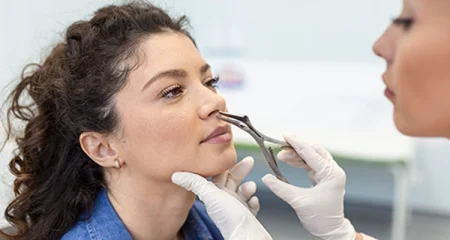


What Is Functional and Aesthetic Nasal Reconstruction?
Restoring nasal breathing while improving structural shape and facial balance is the central purpose of functional and aesthetic nasal reconstruction. Unlike surgery focused only on appearance, reconstruction considers the relationship between the nasal airway, septum, cartilage, bones, valves, tip, and external contours.
The procedure may be needed after trauma, previous nasal surgery, congenital structural differences, or progressive weakening of nasal support. Treatment can involve straightening the septum, rebuilding the nasal valves, repositioning bones, reshaping cartilage, or adding structural grafts. Cosmetic changes are planned alongside functional requirements so that improving appearance does not compromise airflow. The extent of reconstruction varies considerably because some people require correction of one structural area while others need several parts of the nose rebuilt. Results depend on existing anatomy, tissue quality, previous procedures, breathing function, and the amount of structural support required.
When Is Functional and Aesthetic Nasal Reconstruction Recommended?
Persistent breathing problems combined with visible structural concerns may make functional and aesthetic nasal reconstruction appropriate. Common situations include a crooked nose, nasal valve collapse, severe septal deviation, post-traumatic deformity, or structural problems remaining after previous rhinoplasty.
Reconstruction may also be considered when weakened cartilage causes both external distortion and airway narrowing. Functional and cosmetic concerns frequently overlap because the structures maintaining nasal shape also help keep breathing passages open. Not every person with nasal congestion requires reconstruction, since allergies and inflammation can produce similar symptoms. Likewise, minor cosmetic differences may not require extensive structural surgery. The decision depends on the source of obstruction, nasal stability, external proportions, previous treatment, and whether combined structural correction can address both concerns effectively.
What Problems Can Functional and Aesthetic Nasal Reconstruction Correct?
Septal deviation, nasal valve collapse, bridge deformity, tip weakness, asymmetry, airway narrowing, and post-traumatic structural damage may be addressed through nasal reconstruction. Previous surgery can also leave insufficient cartilage support, irregular contours, or functional obstruction requiring further treatment.
The procedure may straighten displaced structures, restore lost support, widen narrowed airway regions, and improve external proportions. Cartilage grafts can reinforce areas that have become weak or collapsed. Nasal bones may require repositioning when significant deviation is present. Scar tissue can also require careful management in previously operated noses. Not every problem can be completely eliminated, particularly when tissue has been significantly damaged. The achievable correction depends on available cartilage, skin characteristics, airway anatomy, previous procedures, scar formation, and the severity of structural changes.
Combining Better Breathing with a More Balanced Nasal Shape
Nasal function and appearance are closely connected because many of the same structures determine both airflow and external shape. Functional and aesthetic nasal reconstruction considers these relationships when planning changes to the septum, bridge, tip, and nasal valves. Strengthening a collapsed sidewall, for example, may improve breathing while also changing external symmetry.
Straightening a crooked nose can similarly require correction of both visible bones and internal septal structures. Cosmetic narrowing must be balanced against the need to preserve adequate airway space. Structural grafts may provide support while simultaneously improving contour. The goal is not simply to make the nose larger or smaller but to establish proportions that remain structurally stable and functionally appropriate. Treatment planning therefore considers facial balance, airway dimensions, cartilage strength, nasal alignment, and long-term support together.
Structural Nasal Problems That Can Affect Airflow
A deviated septum, narrow nasal valves, weak sidewalls, cartilage collapse, and traumatic deformity can all restrict nasal airflow. These structural nasal problems may cause constant obstruction or symptoms that become more noticeable during exercise, sleep, or deep breathing.
The septum can physically reduce space within one nasal passage. Weak lateral cartilage may collapse inward as airflow increases. Previous surgery can sometimes reduce structural support and create narrowing that was not previously present. Trauma may affect several areas simultaneously by displacing bones, cartilage, and the septum. Structural obstruction can also coexist with allergies or chronic inflammation, making symptoms more complex. Effective reconstruction depends on determining which areas contribute to airflow restriction. Correcting only one structure may provide incomplete improvement when several anatomical problems are present.
How Nasal Reconstruction Can Improve Facial Harmony
Changing nasal alignment, proportions, projection, or structural balance can influence how the nose relates to surrounding facial features. During aesthetic nasal reconstruction, corrections are generally planned in relation to the forehead, cheeks, lips, chin, and overall facial proportions rather than treating the nose as an isolated structure.
A severely crooked bridge can draw attention away from otherwise balanced facial features. Restoring alignment may create greater visual symmetry without dramatically changing nasal identity. Rebuilding a collapsed bridge or supporting a weak tip can similarly improve proportions. The objective does not require creating one standardized nasal shape. Natural anatomical characteristics can be maintained while structural irregularities are corrected. Skin thickness, facial dimensions, existing nasal features, and functional requirements all influence how much visible change is appropriate.
Correcting a Deviated or Crooked Nose
A crooked nose may involve the nasal bones, cartilage, septum, or several structures simultaneously. Nasal reconstruction for a deviated nose can require repositioning bones, straightening cartilage, correcting the septum, and rebuilding areas that lack sufficient support.
External straightening alone may not provide a stable result when internal deviation remains untreated. Likewise, correcting only the septum may not fully address significant external crookedness. Previous fractures can make reconstruction more complex because bones may have healed in displaced positions. Natural facial asymmetry can also influence how straight the nose appears after surgery. Perfect alignment cannot always be guaranteed. The goal is usually meaningful improvement in structural balance while maintaining stable support and adequate airflow. Final results depend on deviation severity, tissue characteristics, previous injuries, and healing.
Repairing Nasal Valve Collapse and Airway Obstruction
Weakness around the nasal valve can cause the sidewall to narrow or move inward during inhalation. Nasal valve reconstruction may use cartilage grafts, structural sutures, or repositioning techniques to stabilize this area and maintain a more open airway.
Internal valve narrowing and external sidewall collapse require different forms of support. Spreader-type grafts may help widen selected internal structures, while other grafts can reinforce weaker lateral areas. Septal deviation may also require correction when it contributes to obstruction. Restoring support can produce subtle external changes because the functional structures also contribute to nasal shape. Early swelling can temporarily make breathing feel more restricted after surgery. Functional improvement becomes clearer as tissues settle. Results depend on the cause of obstruction, valve stability, associated septal problems, and structural reconstruction.
Rebuilding Nasal Support After Trauma or Previous Surgery
Trauma and earlier nasal operations can weaken cartilage, alter bone position, or remove structures necessary for stable support. Nasal reconstruction after trauma or surgery may require rebuilding these areas rather than simply reshaping existing tissue. Cartilage grafts are commonly considered when natural support is insufficient.
Damaged septal structures may need reinforcement, while collapsed bridge or tip areas can require additional framework. Scar tissue from previous procedures may make normal tissue planes less predictable. Severe structural loss can also limit available cartilage within the nose. In such cases, graft material from another suitable area may be considered. Rebuilding support aims to improve both stability and appearance while protecting nasal airflow. The complexity depends on previous damage, remaining tissue, scar formation, airway function, and the amount of reconstruction required.
Functional and Aesthetic Nasal Reconstruction After Rhinoplasty
Persistent obstruction, asymmetry, structural weakness, or unwanted contour changes after previous rhinoplasty may require revision nasal reconstruction. Earlier surgery can alter cartilage availability, create scar tissue, or weaken structures responsible for maintaining both nasal shape and airflow.
Correction may involve rebuilding the bridge, supporting the nasal tip, strengthening the valves, or revising the septum. Existing grafts may also require adjustment in some cases. Revision reconstruction is often more complex because normal anatomy has already been modified. Tissue should generally reach an appropriate stage of healing before further major reconstruction is considered. The goal is to improve remaining functional and structural problems while working within the limitations created by previous surgery. Results depend on scar tissue, available cartilage, skin characteristics, structural damage, and healing response.
How Septal Reconstruction Supports Better Breathing
The septum separates the two nasal passages and provides important support to the external nose. Septal reconstruction can improve breathing when deviation, fracture, weakness, or previous surgery has significantly altered this structure. Correction aims to create a more stable central framework while increasing usable airway space where possible.
Minor deviations may require relatively limited treatment. Severe deformities can require extensive reshaping or rebuilding of septal cartilage. Preserving adequate support is important because excessive removal can weaken the bridge or tip. Septal cartilage may also provide graft material for other reconstructive areas when enough suitable tissue remains. Breathing improvement depends on whether septal deviation is the main source of obstruction. Nasal valve problems, inflammation, or other conditions may require additional treatment.
When Cartilage Grafts Are Needed in Nasal Reconstruction
Additional cartilage may be needed when existing nasal structures cannot provide adequate support, shape, or airway stability. During nasal reconstruction, cartilage grafts can strengthen the bridge, tip, septum, nostril margins, or nasal valves. They are particularly useful after trauma or previous surgery has reduced natural structural support.
Septal cartilage can be used when sufficient suitable tissue remains. Other cartilage sources may be considered when more material is required. The graft is shaped according to its structural purpose rather than simply added for volume. Some grafts widen an airway, while others reinforce a weak tip or rebuild a collapsed bridge. Grafting can increase surgical complexity and recovery time. The need for cartilage depends on existing support, previous procedures, deformity severity, airway anatomy, and the reconstruction required.
Restoring the Nasal Bridge During Reconstruction
A collapsed, crooked, irregular, or structurally weakened bridge may require rebuilding during nasal bridge reconstruction. Trauma, previous surgery, cartilage loss, or congenital anatomy can affect bridge height and stability. Treatment may involve cartilage grafts, bone repositioning, or a combination of structural techniques.
The amount of augmentation or reshaping should remain proportional to surrounding facial features. Rebuilding the bridge can also influence breathing when structural collapse contributes to internal airway narrowing. Existing scar tissue and skin thickness affect how clearly the reconstructed framework becomes visible. Grafts must provide adequate support without creating unnecessary bulk or irregularity. Swelling can initially hide smaller contour changes. Final bridge definition develops gradually as tissues settle around the reconstructed framework.
Frequently Asked Questions
Reshaping and Supporting the Nasal Tip
Tip reconstruction can address weakness, asymmetry, poor projection, drooping, or structural changes caused by trauma or previous surgery. During nasal tip reconstruction, existing cartilage may be repositioned and reinforced rather than simply reduced. Maintaining support is particularly important when functional and aesthetic concerns exist together.
Can Nasal Reconstruction Correct Asymmetry?
Yes, nasal reconstruction can improve asymmetry involving the bridge, tip, nostrils, septum, or sidewalls when correctable structural differences are present. Bones may be repositioned, cartilage reshaped, and grafts added to create better balance between both sides.
How Is Functional and Aesthetic Nasal Reconstruction Performed?
The operation is tailored to the specific combination of airway and structural concerns present. Functional and aesthetic nasal reconstruction may involve septal correction, bone repositioning, cartilage reshaping, valve repair, grafting, or tip reconstruction. Several techniques can be combined during one procedure when multiple areas require treatment.
Open vs. Closed Techniques in Nasal Reconstruction
Open and closed approaches describe different ways of accessing nasal structures during nasal reconstruction. A closed approach uses incisions inside the nostrils, avoiding an external columellar incision. An open approach adds a small incision between the nostrils and allows wider exposure of the underlying framework.
Preparing for Functional and Aesthetic Nasal Reconstruction
A detailed review of breathing symptoms, previous nasal procedures, injuries, medications, and treatment goals is important before nasal reconstruction. Existing allergies or chronic inflammation should also be considered because structural surgery does not eliminate every cause of nasal congestion.