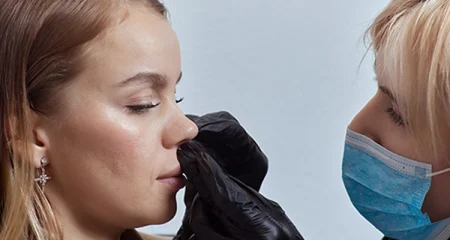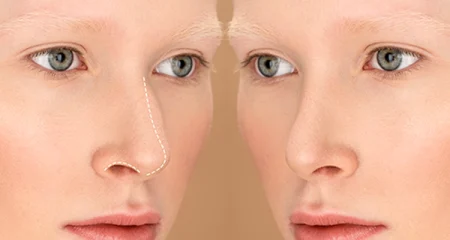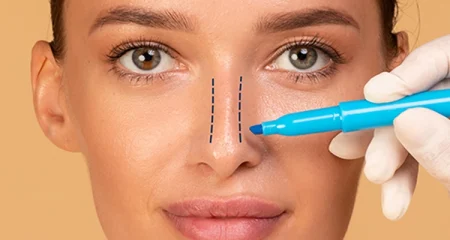


What Is Nostril Asymmetry Correction?
Uneven nostril size, shape, or position can be improved through surgical techniques designed to create better balance between both sides. During nostril asymmetry correction, tissue, cartilage, or the alar base may be adjusted depending on the underlying cause. Some differences originate from natural anatomy, while others develop after trauma, surgery, or changes in nasal support.
Treatment does not always require altering the entire nose. Small differences may be addressed with limited procedures focused on the nostril margins or surrounding tissues. More complex asymmetry can involve the septum, nasal tip, or underlying cartilage. Perfect symmetry cannot be guaranteed because natural facial structures are rarely identical. The goal is usually to reduce noticeable differences while preserving natural proportions and adequate airflow. Results depend on anatomy, skin characteristics, structural support, scar behavior, and the degree of correction required.
Why Is Nostril Asymmetry Correction Performed?
Visible differences between the nostrils may affect facial balance, nasal appearance, or occasionally breathing function. People may consider nostril asymmetry correction when one nostril appears wider, higher, lower, or differently shaped than the other. The difference can be present naturally or become more noticeable after injury or previous nasal surgery.
Some asymmetries result from differences in cartilage support rather than the nostril opening itself. A deviated nasal tip or septum can also influence how both nostrils appear. Correction may therefore involve more than simply reducing one side. The purpose is to improve balance while maintaining natural movement and airflow. Small differences are normal and do not always require treatment. Surgical planning depends on the cause, severity, tissue quality, nasal support, breathing function, and the relationship between nostril shape and surrounding nasal structures.
Who Is a Good Candidate for Nostril Asymmetry Correction?
People with noticeable nostril differences and stable nasal anatomy may be suitable candidates for nostril asymmetry correction. Appropriate candidates generally have realistic expectations and suitable overall health for elective surgery. The asymmetry should be evaluated carefully because it can come from the nostril margin, nasal tip, septum, or broader facial structure.
Previous rhinoplasty, facial trauma, or scar tissue can also influence suitability and surgical planning. Minor differences that are only visible from certain angles may not require correction. Existing breathing problems should be considered before changing nostril size or position. Smoking and certain health conditions can also affect healing. Candidate selection depends on the cause of asymmetry, tissue quality, scar characteristics, nasal support, airway function, and whether the proposed change can improve balance without creating unnecessary narrowing.
What Causes Uneven Nostrils?
Natural anatomy, cartilage differences, septal deviation, facial asymmetry, trauma, and previous surgery can all contribute to uneven nostrils. The appearance of uneven nostrils may come from differences in size, height, flare, shape, or surrounding tissue support. Even the position of the nasal tip can make one side appear more open than the other.
Scar tissue can also pull the nostril margin into a different position after surgery or injury. Weak cartilage may allow one side to collapse slightly during breathing. Differences in the upper lip, cheek, or overall facial structure can also influence how symmetry is perceived. Mild asymmetry is common and may be more noticeable in photographs or certain expressions. The appropriate correction depends on identifying the true source rather than treating the visible difference alone.
What Concerns Can Nostril Asymmetry Correction Address?
Differences in nostril size, height, width, flare, shape, or position may be improved through nostril asymmetry correction. One side may appear larger or more rounded, while the other looks narrower or higher. The nostril margins can also sit at different levels because of cartilage or soft-tissue differences.
Some asymmetry is linked to the nasal tip or septum rather than the nostril base itself. In those cases, correction may involve additional structural changes. Scar-related distortion after earlier surgery can also be addressed when tissue allows further adjustment. Not every difference can be removed completely because facial anatomy naturally contains some asymmetry. The goal is usually to create better visual balance while maintaining stable support and airflow. Treatment planning depends on the cause, severity, tissue condition, and surrounding nasal proportions.
How Is Nostril Asymmetry Correction Performed?
Treatment begins by identifying whether the imbalance comes from skin, cartilage, scar tissue, the alar base, or internal nasal structures. During nostril asymmetry correction, one side may require tissue reduction while the other needs support or repositioning. Small incisions can sometimes be placed within natural creases around the nostril.
Cartilage grafts may be used when one side lacks support or appears retracted. Alar base adjustment can help when width or flare differs between both sides. Tip or septal correction may also be necessary when these structures cause the asymmetry. The operation should avoid making both nostrils artificially identical. Natural variation usually remains even after successful correction. Final appearance becomes clearer as swelling decreases and scar tissue matures. Results depend on anatomy, surgical extent, tissue quality, and healing response.
What Techniques Are Used for Nostril Asymmetry Correction?
Different techniques can address tissue excess, cartilage weakness, scar distortion, alar flare, or differences in nostril position. Common nostril asymmetry correction techniques include alar base adjustment, cartilage grafting, scar release, tip correction, and selective tissue repositioning. The chosen method depends on where the imbalance originates.
A narrow or collapsed side may require added support rather than further reduction. A wider nostril can sometimes be narrowed through carefully planned tissue removal. Retraction may require cartilage reinforcement to lower or stabilize the margin. Previous surgery can make scar management an important part of correction. Several methods may be combined when asymmetry has more than one cause. No single technique is appropriate for every case. Selection depends on nostril shape, cartilage strength, scar tissue, breathing function, facial proportions, and the amount of correction required.
Can Nostril Asymmetry Correction Improve Uneven Nostril Size?
Yes, size differences can often be reduced when the underlying anatomy allows balanced correction. Through nostril asymmetry correction, the larger side may be narrowed or the smaller side may require structural support. Treatment depends on whether the difference comes from the nostril opening, alar flare, cartilage position, or nearby tissues.
Reducing only the larger side is not always the best solution. Overcorrection can create excessive narrowing or breathing problems. Sometimes the smaller side appears reduced because it lacks structural support and needs reinforcement. Swelling can also temporarily exaggerate size differences after surgery. Perfectly identical openings are not always realistic because facial structures are naturally asymmetrical. The goal is a more balanced appearance while preserving stable support and airflow. The final result depends on anatomy, tissue behavior, scar healing, and the cause of the original difference.
Can Nostril Asymmetry Correction Improve Uneven Nostril Shape?
Yes, shape differences can often be improved when they result from correctable cartilage, tissue, or scar-related factors. During nostril asymmetry correction, one side may be reshaped, supported, or repositioned to better match the opposite nostril. Differences can include round, narrow, elongated, retracted, or flared appearances.
Cartilage grafting may help when one margin lacks support. Tissue reduction can sometimes improve excessive flare or width. Scar tissue may need release when it distorts the nostril opening. Tip position also influences nostril shape and may require additional correction. Complete matching is rarely possible because each side has naturally different tissue characteristics. The intended result is improved balance rather than artificial duplication. Final shape becomes more reliable after swelling decreases and incision lines soften during healing.
Can Nostril Asymmetry Correction Be Combined with Rhinoplasty?
Yes, nostril balancing can be performed during the same operation when broader nasal structures also require correction. Combining nostril asymmetry correction with rhinoplasty can coordinate changes involving the bridge, tip, septum, and lower nasal base. This may be useful when the asymmetry originates from more than one structural area.
Tip rotation or projection can change how both nostrils appear. Septal deviation can also influence lower nasal balance and breathing. For these reasons, nostril correction is sometimes planned after the broader structural changes are determined. Combining procedures may create better proportional harmony than treating one area in isolation. However, the recovery can involve more swelling because several structures are modified. The decision depends on nasal anatomy, airway function, asymmetry severity, previous surgery, and the total amount of correction required.
Can Nostril Asymmetry Correction Improve Breathing?
Breathing may improve when structural asymmetry contributes directly to narrowing or collapse of one nasal passage. In nostril asymmetry correction, cartilage support can sometimes strengthen a weak nostril margin and improve airflow. A narrow side caused by alar collapse may benefit from structural reinforcement rather than simple cosmetic adjustment.
However, not every breathing problem comes from the nostrils. Septal deviation, nasal valve narrowing, allergies, or inflammation can also restrict airflow. Excessive reduction of the nostril base can actually worsen breathing if the opening becomes too narrow. Functional assessment is therefore important before changing nostril size or shape. Early postoperative swelling can temporarily make breathing feel more restricted. Long-term improvement depends on identifying the real source of obstruction and preserving adequate structural support during correction.
How Should You Prepare for Nostril Asymmetry Correction?
Health history, medications, previous nasal surgery, breathing symptoms, and treatment goals should be reviewed carefully before nostril asymmetry correction. Existing scars and previous injuries can influence incision planning and tissue movement. Medications and supplements may affect bleeding or healing and should receive appropriate review.
Smoking can interfere with blood circulation and slow wound recovery. Expectations should also remain realistic because perfect nostril symmetry is rarely possible. Photographs from different angles can help show how the asymmetry changes with facial position. The cause should be identified before deciding whether tissue reduction, cartilage support, or broader rhinoplasty is needed. Practical preparation includes allowing time for swelling and visible incision healing. Understanding that scar maturation takes several months helps create more realistic expectations about the final result.
How Long Does Nostril Asymmetry Correction Take?
The procedure may take less than a few hours, although nostril asymmetry correction duration depends on complexity and the techniques required. Limited tissue adjustment can be relatively short. Cartilage grafting, scar release, or combined rhinoplasty can substantially extend the operating time.
Previous surgery can also increase complexity because scar tissue changes normal anatomical layers. Correcting one side differently from the other requires careful measurement and repeated symmetry checks. Anaesthesia preparation and postoperative monitoring are separate from the actual surgical time. A shorter procedure does not mean recovery is immediate. Swelling and scar maturation continue long after surgery ends. Total duration depends on the number of structures involved, whether grafting is needed, previous surgical changes, and whether broader nasal correction is performed at the same time.
What Is the Recovery Process After Nostril Asymmetry Correction?
Early healing commonly involves swelling, redness, tenderness, and temporary differences between both nostrils. During nostril asymmetry correction recovery, incision lines may appear more noticeable before they begin softening. Small crusts or tightness can also occur around the lower nose during the first stage.
The nostrils may initially look more uneven because swelling rarely resolves identically on both sides. This does not automatically indicate a permanent problem. Facial movement can temporarily create tightness around healing tissues. Direct pressure, rubbing, and unnecessary stretching should be avoided during early recovery. Scar tissue continues changing for several months after visible swelling improves. The final shape becomes clearer as the tissues soften and settle. Recovery depends on incision pattern, grafting, tissue tension, previous surgery, skin characteristics, and individual healing response.
How Long Does Swelling Last After Nostril Asymmetry Correction?
Most noticeable swelling improves during the first several weeks, while swelling after nostril asymmetry correction can continue changing for several months. One side may remain puffier than the other during early healing. This temporary difference can make the nostrils appear more uneven before they eventually settle.
Scar tissue also matures gradually and can temporarily influence nostril shape or height. Procedures involving cartilage grafts may require additional time before the tissues soften. When correction is combined with rhinoplasty, swelling usually lasts longer because more nasal structures are healing. Heat and strenuous activity can temporarily increase puffiness. Early symmetry should therefore not be considered the final result. The most reliable evaluation becomes possible after swelling decreases substantially and scar tissue reaches a more stable stage.
What Should You Avoid After Nostril Asymmetry Correction?
Rubbing the nostrils, forceful nose blowing, heavy exercise, smoking, and accidental pressure should generally be avoided during early healing. Throughout nostril asymmetry correction recovery, stretching the incision area can irritate tissues and affect scar formation. Contact sports also create unnecessary risk because healing cartilage and soft tissues remain vulnerable.
Smoking can reduce blood flow and interfere with normal wound healing. Alcohol may contribute to early swelling. Picking crusts or pulling at sutures can damage incision edges. Sleeping with direct pressure on the lower nose should also be avoided. Strong sunlight may make fresh external scars more noticeable. Facial movement does not need complete restriction, but excessive stretching may feel uncomfortable initially. Restrictions depend on the techniques used, grafting, incision placement, combined procedures, and individual healing progress.
Frequently Asked Questions
What Are the Risks of Nostril Asymmetry Correction?
Scarring, persistent asymmetry, infection, overcorrection, undercorrection, and changes in airflow are possible risks of nostril asymmetry correction. Temporary swelling, redness, tenderness, and numbness may also occur during early recovery. Scar contraction can sometimes change the nostril margin as healing progresses.
When Are Nostril Asymmetry Correction Results Visible?
Early changes are noticeable soon after surgery, but nostril asymmetry correction results become more reliable as swelling and scar tissue settle. The nostrils may initially look uneven because one side can swell more than the other. Incision lines may also appear red or firm during early healing.
Are Nostril Asymmetry Correction Results Permanent?
Structural changes are generally long-lasting once healing stabilizes, although nostril asymmetry correction results can continue evolving with scar maturation and natural aging. Tissue removed during narrowing does not naturally return. Cartilage support can also remain stable for many years when it heals appropriately.
Why Are My Nostrils Uneven?
Uneven nostrils can result from natural facial asymmetry, cartilage differences, septal deviation, trauma, scar tissue, or previous surgery. The appearance of uneven nostrils may also change depending on head position, facial expression, and camera angle. One side can appear wider, higher, more flared, or differently shaped than the other.
Is It Normal to Have Asymmetrical Nostrils?
Yes, mild nostril differences are common because natural facial structures are rarely perfectly symmetrical. Normal nostril asymmetry can involve small differences in width, height, shape, or flare between both sides. These variations may become more noticeable in close photographs or from certain viewing angles.
Can Uneven Nostrils Be Corrected?
Yes, many visible differences can be improved when their underlying cause is suitable for structural or soft-tissue correction. Treatment for uneven nostrils may involve alar base adjustment, cartilage grafting, scar release, tip correction, or a combination of techniques. The appropriate method depends on where the asymmetry originates.
Can Nostril Asymmetry Be Corrected Without Full Rhinoplasty?
Yes, limited surgery can sometimes improve nostril asymmetry without changing the nasal bridge or other major structures. This approach may be appropriate when the imbalance is isolated to the nostril base, margin, or supporting cartilage. Small tissue adjustments or grafts can sometimes create better symmetry.
Can Alar Base Reduction Fix Uneven Nostrils?
Yes, selected width or flare differences may improve when alar base reduction is used to adjust the lower nasal tissues. One side can sometimes be narrowed differently from the other to create better balance. The technique is most useful when asymmetry originates primarily from the nostril base.
Can Rhinoplasty Correct Nostril Asymmetry?
Yes, broader nasal surgery can address nostril asymmetry when the difference is linked to the tip, septum, cartilage, or overall nasal structure. Rhinoplasty can reposition supporting tissues, adjust cartilage, correct deviation, and modify the alar base when necessary. This allows several causes of asymmetry to be treated during one operation.