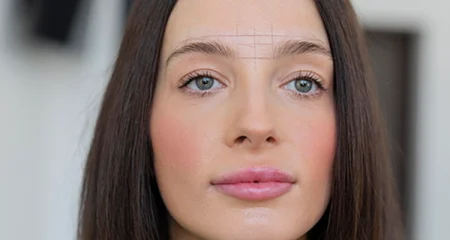

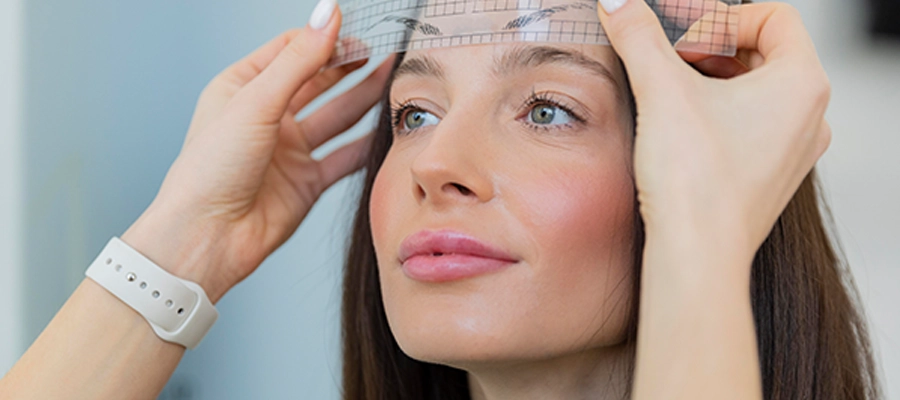
What Is a Revision Brow Lift?
A revision brow lift is a secondary surgical procedure designed to improve brow position, shape, symmetry, or related concerns after previous brow or forehead surgery. Revision treatment may address residual drooping, excessive elevation, uneven brows, an unnatural arch, or changes that develop as the original result settles.
Secondary surgery requires individualized planning because previous dissection, fixation, scars, and altered tissue planes can affect what can safely be changed. The objective is usually to restore better upper-face balance while preserving natural expression rather than simply performing the original procedure again.
Why Brow Lift Results Sometimes Need Correction
A previous brow lift may heal differently than expected because of tissue elasticity, fixation, natural asymmetry, scar formation, muscle activity, or continued aging. Occasionally, the original surgical plan may also have produced too much or too little elevation.
Not every early irregularity requires another operation. Brow position changes substantially during healing, so persistent problems should generally be distinguished from temporary swelling and settling before revision surgery is considered.
Recognizing an Over-Lifted, Under-Lifted or Uneven Brow
An over-lifted eyebrow may appear unusually high, excessively arched, or disconnected from the natural shape of the eye. An under-lifted brow may retain heaviness or descend toward its previous position.
Uneven results can involve overall brow height or only one segment, such as the lateral tail. Evaluation should compare brow position at rest and during expression because muscle activity can make a relatively balanced surgical result appear asymmetric during movement.
Brow Position Problems That Can Appear After Previous Surgery
Postoperative concerns can include excessive lateral elevation, inadequate central support, recurrent brow descent, asymmetrical arches, or differences between the two sides.
Changes in forehead sensation, scars, hairline position, and tissue mobility may also influence revision planning. Determining whether the concern results from fixation, tissue descent, muscle activity, or underlying facial asymmetry helps identify the most appropriate corrective strategy.
Correcting Residual Brow Droop After a First Brow Lift
Residual brow droop occurs when part of the eyebrow remains lower than intended after the initial procedure. It can involve the central brow, lateral tail, or entire eyebrow.
Correction may require additional tissue release, repositioning, or fixation. The surgeon must first determine why the initial elevation was insufficient. Scar tissue and previous fixation points can limit mobility, making secondary correction different from a primary brow lift.
Restoring Balance After Excessive Brow Elevation
Excessive elevation can make the upper face appear tense or surprised. Correction focuses on restoring a position that better matches the eyes, forehead, and opposite eyebrow.
The required approach depends on which portion was over-elevated and how previous tissues were secured. In selected cases, existing fixation may need to be released or revised. Conservative adjustment is important because lowering the brow excessively can create a new imbalance.
Revision Brow Lift for Asymmetrical Brow Height
When one eyebrow sits noticeably higher than the other after healing, secondary surgery can sometimes improve the difference through individualized adjustment of each side.
Correction does not necessarily mean moving both eyebrows. Treatment may concentrate on lowering one side, raising the opposite side, or adjusting different brow segments. Natural skeletal and muscular asymmetry can remain, so absolute symmetry should not be considered a realistic surgical endpoint.
Managing Scar Tissue from Earlier Forehead Surgery
Scar tissue changes the normal relationships between tissue layers and can make revision dissection less predictable. Its location and density depend on the previous technique and individual healing response.
Surgeons must identify which tissues remain mobile and where previous dissection occurred. Dense scarring may influence the direction or extent of repositioning possible during secondary surgery. This is one reason operative reports from earlier procedures can be useful.
How Previous Incisions Influence Revision Planning
Earlier endoscopic, temporal, direct, hairline, or coronal incisions can affect the choice of access for revision surgery.
Existing scars may sometimes be reused, while another incision pattern may provide safer or more effective access. Hairline position, hair density, scar quality, and previous nerve or tissue changes also matter. The revision plan should minimize unnecessary additional scarring while providing adequate access for correction.
Fixing an Unnatural Brow Arch Without Overcorrecting
An excessively peaked or exaggerated arch can develop when one portion of the eyebrow has been elevated disproportionately.
Revision treatment focuses on redistributing brow position rather than simply lowering the entire eyebrow. Central, lateral, and medial segments should be evaluated separately. Small positional changes can substantially alter brow shape, making conservative correction particularly important.
Revising the Brow Tail for Better Eye-Area Balance
The brow tail has a strong visual relationship with the outer upper eyelid and temple. A tail that sits too high can create an excessively upswept appearance, while a low tail may contribute to lateral hooding.
Secondary treatment can adjust this region independently when appropriate. Existing temporal scars, fixation, and tissue mobility influence how much correction is possible. The goal is to improve the brow-to-eye relationship without artificially changing the patient’s natural expression.
Treating a Heavy Central Brow After Lateral Over-Elevation
Sometimes the lateral eyebrow is elevated effectively while the central brow remains relatively low. This can create an exaggerated arch and leave persistent heaviness closer to the middle of the upper face.
Revision planning evaluates whether the central tissues need additional elevation, the lateral tissues require lowering, or both changes would create better balance. Simply lifting the central brow to match an excessively high tail may worsen the overall result.
Revision Brow Lift Prices 2026
Revision Brow Lift Prices 2026 depend on the complexity of the previous operation, scar tissue, required correction, anesthesia, surgical setting, and whether additional procedures are needed.
Is Blepharoplasty Sometimes Needed During Revision Brow Surgery?
Blepharoplasty may complement secondary brow surgery when genuine upper-eyelid skin excess remains after the eyebrow is placed in a more appropriate position.
Can a Revision Brow Lift Change Eye Shape?
Secondary brow surgery primarily changes tissues surrounding the eyes rather than the anatomical eye itself. Repositioning the lateral brow can nevertheless alter how open, elongated, hooded, or elevated the eye area appears.
Why Can the Brows Look Uneven During Early Healing?
Postoperative swelling rarely resolves at exactly the same speed on both sides. Differences in tissue tension, bruising, fixation, and normal healing can therefore temporarily exaggerate eyebrow asymmetry.
How Long Does Swelling Last After Revision Brow Lift?
Most obvious swelling generally improves progressively during the early weeks, while smaller amounts of residual swelling and tissue firmness can persist considerably longer.
When Can I Return to Work After Revision Brow Surgery?
Return to work depends on the extent of surgery, bruising, swelling, incision location, and the physical demands of the patient’s occupation.
Can Brow Asymmetry Return After Revision?
Long-term changes in tissue elasticity, muscle activity, fixation, scar remodeling, and natural aging can alter eyebrow position after secondary correction.
How Long Do Revision Brow Lift Results Last?
The durability of secondary brow correction depends on surgical technique, tissue quality, previous operations, fixation, skin elasticity, muscle activity, and ongoing aging.