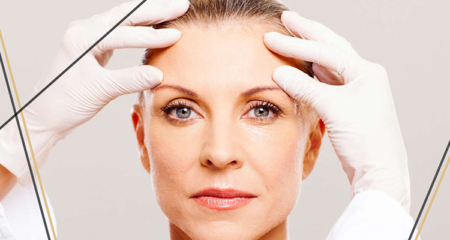


What İs Facial Slimming With Bichectomy?
Bichectomy is a surgical cosmetic procedure that aims to make facial features more defined by the controlled removal of fatty tissue located in the middle of the cheeks, known as the buccal fat pad. It can be particularly effective in reducing lower cheek volume in individuals with round or full faces, contributing to a more balanced facial contour.
The goal of this procedure is not to completely alter the face, but to achieve more prominent cheekbones and a more defined jawline while preserving the person’s natural facial anatomy. With proper patient selection and personalized planning, bichectomy can achieve natural-looking results.
Since each individual’s facial structure is different, facial proportions, skin elasticity, and existing fat distribution should be evaluated in detail before the operation.
Who is a suitable candidate for bichectomy?
Bichectomy is a procedure that can be considered for suitable candidates who are bothered by the full appearance in the lower part of their face and want their facial features to be more defined.
It may be suitable for the following people:
- People with round or full facial features
- Individuals with significant volume in the lower cheek area.
- People who want their cheekbones to appear more prominent
- Patients aiming to make their jawline more defined
- Adults with good skin elasticity
- Individuals whose general health condition is suitable for surgery
- Individuals with realistic expectations
The decision to have surgery is not based solely on whether it makes the face look fuller. A holistic assessment of facial anatomy is necessary.
Who might not be a suitable candidate for a bichectomy?
Like any cosmetic procedure, bichectomy is not suitable for everyone.
Different treatment options may be considered in the following situations:
- People who naturally have a thin facial structure
- Individuals with significant facial volume loss
- Patients with decreased facial volume due to advanced age
- People whose skin elasticity has significantly decreased
- Patients with active infection
- Individuals with uncontrolled chronic diseases
In individuals with delicate facial features, removing excessive fat tissue can cause the face to appear more sunken in later years, so patient selection is of great importance.
How Does Bichectomy Change Facial Features?
After a bichectomy, the excess volume in the cheek area is reduced, which can make the facial contours more defined.
In suitable patients, after the procedure;
- The fullness in the lower cheek area may decrease.
- Your cheekbones may appear more prominent.
- The jawline becomes more clearly visible.
- The facial oval may become more balanced.
- The facial profile may appear thinner.
The resulting change may vary depending on the individual’s facial structure and the amount of fat removed.
Does bichectomy (buccal fat removal) make cheekbones more prominent?
As volume decreases in the lower cheek area, the natural contours around the cheekbones may become more defined.
This doesn’t directly cause the cheekbones to grow larger. However, thanks to the reduction in cheek volume, the contrast between the upper and lower face can increase, making the cheekbones appear more prominent.
The degree of the results may vary depending on the individual’s bone structure and facial anatomy.
Does Bichectomy Define the Jawline?
The definition of the jawline is one of the important elements in facial aesthetics.
Following a bichectomy, the reduction in volume in the lower cheek area may result in a more defined jawline in some patients.
Especially;
- In people with full cheeks,
- In patients with an indistinct facial oval,
- In individuals with excess lower facial volume
The jawline may become more prominent.
However, it is important to remember that this is not a procedure that alters the structure of the jawbone. Results may vary depending on existing facial anatomy.
How is a bichectomy performed?
Bichectomy is a surgical procedure performed through the inside of the mouth. Since no visible incision is made during the procedure, there is no noticeable scar on the face.
The operation is usually performed under local anesthesia. Sedation or general anesthesia may also be preferred if deemed necessary.
During surgery, a small incision is made in the cheek mucosa, and the buccal fat pad is removed in a controlled manner. After performing the procedure symmetrically on both cheeks, the incision is closed with dissolvable sutures.
The procedure is completed in approximately 30 to 60 minutes for most patients , and patients are usually discharged the same day.
Pre-Bichectomy Assessment Process
A successful bichectomy operation requires a detailed evaluation of facial anatomy.
During the examination, the following criteria are usually examined:
- Face shape
- Cheek volume
- Prominence of cheekbones
- Jawline
- Skin elasticity
- Age
- General health status
- Previous cosmetic procedures
- Patient expectations
This assessment determines whether bichectomy is a suitable procedure and creates a personalized surgical plan.
What should be considered before a bichectomy?
Prior to surgery, some preparations may be recommended to support the healing process.
In general, the following topics are considered:
- Informing the doctor about the medications being used.
- Blood thinners should only be prescribed by a doctor.
- Smoking and tobacco products should be stopped before surgery, if possible.
- Sharing current health issues
- Making the necessary preparations for the day of the operation.
Since pre-operative recommendations may vary for each patient, the doctor’s instructions should be taken first.
Recovery Process After Bichectomy
Recovery after bichectomy is usually rapid. Mild swelling, tenderness, and tightness in the cheeks are expected in the first few days.
Since the procedure is performed through the mouth, it is important to pay attention to oral hygiene during the healing process.
Following the care guidelines recommended by your doctor, undergoing regular check-ups, and maintaining oral hygiene can positively support the healing process.
First 24 Hours
The following symptoms may be observed in the first few days after the operation:
- Mild swelling
- Sensibility
- Mild pain
- A feeling of fullness in the cheeks.
- Mild discomfort during chewing.
In the first few days, it is recommended to prefer soft foods and to follow oral hygiene guidelines as directed by your doctor.
First Week
The swelling will gradually decrease during the first week.
During this process;
- The swelling will gradually subside.
- It may be possible to return to daily life activities.
- The stitches inside the mouth are starting to heal.
- The initial check-up is performed.
Avoiding hard and crusty foods for a while may be recommended.
First Month
Within the first month, facial contours will begin to become more defined.
During this period;
- The swelling will be significantly reduced.
- The change in cheek volume is more noticeable.
- Your cheekbones may start to appear more prominent.
- The jawline may appear more balanced.
The completion of the recovery process is required before a final assessment of the outcome can be made.
When does the facial shape settle after a bichectomy?
Due to swelling that occurs in the first few days after the operation, the true appearance of the face cannot be assessed immediately.
Generally;
- The swelling will decrease significantly within the first two weeks.
- After about a month, facial contours will begin to appear more clearly.
- Final results are evaluated in most patients within 2 to 3 months .
Healing time can vary depending on individual skin type and biological healing rate.
What precautions should be taken after a bichectomy?
Postoperative care is crucial for healthy healing and maintaining the achieved aesthetic results.
In general, it is recommended to pay attention to the following suggestions:
- Consume soft and warm foods in the first few days.
- Regularly practicing the oral care recommended by your doctor.
- Using prescribed medications regularly
- Avoiding cigarettes and tobacco products.
- Abstaining from alcohol consumption for a certain period of time
- Postpone strenuous physical activity during the first few days.
- Paying attention to oral hygiene
- Don’t miss your check-up appointments.
The recovery process can vary from person to person. Therefore, the surgeon’s recommendations should always be prioritized.
Are the results of a bichectomy permanent?
The buccal fat pads removed during bichectomy do not regenerate. Therefore, the changes in facial contour achieved with the procedure are generally considered permanent.
However, facial appearance is not solely affected by buccal fat tissue.
The following factors can cause changes in facial appearance over time:
- aging process
- Weight changes
- Natural decrease in skin elasticity
- Genetic characteristics
- Life style
Therefore, natural changes in facial contours are possible over the years.
Does facial expression change after bichectomy?
In a properly planned bichectomy operation, the goal is not to alter facial expressions, but simply to reduce excess volume in the cheek area, thereby making the facial contours more defined.
The procedure does not involve any manipulation of the facial muscles.
Therefore, with appropriate patient selection and controlled fat removal;
- Natural facial expressions can be preserved.
- Facial expressions remain unaffected.
- The face may appear more balanced.
- The cheekbones may appear more prominent.
Since removing excessive amounts of fat tissue can lead to undesirable aesthetic results, surgical planning is of great importance.
Is Bichectomy a Weight Loss Method?
No.
Bichectomy is not a weight loss or slimming method.
The operation only aims to remove the buccal fat pads in the cheek area and does not reduce the total body fat percentage.
This process;
- It is not a replacement for diet.
- It is not an alternative to exercise.
- It does not reduce body weight.
The main goal is to make the facial contours more defined.
Will the cheeks become fuller again after a bichectomy?
The buccal fat tissue removed during the operation does not regenerate.
However, if a person gains significant weight over time, fat accumulation may occur in other areas of the face. While this can affect the overall appearance of the face, the removed fat pads do not reappear.
Therefore, healthy lifestyle habits are also important in maintaining the achieved contour.
Does bichectomy yield the same results in everyone?
No.
Bichectomy results vary from person to person.
The main factors influencing the outcome are:
- Face shape
- Bone structure
- Skin elasticity
- Age
- Amount of fat in the cheeks
- Recovery process
The changes may be more noticeable in people with round and full facial structures, while the same effect may not be expected in individuals with naturally thin facial structures.
Therefore, a personalized assessment before surgery is important.
How are bichectomy prices determined?
The cost of a bichectomy operation can vary for each patient.
The main factors influencing pricing are:
- Patient’s facial anatomy
- Scope of the operation
- Anesthesia method to be used
- The surgeon’s experience
- The hospital or clinic where the operation will be performed
- Postoperative follow-up process
The exact treatment plan and cost information will be determined on an individual basis after a thorough examination.
Frequently Asked Questions
Does bichectomy (buccal fat removal) slim the face?
In suitable candidates, reducing volume in the cheek area can make the face appear thinner and more contoured. The achieved change depends on the individual’s facial structure.
Is bichectomy permanent?
Yes. The buccal fat pads removed during surgery do not regenerate. However, aging and weight changes can affect facial appearance over time.
Will there be scarring after a bichectomy?
No. Because the procedure is performed through the mouth, there will be no visible surgical scar on the outside of the face.
Is bichectomy a painful procedure?
Since the procedure is performed under local or general anesthesia, no pain is felt during the operation. Any mild pain and tenderness that may occur afterward subside quickly in most patients.
When can one return to daily life after a bichectomy?
Most patients can return to their daily activities within a few days. Recovery time may vary from person to person.
Does bichectomy help with weight loss?
No. Bichectomy is a cosmetic procedure that targets localized fat tissue only in the facial area. It does not reduce body weight.
Does bichectomy (buccal fat removal) make cheekbones more prominent?
As the volume of the lower cheeks decreases, the cheekbones may appear more prominent. This effect can vary depending on the individual’s bone structure.
Is bichectomy suitable for people with thin facial features?
Not always. Patient selection should be done carefully, as individuals with delicate facial features may have a risk of their face appearing excessively sunken after surgery.
Does bichectomy (buccal fat removal) make the jawline more defined?
In suitable patients with full cheeks, reducing lower facial volume can contribute to a more defined jawline.
Does facial expression change after bichectomy?
When properly planned, a bichectomy operation aims only to enhance the facial contours. Since the mimic muscles are not affected, an attempt is made to preserve the natural facial expression.