

What is a Temporal Lift?
Skin laxity in the upper part of the face over time, drooping eyebrows, and a tired expression around the eyes are among the earliest noticeable signs of aging. Temporal lift , also known as temple lift , is an aesthetic procedure that aims to give the upper part of the face a younger, more dynamic, and balanced appearance by repositioning the tissues in the temple area.
Temporal lift can help create a more open appearance around the eyes by gently lifting the outer part of the eyebrows. This gives the face a more youthful and vibrant look while aiming to preserve natural facial features.
The procedure can be planned using surgical or minimally invasive techniques, depending on the individual’s needs. The appropriate method is determined based on skin elasticity, the degree of sagging, and aesthetic expectations.
Are Temporal Lift and Temple Lift the Same Procedure?
Yes. The terms temple lift and temporal lift are often used to refer to the same cosmetic procedure.
The goal of both methods is to reduce mild to moderate sagging in the upper part of the face, support the outer part of the brow, and give the eye area a more youthful appearance.
However, the technique to be applied may vary from person to person. While surgical methods are preferred in some patients, minimally invasive procedures may also be considered in suitable candidates.
Who is a suitable candidate for Temporal Lift?
Temporal lift is an option for individuals who have signs of aging in the upper part of their face but do not require a more extensive facelift.
The following individuals are generally considered suitable candidates:
- People with drooping outer eyebrows
- Those with mild to moderate skin laxity in the temple area
- People who want the area around their eyes to look more vibrant
- Individuals who are bothered by the tired look on their face
- Patients with sufficient skin elasticity
- Individuals whose general health condition is suitable for surgery
- Adults with realistic expectations
Before a treatment plan is developed, facial anatomy must be evaluated in detail.
Who might not be a suitable candidate for a temporal lift?
Like any cosmetic procedure, temporal lift is not suitable for everyone.
Different treatment options may be considered in the following situations:
- People with severe facial sagging
- Patients with significantly reduced skin elasticity
- People with active infection
- Individuals with uncontrolled chronic diseases
- People with unrealistic aesthetic expectations
Patients with advanced skin laxity may be more suitable for facelift or other surgical procedures.
Which aesthetic problems can Temporal Lift help correct?
Temporal lift is a procedure that aims to reduce signs of aging in the upper part of the face.
In suitable patients, it can contribute to the improvement of the following aesthetic changes:
- Eyebrow drooping
- Skin laxity in the temple area
- tired expression around the eyes
- Downward drooping appearance at the outer corners of the eyes
- Reduced definition of the upper facial contour.
- Mild skin sagging
The aim is not to alter facial expressions, but to create a more youthful and balanced look that is in harmony with facial anatomy.
How is a temporal lift performed?
Temporal lift surgery can be performed using different methods, depending on the individual’s needs and the preferred technique.
In this surgical procedure, small incisions are made within the scalp, naturally concealed. Through these incisions, tissues in the temple area are carefully freed and repositioned upwards. Excess skin is trimmed as needed, and the tissues are secured in the appropriate position.
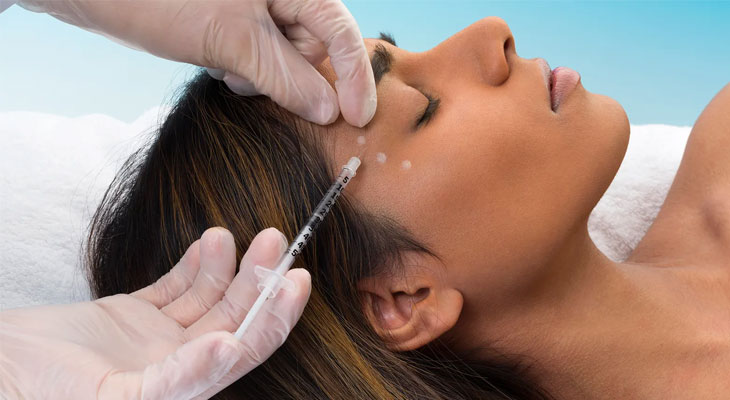
In minimally invasive methods, different techniques can be used instead of surgical incisions. Which method is suitable is determined according to the patient’s skin type and the desired result.
The operation can usually be performed under local anesthesia. Sedation or general anesthesia may also be preferred for some patients.
The process usually takes between 1 and 2 hours .
Temporal Lift Application Methods
Different treatment options can be considered depending on the patient’s needs.
These include:
- Surgical temporal lift
- Minimally invasive procedures
- Small incisions made through the scalp.
- Tissue repositioning
- Thread lifting techniques in suitable patients.
- Laser-assisted applications in some cases.
The most appropriate method should be determined after a thorough examination.
Temporal Lift Pre-Assessment Process
A thorough facial analysis forms the basis of a successful temporal lift procedure.
During the examination, the following criteria are generally evaluated:
- Eyebrow position
- Skin laxity in the temple area
- Anatomy of the eye area
- Skin elasticity
- Facial symmetry
- General health status
- Previous cosmetic procedures
- Patient expectations
Based on this assessment, the appropriate technique is determined and a personalized treatment plan is prepared.
Recovery Process After Temporal Lift
The recovery process after a temporal lift can vary depending on the technique used and the individual’s healing rate. While recovery time may be slightly longer with surgical methods compared to minimally invasive procedures, most patients are able to return to their daily lives within a short time.
Mild swelling, edema, a feeling of tightness, and tenderness are expected in the first few days. These symptoms are usually temporary and gradually decrease as healing progresses.
Following your doctor’s recommendations, not missing regular check-ups, and protecting the surgical area can contribute to a healthy healing process.
First 24 Hours
The following symptoms may occur after the procedure:
- Mild swelling
- Edema
- Feeling of tension
- Mild pain
- Sensibility
During this period, it is recommended to keep the head elevated, take medications prescribed by the doctor regularly, and get enough rest.
First Week
During the first week, the swelling gradually decreases, and facial features begin to look more natural.
During this process;
- Most of the swelling will subside.
- Minor bruising may occur.
- Daily activities can be resumed gradually.
- Follow-up examinations are conducted.
In patients who have undergone surgery, it is important to keep the incision sites clean and follow the doctor’s care recommendations.
First Month
The tightening in the upper part of the face becomes more noticeable within the first month.
During this period;
- The eyebrow position looks more natural.
- The opening around the eyes may widen.
- The contour in the temple area becomes more defined.
- Their facial expression may take on a more youthful appearance.
Complete tissue healing is necessary for an assessment of the final results.
Will there be scarring after a temporal lift?
In temporal lift surgery, incisions are usually made within the scalp. This way, the incision scars are hidden within the hairline and are difficult to notice from the outside.
In minimally invasive procedures, there is often no noticeable surgical scar.
Visibility of the tracks;
- The surgical technique used,
- Skin structure,
- Wound healing properties,
- Postoperative care
This can vary depending on factors such as those mentioned.
Are the results of a temporal lift permanent?
Although the tightening effect achieved with temporal lift can last for a long time, the aging process naturally continues.
Because tissues are repositioned during the operation, the resulting changes can be preserved for many years. However;
- The aging process,
- Genetic factors,
- Sun exposure,
- Smoking,
- Life style
Factors like these can affect skin appearance over time.
Healthy lifestyle habits and regular skincare can help maintain the results for longer.
What precautions should be taken after a temporal lift?
Post-operative care is an important part of the recovery process.
In general, it is recommended to pay attention to the following suggestions:
- Sleeping with your head elevated during the first few days.
- To protect the temple area from blows.
- Do not use medication without a doctor’s recommendation.
- Avoiding strenuous exercise for a certain period of time.
- Avoiding cigarettes and tobacco products.
- Follow the wound care routine recommended by your doctor regularly.
- Sun protection
- Don’t miss your check-up appointments.
Since every patient’s recovery process is different, personalized recommendations should always be prioritized.
Does facial expression look natural after a temporal lift?
The primary goal of a temporal lift procedure is not to alter facial expressions, but to correct age-related sagging within natural limits.
With the right patient selection and appropriate surgical planning;
- Eyebrows are positioned to be in harmony with the face.
- The area around the eyes may look more vibrant.
- Facial expressions are preserved.
- The facial expression maintains its natural appearance.
Avoiding excessive stretching plays a key role in achieving a natural result.
How does Temporal Lift change the area around the eyes?
By supporting the temple area, a more open and dynamic appearance can be created around the eyes.
In suitable patients;
- The outer part of the eyebrow can be slightly raised.
- The tired expression around the eyes may decrease.
- A more youthful appearance can be achieved at the outer corner of the eye.
- The upper facial contours can become more balanced.
This procedure is not a substitute for eyelid surgery. If deemed necessary, it may be planned in conjunction with other surgical procedures such as blepharoplasty.
Do eyebrows lift too high after a temporal lift?
One of the most frequently asked questions by those considering a temporal lift is whether the procedure will preserve the natural appearance of their eyebrows.
With proper planning, the goal of a temporal lift operation is not to excessively raise the eyebrows, but to reposition the tissues that have drooped due to aging to a more anatomically appropriate location.
In this way;
- The outer part of the eyebrow can be slightly supported.
- Their facial expression may appear more refreshed.
- The area around the eyes may appear lighter.
- Natural facial expressions can be preserved.
To avoid creating an artificial or overly tense appearance, the operation must be planned according to the individual’s facial proportions.
Will there be swelling and bruising after a temporal lift?
As with any surgical procedure, temporary swelling and mild bruising may occur after a temporal lift.
These symptoms include:
- The scope of the transaction includes:
- Depending on the technique used,
- Depending on skin type,
- The person’s recovery rate
It may vary depending on the situation.
Swelling is usually most noticeable in the first few days and then gradually decreases in the following days. In most patients, bruising and edema largely subside within 1-2 weeks .
Applying cold compresses, rest, and following your doctor’s recommended care instructions can support the healing process.
When does the temporal lift effect become noticeable?
Changes in the upper part of the face after a temporal lift are noticeable in the early stages. However, due to swelling in the first few days, the healing process must be complete before the true results can be evaluated.
Generally;
- A slight improvement may be noticed in the first few days.
- The swelling will decrease significantly within the first two weeks.
- The facial contours become more defined after about a month.
- Final results are assessed in most patients within 1 to 3 months .
Healing time can vary depending on the method used and the individual’s skin type.
Is a temporal lift alone sufficient?
Temporal lift is a procedure that can be effective, especially for mild to moderate sagging in the upper part of the face. However, since each patient’s needs are different, whether it will be sufficient on its own should be determined after a detailed evaluation.
In some patients, temporal lift;
- Correction of drooping eyebrows,
- Revitalizing the eye area,
- Recovery of the temple area
That might be enough.
For individuals with severe skin sagging or signs of aging affecting the lower part of the face, a combination of treatment with other aesthetic procedures may be planned.
What procedures can be performed in conjunction with a temporal lift?
To achieve a more balanced and holistic facial rejuvenation, a temporal lift can be planned in conjunction with other aesthetic procedures.
The following procedures may be considered in suitable patients:
- Upper or lower eyelid aesthetics
- Endoscopic brow lift
- facelift surgery
- Neck lift
- Fat injection
- Filler applications
- Botulinum toxin applications
- Skin rejuvenation and laser treatments
The decision regarding the combination of cosmetic options is made on an individual basis, taking into account the patient’s facial anatomy, skin type, and aesthetic goals.
Is Temporal Lift Suitable for Men?
Temporal lift is not an aesthetic procedure exclusively for women. It can also be applied to men who experience eyebrow drooping and sagging in the temple area due to aging.
When planning the procedure for male patients, care is taken to preserve the characteristic features of the face.
Aim;
- To achieve a more youthful appearance,
- To support the eyebrows at a natural level,
- To maintain masculine facial features,
- The goal is to avoid creating an overly lifted look.
Therefore, surgical planning is done according to different aesthetic criteria for female and male patients.
Does the hairline change after a temporal lift?
One of the most frequently asked questions about temporal lift is whether it will affect the hairline.
When surgical techniques are planned correctly, incisions are made within the scalp, aiming to preserve the natural appearance of the hairline.
In most patients;
- There is no noticeable change in the hairline.
- The incisions are hidden among the hair.
- Once healing is complete, surgical scars are not noticeable.
As with any surgical procedure, results can vary depending on the individual’s anatomical structure and the technique used.
Frequently Asked Questions
How long does temporal lift surgery take?
Depending on the scope of the procedure, a temporal lift operation is usually completed in 1 to 2 hours .
Can a temporal lift be performed with local anesthesia?
Yes. In many patients, the procedure can be performed under local anesthesia. Sedation or general anesthesia may also be preferred if needed.
When can I return to work after a temporal lift?
Most patients can return to their daily lives and desk jobs within a few days to a week. Recovery time may vary depending on the technique used.
Will there be scarring after a temporal lift?
Because the incisions are planned within the scalp, any resulting scars are generally not noticeable from the outside.
Is temporal lift permanent?
The resulting tightening effect can last for a long time. However, since the aging process continues, the skin will continue to undergo natural changes over time.
Does temporal lift change the shape of the eye?
The procedure can create a brighter and more youthful appearance around the eyes. However, the goal is not to completely change the shape of the eyes, but to support the natural anatomy of the face.
Is temporal lift a procedure suitable for men?
Yes. It can be safely applied to male patients as well. During surgical planning, care is taken to preserve natural and masculine facial features.
Are temporal lift and facelift the same procedure?
No. While a temporal lift focuses only on the upper part of the face, a facelift is a different surgical procedure that covers a larger anatomical area.