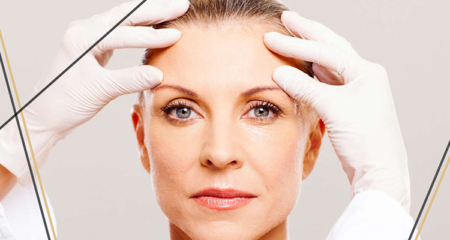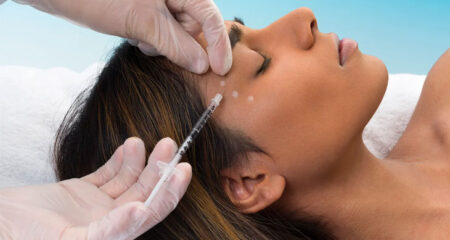


What is a Non-Surgical Facelift?
With the aging process, the production of collagen and elastin in the skin decreases, leading to changes such as loss of elasticity, mild sagging, and a reduction in the definition of facial contours. For individuals who do not want surgery or prefer to reduce the signs of aging on the skin with non-surgical methods, procedures developed are considered under the heading of non-surgical facelift .
Non-surgical facelift is a general term for procedures that aim to achieve a firmer, more vibrant, and younger appearance by stimulating the tissues that support the skin using various technologies. Depending on the method used, different techniques such as focused ultrasound, radiofrequency, laser technologies, or thread lifts may be employed.
Because these procedures do not require surgical incisions or stitches, recovery times are generally shorter. However, the appropriate method should be determined based on the individual’s skin type, the degree of signs of aging, and aesthetic expectations.
Who is a suitable candidate for non-surgical facelift?
Non-surgical facelift procedures may be a suitable option for individuals with mild to moderate skin laxity.
Generally, the following individuals may be considered as candidates:
- People with mild to moderate skin sagging
- Individuals who do not want surgery
- People who want to support skin firmness
- Patients aiming to reduce the first signs of aging
- People who want to return to their daily lives quickly
- Adults in good general health
- Individuals with realistic expectations
For individuals with severe skin sagging, surgical facelift may be a more suitable option.
For what purposes is a non-surgical facelift performed?
The main goal of non-surgical facelift procedures is to stimulate the skin’s natural collagen production, contributing to a firmer and more youthful appearance.
In suitable patients, planning can be done with the following goals in mind:
- Supporting skin firmness.
- Reducing mild skin laxity.
- Defining facial contours
- A more defined jawline.
- Minimizing the appearance of fine lines.
- Supporting skin quality.
- Achieving a more vibrant and dynamic facial appearance.
The results obtained may vary depending on the method used, the person’s skin type, and age.
Which areas can be treated with non-surgical facelift?
Non-surgical facelift procedures are not limited to the face. Personalized treatment plans can be developed for many anatomical areas where signs of aging are visible.
The most common areas where this procedure is performed are:
- Cheeks
- Jawline
- Chin area
- Neck
- Temple area
- Around the eyebrows
- around the eyes
- Lower face contour
The areas to be treated will be determined after examination, based on the individual’s needs.
What are non-surgical facelift methods?
Non-surgical facelift procedures are not a single, incomplete process. Different technologies can be chosen depending on the patient’s needs.
The most commonly used methods include the following:
- Ulthera
- HIFU (High-Intensity Focused Ultrasound)
- Radiofrequency applications
- Laser technologies
- Rope hanging applications
- Energy-based systems that support collagen production
Each method has a different mechanism of action and application area. Therefore, the most appropriate treatment plan is created after expert evaluation.
How is a non-surgical facelift performed with Ulthera?
Ulthera is a non-surgical facelift treatment that uses focused ultrasound technology.
During the procedure, ultrasound energy is transmitted to tissues at specific depths without damaging the skin’s surface. The controlled heat effect created aims to stimulate collagen production and lead to skin tightening over time.
During the application process;
- The skin surface is protected.
- Deep connective tissues can be targeted.
- No surgical incision is made.
- No stitches required.
- The recovery process is usually short.
The processing time varies depending on the application area, but it is usually completed within 30 to 60 minutes .
What is the difference between Ulthera and HIFU?
Although Ulthera and HIFU are technologies that work on similar principles, they are not the same application.
Both methods use focused ultrasound energy to target tissues beneath the skin. However, Ulthera is a specialized device system with specific technical characteristics. HIFU, on the other hand, is a general technology definition encompassing various devices developed by different manufacturers.
Which method is appropriate;
- Skin structure,
- The degree of signs of aging,
- The area where the application will be carried out,
- Treatment goals
Factors such as these should be considered when making this decision.
Non-Surgical Facelift Pre-Procedure Evaluation
A detailed skin analysis is important before a treatment plan is developed.
During the examination, the following criteria are generally evaluated:
- Skin elasticity
- Degree of sagging
- Collagen structure
- Face contour
- Age
- General health status
- Previously performed aesthetic procedures
- Patient expectations
Based on this assessment, the chosen method and session plan will be tailored to the individual.
Non-Surgical Facelift: Before and After Process
In non-surgical facelift procedures, accurate assessment of the skin structure before treatment is crucial for achieving successful results. During the examination, skin elasticity, the degree of signs of aging, facial anatomy, and the patient’s expectations are evaluated together to create a personalized treatment plan.
Most non-surgical facelift procedures require no special preparation. However, it is essential to inform the doctor about any medications being taken, current health condition, and previous cosmetic procedures.
After the procedure, patients can usually return to their daily lives shortly. Mild redness, tenderness, or swelling may occur, and these effects usually subside spontaneously within a short time.
What precautions should be taken after a non-surgical facelift?
Following the procedure, it is important to follow your doctor’s recommendations to support the skin’s healing process and help maintain the results.
In general, the following recommendations can be made:
- Protect yourself from the sun and use sunscreen with a high protection factor.
- Using the skincare products recommended by your doctor regularly.
- Avoid practices that may irritate the skin in the first few days.
- Avoid saunas, steam rooms, and excessively hot environments for a certain period of time.
- Drink plenty of water.
- Paying attention to healthy eating.
- Don’t miss your check-up appointments.
Personalized care recommendations may vary depending on the method used.
When will the effects of a non-surgical facelift be seen?
In non-surgical facelift procedures, results can appear at different times depending on the technology used.
In some procedures, a slight tightening may be felt after the treatment. However, the real change occurs gradually as collagen production increases over time.
Generally;
- You may feel slight tightening in the first few weeks.
- Changes related to collagen production may become noticeable in approximately 1-3 months.
- Skin quality can be improved over time.
- The facial contours may become more defined.
The time it takes for results to appear can vary depending on the person’s age, skin type, and the method used.
How long does the effect of a non-surgical facelift last?
The permanence of non-surgical facelift procedures is not uniform and can vary depending on the technology used.
The main factors affecting the time it takes for results are:
- Skin texture
- Age
- Life style
- Sun exposure
- Smoking
- The method applied
- Collagen production capacity
In some patients, repeat treatments may be scheduled at specific intervals as recommended by the doctor.
Is Non-Surgical Facelift Painful?
Most non-surgical facelift procedures are performed with patient comfort in mind.
Depending on the technology used, a slight sensation of warmth, stinging, or tingling may occur during the procedure. This sensation is tolerable for most people.
If necessary, local anesthetic cream can be applied to increase comfort.
No significant pain is expected after the procedure. Some patients may experience short-term tenderness or mild swelling.
How long does a non-surgical facelift take?
The duration of the procedure may vary depending on the method used and the size of the area to be treated.
Most non-surgical facelift procedures are completed in approximately 30 to 60 minutes .
The treatment time may be slightly longer when multiple areas are being treated.
Is it possible to return to daily life after a non-surgical facelift?
One of the most important advantages of non-surgical facelift procedures is the short recovery time.
Most patients are able to return to their normal daily lives the same day after the procedure.
In some people;
- Mild redness,
- Sensibility,
- Minimal edema
Although these effects may occur, they usually resolve spontaneously within a short time and do not significantly affect social life.
At what ages can non-surgical facelift procedures be performed?
Non-surgical facelift procedures are not limited to a specific age group.
starting from the age of 30, when the first signs of skin elasticity begin to appear .
However, the decision regarding treatment is not based solely on age. Skin quality, the degree of sagging, and the patient’s expectations are all considered together to create the most suitable treatment plan.
For individuals with severe skin sagging, surgical facelift may be a more suitable option.
Is Ulthera the same procedure as non-surgical facelift?
Ulthera is one of the non-surgical facelift methods, but it doesn’t encompass all of these concepts.
Non-surgical facelift is a general treatment approach encompassing various technologies such as ultrasound, radiofrequency, laser, thread lifts, and the like. Ulthera is just one of these methods, targeting the supporting tissues beneath the skin using focused ultrasound energy.
Therefore, while every Ulthera treatment is considered a non-surgical facelift, not every non-surgical facelift procedure is an Ulthera treatment.
How many sessions are needed for a non-surgical facelift?
The number of sessions required varies depending on the technology used and the individual’s skin type.
While some energy-based treatments can be planned as a single session, others may require multiple sessions to achieve more noticeable results.
Factors that influence session scheduling include:
- Skin elasticity
- Degree of sagging
- Age
- Technology used
- Treatment goals
- Collagen production capacity
The treatment plan should be tailored to each patient individually.
Is redness possible after a non-surgical facelift?
Mild redness, warmth, or tenderness may occur after the procedure.
These symptoms may develop due to the controlled stimulation of subcutaneous tissues during the procedure and usually resolve spontaneously within a short period in most patients.
These effects may be more pronounced in people with sensitive skin. Following the skincare routine recommended by your doctor can support the healing process.
Are the results of non-surgical facelifts permanent?
Non-surgical facelift procedures do not stop the aging process. However, in suitable patients, they can provide a long-lasting rejuvenating effect by supporting skin firmness.
Sustainability of results;
- Age
- Skin texture
- Genetic characteristics
- Life style
- Sun exposure
- Smoking
- Regular skincare
It depends on many factors, such as these.
In some patients, periodic supportive treatments may be planned to help maintain the effect achieved.
What is the difference between a non-surgical facelift and a surgical facelift?
Although both methods aim to rejuvenate the facial appearance, their application methods and areas of effect differ.
Non-surgical facelift:
- No surgical incision is required.
- The recovery period is generally shorter.
- It is a preferred choice for mild to moderate skin laxity.
- It aims to support collagen production.
Surgical facelift:
- It requires surgery.
- The skin and deeper tissues are repositioned.
- It can offer a more comprehensive solution for advanced skin sagging.
- The recovery period is longer.
The appropriate method should be determined by evaluating skin type and the degree of signs of aging.
How are prices determined for non-surgical facelift procedures?
The cost of non-surgical facelift procedures can vary for each patient.
The main factors influencing pricing are:
- Technology used
- The width of the area to be treated
- Number of sessions
- Scope of the application
- The experience of the physician performing the procedure.
- Specifications of the device used
- Clinical conditions
- Additional applications as deemed necessary.
The exact treatment plan and cost information will be determined on an individual basis after a thorough examination.
Frequently Asked Questions
Is non-surgical facelift a painful procedure?
In most cases, only a mild sensation of warmth, stinging, or tingling occurs. Significant pain is not expected after the procedure.
How long does the process take?
Depending on the method used, most procedures are completed in approximately 30 to 60 minutes .
When can we return to daily life?
Most patients are able to return to their daily lives the same day after the procedure.
When will the results be seen?
While initial effects may be noticeable quickly, results generally become more pronounced within 1 to 3 months due to increased collagen production.
How many sessions are needed?
The number of sessions varies depending on the technology used and skin type. Some treatments are planned in a single session, while others may require multiple sessions.
Is non-surgical facelift permanent?
Although the results obtained can last for a long time, periodic support treatments may be necessary as the natural aging process continues.
Is a non-surgical facelift suitable for everyone?
No. Individuals with severe skin sagging may be better suited to different treatment options, such as surgical facelift.
Are Ulthera and HIFU the same treatment?
While both utilize focused ultrasound technology, Ulthera refers to a specific device system, whereas HIFU is a general technology definition encompassing various devices.
Will there be any scarring after the procedure?
No. Non-surgical facelift procedures do not involve surgical incisions, so there are no stitches or surgical scars.
Is it possible to achieve a natural look with a non-surgical facelift?
With appropriate patient selection and proper treatment planning, the goal is not to alter facial features, but to achieve a more youthful and natural look by supporting skin firmness.