
What is Botox (Botulinum Toxin Type A)?
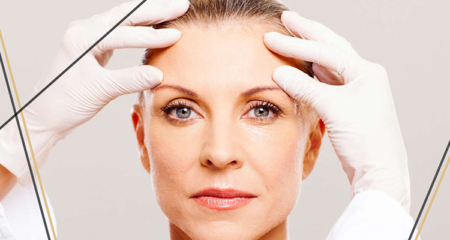
Botox is an injection-based medical procedure containing Botulinum Toxin Type A that temporarily relaxes certain muscles. It is most commonly used to reduce the appearance of dynamic wrinkles caused by facial expressions. In addition, it can be used to treat certain medical conditions such as excessive sweating, teeth grinding (bruxism), and chronic migraines in suitable patients.
Botox works by temporarily reducing the signal between the nerve and the muscle, thereby restricting the movement of the target muscle in a controlled manner. This can soften expression lines and wrinkles on the skin, resulting in a more rested facial expression.
Botox is not a permanent procedure. The effect lasts for a certain period, and muscle movement naturally returns over time.
Who is Botox suitable for?
Botox can be considered for adult individuals who have wrinkles caused by facial expressions and whose overall health is suitable for the procedure.
It may be suitable for the following people:
- People whose forehead lines are becoming more prominent
- Individuals who have expression lines between their eyebrows
- People who are bothered by crow’s feet lines around the eyes
- Patients who want a more rested facial appearance
- People who complain of excessive sweating
- Individuals who grind their teeth or exhibit excessive jaw muscle activity.
- People with realistic expectations
The decision to get Botox should be made after a thorough evaluation, based on the individual’s needs.
Who might not be a suitable candidate for Botox?
Like any cosmetic procedure, Botox isn’t suitable for everyone.
The procedure may be postponed or alternative treatment options may be considered in the following situations:
- Pregnancy and breastfeeding period
- Presence of active infection in the application area.
- Known history of allergy to botulinum toxin.
- Some neuromuscular diseases
- Specific health conditions that require evaluation by a doctor.
Existing medical conditions and medications being used must be reported to the doctor before the procedure.
For what purposes is Botox used?
Botox is not just a procedure used for aesthetic purposes.
In suitable patients, it can be planned for the following purposes:
For aesthetic purposes
- To reduce the appearance of forehead lines.
- To soften the lines between the eyebrows.
- To reduce crow’s feet lines around the eyes.
- Supporting eyebrow position
- To create a more rested facial expression.
For medical purposes
- Excessive sweating (hyperhidrosis)
- Teeth grinding and jaw muscle hypertrophy (bruxism)
- Suitable patients for chronic migraine treatment
- Some muscle spasms
The purpose for which Botox is used is determined based on the individual’s complaints and the doctor’s assessment.
Which areas can Botox be applied to?
Botox is a treatment that can be applied to different anatomical areas.
The most common application areas are:
- Forehead
- Between the eyebrows
- around the eyes
- Brow lifting procedures
- Around the nose
- Fine lines above the lips
- Chin
- Masseter (chewing muscle)
- Neckbands
- Armpit
- Palm
- sole of the foot
The dosage and injection technique differ for each area.
How is Botox administered?
Botox injections are a non-surgical procedure performed in a clinical setting.
Before the procedure, the muscle groups to be treated are evaluated and the injection points are determined.
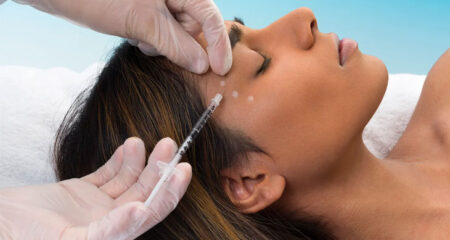
Then, using very fine needles, small doses of botulinum toxin are applied to the target muscles.
During the process;
- No surgical incision is made.
- No stitches required.
- General anesthesia is not administered.
- Hospitalization is not required.
The procedure is usually completed within 10 to 20 minutes , and patients can return to their daily lives the same day.
Pre-Botox Assessment
A successful Botox treatment is based on a detailed facial analysis.
During the examination;
- Movements of facial muscles
- The depth of wrinkles
- Facial symmetry
- Skin texture
- Previous cosmetic procedures
- General health status
- Medications used
- Patient expectations
It is evaluated.
Based on this analysis, a personalized injection plan is created.
What should be considered before Botox treatment?
Paying attention to certain points before the procedure can help improve post-procedure comfort.
Generally;
- Blood-thinning medications should only be considered on the recommendation of a doctor.
- Your doctor should be informed about herbal supplements.
- Avoiding alcohol consumption before the procedure is recommended.
- There should be no active infection at the application site.
- The skin should be considered clean.
Since the recommendations may vary for each patient, the advice of the physician performing the procedure should be taken into consideration.
What precautions should be taken after Botox treatment?
Following certain rules in the first few hours after a Botox injection can help the medication be effective in the targeted muscles.
In general, it is recommended to follow the suggestions below:
- Keeping the head in an upright position for the first 4-6 hours.
- Do not rub or massage the treated area.
- Avoid strenuous exercise for the first 24 hours.
- Avoid saunas, Turkish baths, and very hot environments for a while.
- Avoid alcohol consumption on the first day.
- Do not perform any other procedures on the treated area without the doctor’s recommendation.
- Don’t miss your check-up appointments.
Mild redness or small needle marks may be seen after the procedure. These effects usually disappear spontaneously within a short time in most people.
When can I return to daily life after Botox treatment?
Because Botox is a non-surgical procedure, most patients can immediately return to their daily lives after the treatment.
Taking a break from work or social activities is often not necessary.
The following temporary effects may be seen in the first few hours:
- Mild redness
- Small pin marks
- Mild sensitivity
- Rarely minor bruises
These symptoms usually resolve quickly.
When do the effects of Botox begin?
The effects of Botox injections do not appear immediately after the procedure.
Generally;
- The first effects may start to be felt within 3-5 days .
- Muscle movements gradually decrease.
- The full effect is usually assessed within 10-14 days for most people .
This process can vary depending on the individual’s muscle structure, metabolism, and the dose administered.
How long do the effects of Botox last?
Botox is not a permanent treatment.
The duration of the effect varies from person to person, but in most patients it lasts approximately 4 to 6 months .
Factors that can affect the duration of the effect include:
- Muscle strength
- Metabolism rate
- The dose administered
- Whether or not Botox has been applied before
- Life style
Muscle movement naturally returns over time, and if needed, a follow-up treatment can be planned after a doctor’s evaluation.
Can I exercise after Botox?
It is not recommended to immediately resume strenuous physical activity after Botox treatment.
the first 24 hours ;
- Weight training,
- Intense cardio exercises,
- Activities that require bending over for extended periods
It should be postponed.
Low-intensity activities, such as light walking, are not a problem for most people.
Can I wear makeup after Botox?
It is important to avoid irritating the application area after the procedure.
Therefore, if makeup is to be applied, the doctor’s recommendations should be followed, and pressure should not be applied to the injection sites in the first few hours.
It is recommended to treat the skin gently and avoid rubbing the application area.
Can there be side effects after Botox?
Most people can resume their daily lives without problems after a Botox injection. However, as with any medical procedure, some temporary side effects may occur.
These include:
- Mild redness
- minor bruises
- Sensibility
- Headache
- Mild swelling at the injection site.
It may be included.
For unexpected or persistent symptoms, the doctor who performed the procedure should be consulted.
Can Botox be repeated?
Yes.
Because the effects of Botox diminish over time, it can be reapplied to patients who need it, after a doctor’s evaluation.
For most people, the treatment interval is approximately 4 to 6 months , but this period;
- Muscle activity,
- Metabolism,
- The goal of treatment is,
- The impact of previous practices
This can vary depending on factors such as those mentioned.
Scheduling Botox treatments at appropriate intervals is important for preserving natural muscle movement.
Are Botox and Botulinum Toxin Type A the Same Thing?
Botulinum toxin type A is the scientific name for the active ingredient used in the procedure. “Botox” is the name of one of the trademarks containing this active ingredient and has over time become a general term referring to all botulinum toxin applications in daily use.
Although there are currently botulinum toxin type A products from different manufacturers, the active ingredient acts through the same biological mechanism. Which product to use is determined based on the patient’s needs, the area to be treated, and the doctor’s assessment.
Does Botox change facial expressions?
One of the most frequently asked questions by people considering Botox is whether their facial expressions will look artificial after the procedure.
When administered in the correct dose and with the correct injection technique, the goal of Botox is not to completely eliminate facial expressions, but to reduce the movement of overactive muscles in a controlled manner.
With proper planning;
- Natural facial expressions can be preserved.
- Their facial expression may not appear blank.
- A more rested and vibrant appearance can be achieved.
- The appearance of wrinkles can be reduced.
Personalized dosage planning is crucial in achieving natural results.
Does the face look worse after the effects of Botox wear off?
No.
As the effects of Botox wear off, the muscles gradually return to their normal movements. During this process, the face approaches its natural appearance before the procedure.
It is not expected that the face will look worse after the effects of Botox wear off. On the contrary, it is thought that regular and appropriately spaced applications may help slow down the deepening of expression lines in some people.
The aging process continues naturally, independently of Botox.
Are Botox and Fillers the Same Procedure?
No.
Botox and filler treatments are two separate medical aesthetic procedures serving different purposes.
Botox:
- It temporarily reduces muscle movement.
- It targets dynamic wrinkles.
- It is applied especially to the forehead, between the eyebrows, and around the eyes.
Filler applications:
- It aims to support volume loss.
- It can help improve the appearance of depressions and static lines.
- It can be applied to areas such as the lips, cheeks, chin, and nasolabial folds.
In some patients, combining Botox and filler treatments can create a more balanced approach to facial rejuvenation.
How are Botox prices determined?
The cost of Botox treatment is determined on an individual basis.
The main factors influencing pricing are:
- Number of areas where the application will be implemented
- Quantity of product to be used
- Treatment purpose (aesthetic or medical)
- Muscle strength
- The doctor’s experience
- The clinic’s technical infrastructure
- Necessary control procedures
The exact treatment plan and cost information can be determined after a detailed evaluation.
Frequently Asked Questions
Is Botox a painful procedure?
No. Very fine needles are used in Botox injections. Most people only describe a slight stinging sensation. If necessary, a local anesthetic cream can be used before the procedure.
How long does a Botox treatment take?
Depending on the area to be treated, the procedure is usually completed within 10 to 20 minutes .
When can I return to daily life after Botox treatment?
Most patients can resume their normal daily activities the same day after the procedure.
When do the effects of Botox start to be seen?
The first effects usually begin to appear within 3-5 days . Full results are seen in most people within 10-14 days .
How long does the effect of Botox last?
While the effects of Botox can vary from person to person, in most patients it lasts approximately 4 to 6 months .
Can Botox be reapplied?
Yes. When its effect diminishes, it can be reapplied at appropriate intervals after a doctor’s evaluation.
Does Botox make the face look expressionless?
When used with the correct dosage and appropriate technique, the goal is to reduce the appearance of expression lines while preserving natural facial expressions. Avoiding excessive application is important for a natural result.
Are Botox and fillers the same procedure?
No. Botox reduces muscle movement, while fillers are used to support volume loss. If needed, the two procedures can be planned together.
Is Botox only used for wrinkles?
No. In suitable patients, it can also be used to treat excessive sweating, teeth grinding (bruxism), chronic migraine, and some muscle spasms.
Is Botox a permanent procedure?
No. The effect of Botox is temporary, and muscle movements naturally return after a certain period. It can be reapplied if needed, upon a doctor’s recommendation.