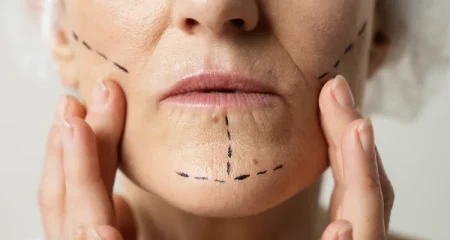


What Is Facial Volume Restoration?
Facial Volume Restoration is a cosmetic treatment approach designed to replace fullness lost through aging, weight changes, genetics, or changes in facial tissues. The objective is to restore balanced contours rather than simply make the face appear fuller.
Treatment may involve autologous fat transfer, dermal fillers, or a combination of techniques depending on the areas affected. Common targets include the cheeks, temples, under-eye hollows, and selected areas around the mouth or jawline.
A successful treatment plan considers the entire facial structure. Restoring volume in appropriate locations can soften hollow areas and improve transitions between facial features. Results vary according to anatomy, treatment method, skin quality, and the amount of correction required.
Why Does the Face Lose Volume Over Time?
Facial volume decreases because aging affects fat compartments, bone structure, skin, and supporting tissues. Facial Volume Restoration aims to address some of these changes by replacing lost soft-tissue fullness in carefully selected areas.
Facial fat does not disappear uniformly. Certain compartments can shrink or shift, creating flatter cheeks, hollow temples, deeper under-eye shadows, and more noticeable facial folds. Age-related changes in facial bones can further alter structural support.
Weight loss may also contribute to facial deflation, particularly when it is substantial or rapid. Genetics influence when and where these changes become noticeable.
Because several anatomical processes contribute to volume loss, treatment should focus on the underlying facial changes rather than treating every hollow or wrinkle in the same way.
Which Areas of the Face Commonly Experience Volume Loss?
The cheeks, temples, under-eye region, and areas around the mouth commonly show age-related volume changes. Facial Volume Restoration can target one or several of these regions according to individual anatomy.
Loss of cheek fullness can flatten the midface and make transitions toward the lower eyelids more noticeable. Temple hollowing can change the shape of the upper face, while under-eye volume loss may create shadows or a tired appearance.
Volume changes can also affect the chin, jawline, and areas beside the mouth. However, apparent volume loss is sometimes caused partly by skin laxity or skeletal changes.
A complete facial assessment helps determine which areas genuinely require additional volume and which concerns may need another treatment.
Who Is a Suitable Candidate for Facial Volume Restoration?
A suitable candidate for Facial Volume Restoration generally has visible facial hollowing, reduced soft-tissue fullness, or contour changes caused by aging, genetics, or weight loss.
Candidates may notice flatter cheeks, hollow temples, deeper under-eye transitions, or reduced definition in other facial areas. Good general health and realistic expectations are also important when considering treatment.
The most appropriate technique depends on the degree of volume loss. Dermal fillers may suit localized corrections, while fat transfer can be considered when broader or longer-lasting volume restoration is desired.
Significant skin laxity cannot always be corrected by adding volume. In such cases, lifting procedures or other treatments may be necessary to address the underlying concern.
Facial Volume Loss and Its Effect on Facial Proportions
Volume loss can change facial proportions by reducing fullness in areas that normally provide structural balance. Facial Volume Restoration aims to improve these relationships without creating excessive or unnatural fullness.
For example, reduced cheek projection can make the lower face appear heavier. Hollow temples may make the upper face look narrower, while under-eye volume loss can create stronger shadows between the eyelids and cheeks.
These changes often occur together as part of facial aging. Treating only one area may therefore be insufficient when several facial compartments have lost volume.
Careful planning considers the relationship between the forehead, temples, cheeks, eyes, chin, and jawline. The goal is balanced contour restoration while preserving the patient’s natural facial characteristics.
Treatment Options for Restoring Lost Facial Volume
Several treatments can be used for Facial Volume Restoration, with autologous fat transfer and dermal fillers among the most common options.
Fat transfer involves harvesting fat from another body area, processing it, and injecting it into selected facial regions. Some successfully integrated fat can provide long-term volume.
Dermal fillers provide volume through injectable materials and can be useful for targeted correction without a fat-harvesting procedure. Depending on the product used, results are usually temporary and gradually decrease.
Treatment choice depends on the amount of volume required, facial anatomy, desired longevity, recovery preferences, and previous procedures. Some patients may benefit from combining techniques or addressing skin laxity separately.
Using Fat Transfer for Natural Facial Volume Enhancement
Autologous fat transfer is a Facial Volume Restoration option that uses the patient’s own fatty tissue to replenish selected facial areas.
Fat is commonly harvested from the abdomen, thighs, flanks, or another suitable donor site. After processing, small amounts are placed into areas such as the cheeks, temples, under-eye hollows, chin, or jawline.
Not all transferred fat survives. A portion is naturally reabsorbed during healing, while successfully integrated fat cells can remain for many years.
The procedure can be particularly useful when several facial regions require treatment. Careful distribution is essential because excessive fat placement may create heaviness or irregular contours rather than natural-looking restoration.
Facial Volume Restoration with Dermal Fillers
Dermal fillers provide a nonsurgical option for Facial Volume Restoration by adding controlled amounts of injectable material to selected facial areas.
Depending on the filler and indication, treatment may be used for cheeks, temples, chin, jawline, or certain facial hollows. Different products have different physical properties, making some more appropriate for structural support and others for softer correction.
One advantage is that treatment can usually be performed without surgery or a donor site. Recovery may also be shorter than after fat grafting.
However, many fillers are temporary and require maintenance if the effect is to be preserved. Risks can include swelling, bruising, asymmetry, nodules, and rare but serious vascular complications.
Fat Transfer vs Fillers for Facial Volume Loss
Fat transfer and fillers offer different approaches to Facial Volume Restoration, and neither option is automatically better for every patient.
Fat transfer uses the patient’s own tissue and can treat several areas during one procedure. Surviving fat may remain long term, but the procedure requires harvesting, produces more swelling, and has some unpredictability in fat retention.
Dermal fillers avoid liposuction and allow relatively precise treatment of smaller areas. Many fillers provide immediate correction, although their effects usually decrease over time and maintenance treatments may be required.
The decision depends on the extent of volume loss, treatment areas, desired longevity, available donor fat, recovery preferences, and individual anatomy.
Restoring Cheek and Midface Fullness
The cheeks and midface are important targets for Facial Volume Restoration because loss of fullness in these areas can affect several surrounding facial contours.
Age-related deflation may reduce cheek projection and create a flatter transition between the lower eyelids and midface. Restoring selected deep or superficial areas can improve cheek shape while softening nearby hollows.
Fat transfer and dermal fillers are both possible options. The amount and depth of treatment depend on bone structure, soft-tissue thickness, existing asymmetry, and the degree of volume loss.
Overfilling should be avoided. The goal is to restore appropriate support and proportion rather than produce unusually prominent or excessively rounded cheeks.
Improving Temples and Under-Eye Hollows
Temple and under-eye hollowing can create shadows and alter overall facial balance. Facial Volume Restoration may improve these areas when true soft-tissue volume loss contributes to their appearance.
Temple treatment can create a smoother transition between the forehead, brow, and cheek. Under-eye treatment may reduce hollowing between the lower eyelid and upper cheek.
Both areas require careful technique because important blood vessels and delicate anatomical structures are present. The under-eye region also has thin skin, making swelling or irregularities more visible.
Not every under-eye shadow results from volume loss. Pigmentation, prominent eye bags, skin laxity, and vascular visibility may require different treatment approaches.
How Is a Facial Volume Restoration Treatment Planned?
A Facial Volume Restoration treatment plan begins with an assessment of facial anatomy, volume distribution, skin quality, symmetry, and the patient’s primary concerns.
The face should be evaluated as a whole rather than as a collection of isolated wrinkles. Areas with true volume deficiency are identified, and their relationship with surrounding structures is considered.
The next step is selecting an appropriate treatment. Factors include whether fat transfer or fillers are more suitable, how much correction is required, and whether skin laxity or other aging changes also need treatment.
Previous procedures, medical history, medications, smoking, and expectations should also be reviewed. Conservative planning helps preserve natural proportions and reduces the risk of unnecessary overcorrection.
Recovery After Facial Volume Restoration
Recovery after Facial Volume Restoration depends largely on whether treatment involves fat transfer, dermal fillers, or a combination of procedures.
After fillers, temporary swelling, redness, tenderness, or bruising may occur around injection sites. These effects often improve relatively quickly, although recovery varies by treatment area and product.
Fat transfer generally involves more swelling because both the face and donor area need to heal. Facial puffiness and bruising can remain noticeable for one to two weeks, with subtle swelling sometimes lasting longer.
Patients should follow individualized instructions regarding exercise, facial pressure, sleeping position, skin care, and donor-site care when applicable. Early swelling should not be used to judge final volume or symmetry.
When Do Facial Volume Restoration Results Become Visible?
The timing of Facial Volume Restoration results depends on the technique used. Fillers can produce visible volume changes immediately, although swelling may temporarily affect the appearance.
Fat transfer also creates immediate fullness, but the early result includes postoperative swelling and fat that may later be reabsorbed. Facial contours gradually become more stable as swelling decreases and surviving fat integrates with surrounding tissue.
A more reliable fat-transfer result generally becomes visible over several months. Filler results can often be assessed sooner once initial swelling settles.
Regardless of technique, final evaluation should consider symmetry, facial proportions, and natural movement rather than focusing only on the amount of added volume.
Facial Volume Restoration Prices 2026
Facial Volume Restoration Prices 2026 vary considerably because treatment can range from a small filler correction to extensive facial fat grafting involving several anatomical areas.
Frequently Asked Questions
What causes facial volume loss?
Facial volume loss usually develops because aging changes the fat compartments, bone structure, skin, and supporting tissues of the face. Facial Volume Restoration aims to replace some of this lost fullness and improve overall facial balance.
At what age does facial volume loss usually begin?
Facial volume loss can begin gradually in early adulthood, although noticeable changes often become more apparent during the thirties and forties. The timing varies considerably between individuals, which is why Facial Volume Restoration should be based on anatomy rather than age alone.
What is the best treatment for restoring facial volume?
The best treatment depends on the amount of volume loss, areas involved, desired longevity, and individual facial anatomy. Facial Volume Restoration may involve dermal fillers, autologous fat transfer, or a combination of techniques.
Can Facial Volume Be Restored Naturally?
Facial volume can be restored using the patient’s own fat through autologous fat grafting. This form of Facial Volume Restoration uses fat taken from another body area and transfers it into selected facial regions.
The harvested fat is processed before placement to improve contour and restore volume where needed. Treatment planning depends on facial anatomy, the degree of volume loss, and the areas requiring correction.
Facial volume restoration with fat grafting may involve:
Harvesting fat from another body area
Processing the collected fat
Transferring fat into selected facial regions
Restoring lost facial volume
Improving facial contour
Treating localized volume deficiencies
Using the patient’s own tissue
Planning treatment according to facial anatomy
Which Areas of the Face Can Be Treated?
Autologous fat grafting can be used in several facial areas affected by volume loss or contour deficiency. Common treatment regions include the temples, cheeks, midface, under-eye area, chin, jawline, and selected areas around the mouth.
Smaller facial depressions or localized contour irregularities may also be treated depending on individual anatomy. The treatment plan should focus on the areas where added volume can improve overall facial balance.
Facial areas that may be treated include:
Temples
Cheeks
Midface
Under-eye hollows
Chin
Jawline
Areas around the mouth
Is fat transfer better than fillers for volume restoration?
Fat transfer and fillers both have advantages, so neither is universally better for Facial Volume Restoration.Fat transfer uses the patient’s own tissue and can provide long-lasting volume once surviving fat cells become established. It may be especially useful when several facial regions require correction. However, it involves fat harvesting, more swelling, and some unpredictability in fat survival.
How long do facial volume restoration results last?
The longevity of Facial Volume Restoration depends mainly on the treatment method used.Dermal filler results are usually temporary and can last from several months to longer periods depending on the product, treatment area, metabolism, and amount injected. Maintenance sessions may be required as the material gradually breaks down.
Can facial volume restoration improve facial symmetry?
Fat transfer or fillers can be placed selectively to increase volume in areas that appear flatter, more hollow, or less projected. Treatment may involve the cheeks, temples, under-eye region, chin, or other suitable zones.