
What Is Lower Eyelid Fat Repositioning?
Lower eyelid fat repositioning is a surgical technique that redistributes existing under-eye fat to create a smoother transition between the lower eyelid and upper cheek. Instead of simply removing prominent fat that creates under-eye bags, the surgeon moves selected fat into nearby hollow areas, particularly the tear trough.
This volume-preserving approach can be useful when a patient has both under-eye bags and hollowness beneath them. Treating these two concerns together may reduce the contrast between fullness and depression without creating an excessively hollow lower eyelid.
Fat repositioning is commonly performed as part of lower blepharoplasty, although the exact technique varies according to eyelid anatomy, skin quality, cheek projection, and lower-lid support.
What Does Lower Eyelid Fat Repositioning Treat?
The procedure primarily treats the combination of prominent lower-eyelid fat and a visible depression beneath the eyelid. This pattern can produce bags, shadows, and a distinct groove between the eyelid and cheek.
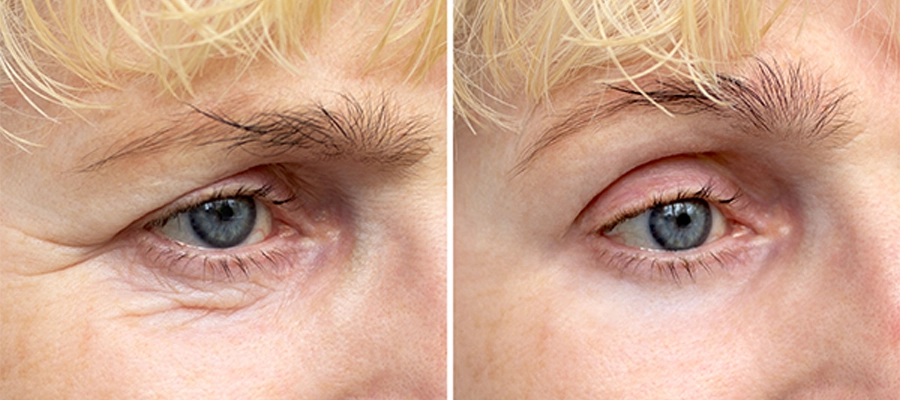
Treatment may improve under-eye puffiness, tear-trough hollows, shadowing caused by contour differences, and an uneven lid-cheek junction. It can also create a less tired appearance when structural under-eye changes are responsible for the concern.
The procedure does not directly treat every cause of dark circles. True pigmentation, visible blood vessels, very thin skin, and surface texture changes may require different treatments.
How Does Lower Eyelid Fat Repositioning Work?
The lower eyelid naturally contains fat compartments that help cushion the eye. These fat pads can become more prominent because of genetics, aging, and changes in surrounding support structures.
At the same time, the area immediately below these compartments can develop a hollow. The contrast between a bulging fat pad and a depressed tear trough can make both features appear more pronounced.
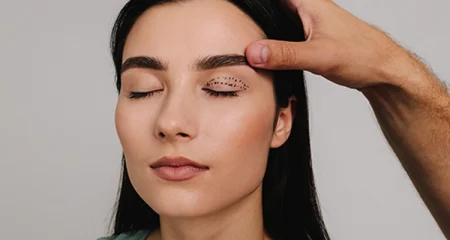
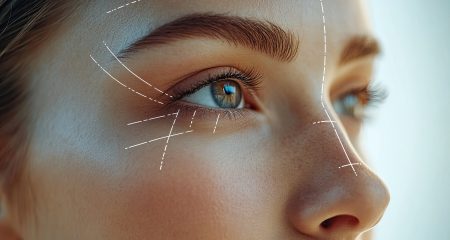
With lower eyelid fat repositioning, selected fat is mobilized while maintaining its connection to the surrounding tissues. It is then repositioned across or beneath the tear-trough region and secured in a new location. This redistributes existing volume rather than simply reducing it.
Who Is a Good Candidate for Lower Eyelid Fat Repositioning?
Suitable candidates often have noticeable lower-eyelid bags combined with tear-trough hollowing. The procedure can be particularly useful when removing the bags alone would risk creating a depleted or sunken appearance.
Candidate assessment considers lower-eyelid support, eye prominence, cheek structure, skin elasticity, fat distribution, tear-trough depth, and previous eyelid procedures. Overall health and eye-related conditions must also be reviewed.
Patients whose primary concern is pigmentation without structural bags or hollows may not benefit significantly from fat repositioning. Similarly, substantial loose skin or lower-lid laxity may require additional surgical techniques.
What Causes Under-Eye Bags and Tear Trough Hollows?
Under-eye bags can develop when lower-eyelid fat becomes more visible as supporting tissues change. Genetics can make these fat compartments prominent even in younger adults.
Tear-trough hollows have different contributing factors. Facial skeletal anatomy, soft-tissue volume, retaining structures, cheek projection, and age-related changes can all influence the depth of the groove.
When bags sit directly above a hollow, lighting creates additional shadow. This can make the under-eye area appear darker and more tired. Correcting the contour difference may therefore improve apparent darkness even without changing skin pigmentation.
How Is Lower Eyelid Fat Repositioning Performed?
Surgery can be performed through an incision inside the lower eyelid or through an external incision near the eyelashes, depending on the treatment plan.
The surgeon carefully accesses the lower-eyelid fat compartments and mobilizes selected portions of fat. Instead of discarding all prominent tissue, useful fat is advanced into the hollow area beneath the eyelid.
The repositioned tissue is then secured according to the chosen surgical technique. If excess lower-eyelid skin, poor support, or other structural concerns are present, additional procedures may be performed during the same operation.
What Are the Benefits of Lower Eyelid Fat Repositioning?
One of the main advantages is volume preservation. Traditional aggressive fat removal can sometimes leave the lower eyelids looking hollow, particularly as the face continues to age.
Repositioning uses existing tissue to smooth the transition between the eyelid and cheek. It can therefore address both a bulge and an adjacent depression within the same procedure.
Another benefit is that the transferred tissue remains the patient’s own living fat rather than an injectable implant or synthetic filler. Once healed, the corrected contour can provide a durable structural improvement, although natural facial aging continues.
Lower Eyelid Fat Repositioning vs. Fat Removal
Fat removal focuses on reducing prominent lower-eyelid fat. This can be appropriate when genuine excess fullness exists without significant surrounding hollowing.
Fat repositioning takes a different approach. Rather than removing useful volume, the surgeon redistributes it into areas where volume is deficient. This can be particularly valuable when an under-eye bag sits above a pronounced tear trough.
Neither technique is universally superior. Some patients benefit from repositioning, others from conservative removal, and some require a combination. The decision depends on existing volume and the desired lid-cheek contour.
Lower Eyelid Fat Repositioning vs. Dermal Fillers
Dermal fillers can add volume to selected under-eye hollows without surgery. They can be useful for carefully selected patients whose primary concern is a depression rather than substantial lower-eyelid bags.
Fat repositioning addresses the anatomy differently because it surgically redistributes existing lower-eyelid fat. This may be more appropriate when prominent fat and hollowness occur together.
Fillers are temporary and may require maintenance. They can also produce puffiness or contour irregularities in unsuitable candidates. Surgical treatment involves greater recovery but can provide longer-lasting structural correction.
Can Lower Eyelid Fat Repositioning Improve Tear Troughs?
A prominent tear trough can sometimes be softened by moving existing lower-eyelid fat into the depressed region. The objective is to decrease the visible step between the eyelid and cheek.
The degree of improvement depends on the depth and cause of the hollow. Skeletal anatomy, cheek projection, skin thickness, and surrounding volume all influence the result.
Some patients have hollowness extending beyond the area that lower-eyelid fat can adequately treat. Additional cheek volume restoration or another complementary technique may then be considered.
Can Lower Eyelid Fat Repositioning Reduce Under-Eye Bags?
Repositioning can reduce the appearance of under-eye bags by moving prominent fat away from the area where it creates a visible bulge.
The procedure does not necessarily remove all fat. Instead, selected tissue is redistributed to produce a smoother contour. Preserving useful volume can help prevent the lower eyelid from appearing excessively hollow after surgery.
If the amount or distribution of fat makes repositioning alone insufficient, a surgeon may combine redistribution with conservative removal.
What Type of Anesthesia Is Used for Lower Eyelid Fat Repositioning?
The anesthesia approach depends on surgical complexity, patient health, surgeon preference, and whether additional procedures are being performed.
Selected procedures may be performed with local anesthesia combined with sedation. General anesthesia may be used for more extensive lower-eyelid surgery or when treatment is combined with upper blepharoplasty, brow surgery, facelift surgery, or other procedures.
The anesthesia plan should be determined during preoperative assessment with patient safety and comfort as the priorities.
How Long Does Lower Eyelid Fat Repositioning Take?
The procedure commonly takes approximately one to two hours when performed as an isolated lower-eyelid operation, although surgical duration varies.
Treatment may take longer when significant asymmetry requires correction or when skin adjustment, canthal support, or additional eyelid procedures are included.
The time spent at the surgical facility will also include anesthesia preparation and postoperative observation, so it is longer than the actual operating time.
Lower Eyelid Fat Repositioning Prices 2026
Lower Eyelid Fat Repositioning Prices 2026 vary according to surgical complexity, anesthesia, geographic location, surgeon experience, facility fees, and whether the procedure is performed alone or as part of a broader lower blepharoplasty.
Frequently Asked Questions
How to Prepare for Lower Eyelid Fat Repositioning
Preparation includes reviewing general health, medications, supplements, allergies, previous facial procedures, and relevant eye conditions. Dry-eye symptoms and previous eyelid surgery should be specifically discussed.
Lower Eyelid Fat Repositioning Recovery Timeline
During the first several days, swelling and bruising are usually most noticeable. The lower eyelids and upper cheeks may appear puffy, and one side may temporarily swell more than the other.
How Long Do Swelling and Bruising Last After Lower Eyelid Fat Repositioning?
Bruising commonly improves substantially during the first one to two weeks, although individual healing varies. Visible swelling often lasts longer.
When Can You Return to Work After Lower Eyelid Fat Repositioning?
Many patients plan approximately 10 to 14 days before returning to work or social situations where visible swelling and bruising may be a concern.
When Are the Final Results Visible After Lower Eyelid Fat Repositioning?
Initial improvement becomes easier to see as bruising and significant swelling decrease. However, the contour can continue changing for several months.
How Long Do Lower Eyelid Fat Repositioning Results Last?
Lower eyelid fat repositioning results can be long-lasting because the procedure creates a structural redistribution of existing tissue rather than relying on a temporary injectable product.
What Are the Risks and Side Effects of Lower Eyelid Fat Repositioning?
Common temporary effects include bruising, swelling, tightness, tenderness, dryness, watering, numbness, and temporary asymmetry.