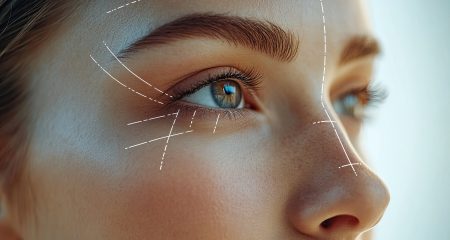


What Is Canthopexy?
Canthopexy is an eyelid-support procedure that reinforces and stabilizes the outer corner of the eye, known as the lateral canthus, without completely reconstructing the lateral canthal tendon. It is commonly used to improve mild lower-eyelid laxity or provide additional support during lower blepharoplasty.
The procedure focuses on maintaining an appropriate relationship between the lower eyelid and the eye. When the lower lid has insufficient support, it may appear loose, rounded, or slightly pulled away from the eye. Reinforcing the lateral structures can help maintain a more stable lower-eyelid position.
Canthopexy is generally considered less structurally extensive than canthoplasty. Although it can influence the appearance of the outer eye, its primary purpose is often support rather than creating a dramatic new eye shape.
What Does Canthopexy Do?
Canthopexy strengthens the tissues supporting the outer portion of the lower eyelid. The surgeon typically reinforces the existing lateral canthal structures and secures them in an appropriate position near the outer orbital rim.
This additional support can help the lower eyelid remain closely positioned against the eye. It can be particularly valuable when lower blepharoplasty is being performed in a patient with pre-existing eyelid laxity.
The degree of visible change depends on the starting anatomy and the direction of fixation. In many cases, the intended result is subtle: a supported lower eyelid rather than an obviously lifted outer eye.
How Does Canthopexy Work?
The lateral canthus is an important structural point where the upper and lower eyelids meet at the outer corner of the eye. Its supporting tissues help determine lower-lid position and stability.
During canthopexy, these tissues are reinforced without the more extensive division and reconstruction associated with certain canthoplasty techniques. Sutures can be used to secure the lateral structures to stronger tissue around the orbital rim.
The amount of tension is carefully controlled. Excessive tightening could alter the eye shape or create an unnatural appearance, while inadequate support may fail to correct meaningful laxity.
Who Is a Good Candidate for Canthopexy?
Suitable candidates often have mild or moderate lower-eyelid laxity, reduced lateral support, or anatomy that could benefit from reinforcement during another eyelid operation.
The procedure may also be considered in patients undergoing lower blepharoplasty when the surgeon believes additional support could reduce the risk of postoperative lower-lid malposition.
Candidate selection depends on lower-eyelid tone, eye prominence, canthal position, cheek support, previous surgery, skin quality, and the degree of laxity. More significant structural problems may require canthoplasty or another reconstructive approach instead.
What Eye Concerns Can Canthopexy Correct?
Canthopexy can address selected problems involving lower-eyelid laxity and lateral canthal support. These can include a mildly loose lower eyelid, reduced outer-lid stability, or subtle positional changes around the lateral eye.
It may also be used preventively as part of lower-eyelid rejuvenation when surgery could otherwise place additional tension on an already weak lower lid.
The procedure does not correct every form of eyelid drooping, under-eye bag, ptosis, or significant ectropion. Accurate diagnosis is important because these conditions involve different anatomical structures.
How Is Canthopexy Surgery Performed?
The surgeon accesses the lateral eyelid-support structures through a carefully planned incision, often using an incision associated with another eyelid procedure when canthopexy accompanies blepharoplasty.
The lateral canthal tissues are identified and reinforced with sutures. These tissues are then secured to stable structures around the outer orbital region at a position selected according to the patient’s anatomy.
When performed alone, the procedure can be relatively limited. When combined with lower blepharoplasty, fat repositioning, or other eyelid surgery, the surgical plan becomes more extensive.
What Are the Benefits of Canthopexy?
One of the main benefits is improved lower-eyelid support without requiring the more extensive structural reconstruction associated with canthoplasty.
Canthopexy can help maintain contact between the lower eyelid and the eye while supporting a natural lateral contour. This can be particularly important during lower blepharoplasty, where skin and soft-tissue changes may affect postoperative lid position.
Another potential advantage is subtlety. In appropriately selected patients, support can be improved without deliberately creating a dramatic or obviously altered eye shape.
Can Canthopexy Improve Lower Eyelid Laxity?
Canthopexy can improve mild lower-eyelid laxity by reinforcing the existing lateral support structures.
The degree of laxity matters. A mildly loose lower eyelid may respond well to reinforcement, while significant tendon weakness or substantial eyelid malposition may require a more extensive canthoplasty or reconstructive procedure.
Lower-eyelid laxity should therefore be evaluated before surgery rather than assuming canthopexy is appropriate for every patient.
Can Canthopexy Change the Shape of the Eyes?
Canthopexy can produce some change in lateral eye contour because it influences the support and position of the outer eyelid. However, the amount of change depends on the fixation point, tissue tension, and preoperative anatomy.
A standard supportive procedure is generally not intended to create a dramatically elongated, upturned, or “cat-eye” appearance. Procedures specifically designed to alter eye shape may require different techniques.
The priority in functional canthal support is usually maintaining appropriate eyelid position and natural expression rather than creating an exaggerated lateral tilt.
Canthopexy vs. Canthoplasty: What Is the Difference?
Canthopexy and canthoplasty both involve the outer eyelid but differ in the extent of structural modification.
Canthopexy generally reinforces the existing lateral canthal structures without completely dividing and reconstructing them. It is commonly considered when support is required but the underlying anatomy remains reasonably intact.
Canthoplasty typically involves more extensive modification or reconstruction of the lateral canthal tendon and related structures. It may be preferred when greater laxity, significant malposition, or a more substantial structural change requires correction.
Neither procedure is automatically superior. The appropriate option depends on eyelid anatomy and the intended result.
Canthopexy vs. Lower Blepharoplasty
Lower blepharoplasty primarily treats under-eye bags, prominent fat, excess skin, and selected contour problems beneath the eye. Canthopexy primarily addresses lower-eyelid support.
The procedures therefore solve different problems. A patient can have prominent under-eye bags with strong eyelid support and may not require canthopexy. Another patient may have both bags and lower-lid laxity and benefit from combined treatment.
Evaluating eyelid stability before lower blepharoplasty helps determine whether an additional support procedure is appropriate.
Can Canthopexy Be Combined with Blepharoplasty?
Canthopexy is frequently considered alongside lower blepharoplasty when additional lateral eyelid support is indicated.
For example, a surgeon may reposition lower-eyelid fat to improve bags and tear-trough hollowing while simultaneously reinforcing the lateral eyelid. This allows contour and support to be addressed during the same operation.
It can also be included in combined upper and lower blepharoplasty. However, adding canthopexy routinely when no support problem exists is not necessarily beneficial. The decision should be anatomy-driven.
What Type of Anesthesia Is Used for Canthopexy?
Canthopexy may be performed under local anesthesia, local anesthesia with sedation, or general anesthesia depending on surgical complexity and accompanying procedures.
An isolated support procedure may require a different anesthesia plan from canthopexy performed alongside extensive lower blepharoplasty, fat repositioning, or facial surgery.
The surgeon and anesthesia team determine the appropriate method after reviewing medical history, treatment extent, and individual comfort requirements.
How Long Does Canthopexy Surgery Take?
An isolated canthopexy can be relatively short, often taking less than an hour, although there is no universal operating time.
Surgery takes longer when the procedure is combined with lower blepharoplasty, upper blepharoplasty, fat repositioning, or other facial procedures. Significant asymmetry or previous eyelid surgery may also increase complexity.
Facility time includes preparation, anesthesia, surgery, and postoperative observation, so patients should not use the operating time alone to estimate the duration of their surgical visit.
How to Prepare for Canthopexy Surgery
Preparation begins with examination of lower-eyelid tone, lateral canthal position, eye prominence, cheek support, skin quality, and previous eyelid surgery. Existing asymmetry should also be documented before treatment.
Patients should discuss medical conditions, medications, supplements, allergies, dry-eye symptoms, contact lens use, and previous ophthalmic procedures with their surgical team.
Preoperative instructions may cover smoking, alcohol, medications affecting bleeding, fasting, skincare, and transportation. Prescription medications should only be changed according to appropriate medical guidance.
Frequently Asked Questions
Canthopexy Prices 2026
Canthopexy Prices 2026 vary according to geographic location, surgeon experience, anesthesia, surgical facility, the complexity of eyelid laxity, and whether the operation is performed independently or combined with another procedure.
Canthopexy Recovery Timeline
During the first few days, swelling, bruising, tenderness, and tightness are common around the outer eye. The lateral corners may initially appear more elevated or tighter than expected.
How Long Do Swelling and Bruising Last After Canthopexy?
The most noticeable bruising and swelling generally improve during the first one to two weeks, although recovery differs between patients.
When Can You Return to Work After Canthopexy?
Many patients plan approximately one to two weeks before returning to highly visible work or social activities.
When Are the Final Canthopexy Results Visible?
Initial changes become visible once bruising and major swelling decrease, but early appearance can be misleading.
How Long Do Canthopexy Results Last?
Canthopexy results can be long-lasting, but longevity varies according to tissue quality, technique, age, anatomy, and the degree of pre-existing eyelid laxity.
Does Canthopexy Leave Scars?
Canthopexy involves surgical access and therefore can produce a scar. Incisions are generally positioned strategically around the lateral eyelid or incorporated into incisions used for
What Are the Risks and Side Effects of Canthopexy?
Common temporary effects include swelling, bruising, tenderness, tightness, irritation, dryness, watering, numbness, and temporary asymmetry.