
What Is Transbrow Upper Eyelid Surgery Combined with Brow Lift?
Transbrow upper eyelid surgery combined with brow lift is a customized upper-face procedure designed to address the relationship between a low or descended eyebrow and heaviness around the upper eyelid. Depending on the specific technique, surgical access around the brow can be used to reposition brow tissues while selected upper-eyelid concerns are addressed as part of the same treatment plan.
The term “transbrow” is not used identically by every surgeon. It can describe approaches using access through or immediately adjacent to the eyebrow region, and the exact incision pattern and structures treated can differ. Patients should therefore understand the proposed surgical technique rather than relying on the procedure name alone.
The main principle is to evaluate the brow and upper eyelid together. When brow descent contributes substantially to hooding, treating only the eyelid can leave the underlying upper-face heaviness unchanged.
What Does Transbrow Upper Eyelid Surgery Combined with Brow Lift Treat?
This combined approach can address selected cases of brow ptosis, upper-eyelid hooding, lateral eyelid heaviness, and asymmetry between the eyebrows and upper eyelids.
A low eyebrow can push soft tissues downward toward the eye, creating the appearance of additional upper-lid skin. At the same time, genuine eyelid skin redundancy may also be present. Treatment can therefore be planned at more than one anatomical level when necessary.
The procedure does not automatically correct true eyelid ptosis, in which the actual upper-eyelid margin sits too low. Ptosis requires assessment of the eyelid-elevating mechanism and may need a separate repair.
Who Is a Good Candidate for Transbrow Upper Eyelid Surgery and Brow Lift?
Potential candidates generally have significant brow descent combined with upper-eye heaviness and require more direct brow control than eyelid surgery alone can provide.
The technique may be particularly relevant when brow position, shape, or asymmetry is a major part of the concern. Existing eyebrow density, forehead anatomy, skin quality, scar characteristics, previous surgery, and the amount of required elevation influence suitability.
Patients primarily concerned with isolated excess upper-eyelid skin may be better suited to conventional blepharoplasty. Similarly, patients who strongly prioritize completely hidden scalp scars may prefer another brow-lifting approach when their anatomy permits it.
How Is Transbrow Upper Eyelid Surgery Combined with Brow Lift Performed?
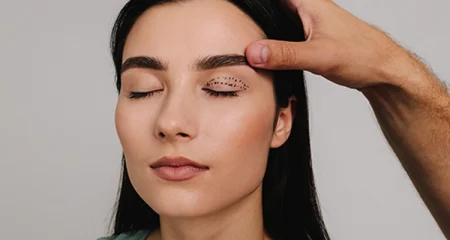
Surgical planning begins by examining eyebrow height, brow shape, eyelid skin, forehead muscle activity, eye position, and natural asymmetry. The surgeon determines which portions of the brow require repositioning and whether separate eyelid tissue adjustment is necessary.
Through the planned access, selected brow and forehead tissues can be released and repositioned. The amount and direction of elevation may differ between the medial, central, and lateral brow.
When genuine upper-eyelid skin excess remains, upper-lid correction can be incorporated into the treatment plan. Conservative tissue management is important because raising the brow itself changes how much skin appears to be present above the eye.
What Are the Benefits of Combining Upper Eyelid Surgery with a Brow Lift?
One of the principal benefits is the ability to treat upper-eye heaviness from two different anatomical levels. The brow component addresses tissue descent above the orbit, while eyelid treatment addresses genuine excess directly within the upper lid.
This can produce a more balanced result than aggressively removing eyelid skin while leaving a significantly low eyebrow untreated.
Combined planning also allows brow shape, eyelid crease visibility, lateral hooding, and asymmetry to be considered together. The objective is a more open and rested eye area without unnecessarily elevating the eyebrow or hollowing the upper eyelid.
How Does a Brow Lift Improve Heavy or Drooping Upper Eyelids?
Brow descent can move forehead and eyebrow tissues closer to the upper eyelid. This reduces the visible distance between the eyebrow and eyelid crease and can exaggerate hooding.
Repositioning a low brow restores some of this vertical relationship and may reduce the amount of tissue crowding the upper eye. The effect can be particularly noticeable around the lateral eyelid when the brow tail has descended.
A brow lift does not remove genuine eyelid skin redundancy. When both conditions are present, carefully coordinated brow and eyelid treatment may be more appropriate than relying on either procedure alone.
Transbrow Upper Eyelid Surgery vs. Traditional Upper Blepharoplasty
Traditional upper blepharoplasty generally uses an incision within the natural upper-eyelid crease and focuses directly on excess eyelid skin and selected underlying tissues.
A transbrow approach places greater emphasis on the eyebrow region and may provide more direct access for correcting brow descent or shape. Depending on the technique, it can be incorporated into a broader upper-eyelid treatment plan.
The choice depends on where the actual problem originates. Isolated eyelid redundancy does not necessarily require brow surgery, while significant brow ptosis cannot be reliably corrected simply by removing more eyelid skin.
Brow Lift vs. Upper Blepharoplasty: What Is the Difference?
A brow lift changes the position of the eyebrow and associated forehead tissues. Upper blepharoplasty changes tissues within the upper eyelid.
Although they target different anatomical structures, both can influence the amount of visible skin above the eye. This overlap is why a low eyebrow can sometimes be mistaken for excessive eyelid skin.
During examination, the eyebrow can be positioned closer to its intended level to evaluate how much true eyelid redundancy remains. This helps determine whether treatment should involve the brow, eyelid, or both.
Can Transbrow Surgery Correct Brow Ptosis and Hooded Eyelids?
Transbrow techniques can be considered when brow ptosis contributes significantly to upper-eyelid hooding. Repositioning the eyebrow may reduce the amount of tissue descending toward the eye.
When independent upper-lid skin excess is also present, additional eyelid correction may be needed. Treatment should distinguish these problems before surgery because excessive eyelid skin removal cannot substitute for proper brow repositioning.
True upper-eyelid ptosis should also be differentiated from hooding. A low eyelid margin may require dedicated ptosis surgery even after brow and skin concerns are corrected.
Where Are the Incisions Made in Transbrow Upper Eyelid Surgery?
Incision placement depends on the exact transbrow technique. Access may be positioned through, along, or immediately adjacent to portions of the eyebrow so that the surgeon can reach deeper brow tissues directly.
When upper blepharoplasty is also performed, an additional incision may be placed within the natural upper-eyelid crease.
Scar visibility is an important consideration with brow-level access. Eyebrow hair density, incision position, skin characteristics, hair direction, surgical tension, and individual healing all influence how noticeable the scar eventually becomes.
What Type of Anesthesia Is Used for Transbrow Upper Eyelid Surgery?
Selected procedures may be performed using local anesthesia with or without sedation. More extensive operations or combined facial procedures may be performed under general anesthesia.
The appropriate method depends on the amount of tissue release, anticipated operating time, patient health, comfort requirements, and whether other procedures are being performed simultaneously.
Anesthesia planning should be individualized after medical assessment rather than selected solely according to the name of the procedure.
How Long Does Transbrow Upper Eyelid Surgery with Brow Lift Take?
Operating time varies according to whether treatment involves one or both brows, the degree of asymmetry, the amount of tissue repositioning, and whether separate upper blepharoplasty is performed.
A combined procedure may take approximately one to several hours, but a universal operating time would be misleading because techniques described as transbrow surgery can differ substantially.
Revision surgery, significant asymmetry, additional eyelid work, or other facial procedures can extend the operation. Anesthesia preparation and postoperative observation add further time beyond the surgical portion.
Transbrow Upper Eyelid Surgery Combined with Brow Lift Prices 2026
Transbrow Upper Eyelid Surgery Combined with Brow Lift Prices 2026 vary according to the exact surgical technique, whether one or both brows require correction, the extent of upper-eyelid treatment, anesthesia, geographic location, and surgical-facility costs.
Frequently Asked Questions
How to Prepare for Transbrow Upper Eyelid Surgery and Brow Lift
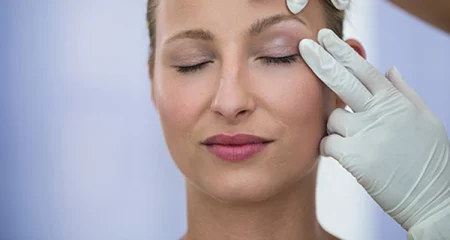
Preparation begins with examination of brow position, eyelid anatomy, forehead movement, eyebrow density, skin quality, and previous scars. Photographs taken with the face relaxed and during expression can help document pre-existing asymmetry.
Transbrow Upper Eyelid Surgery and Brow Lift Recovery Timeline
During the first several days, swelling and bruising can develop around the brows, forehead, and upper eyelids. The brows may initially appear higher, tighter, or more asymmetric than expected because tissues have not yet settled.
How Long Do Swelling and Bruising Last After Transbrow Surgery?
Bruising commonly becomes substantially less noticeable during the first one to two weeks, although recovery varies between individuals.
When Can You Return to Work After Transbrow Upper Eyelid Surgery?
Many patients may require approximately one to two weeks before they feel comfortable returning to visible professional or social activities, although this varies according to bruising, swelling, incision appearance, and the extent of surgery.
When Are the Final Results Visible After Transbrow Upper Eyelid Surgery?
Initial improvement becomes visible as bruising and major swelling decrease, but early brow height does not necessarily represent the final position.
How Long Do Transbrow Upper Eyelid Surgery and Brow Lift Results Last?
Structural improvement from brow repositioning and upper-eyelid surgery can be long-lasting, but the procedure cannot stop natural aging.
Does Transbrow Upper Eyelid Surgery Leave Visible Scars?
Transbrow surgery creates an incision in or near the eyebrow region, so scar placement deserves careful consideration. Eyebrow hairs and natural anatomical boundaries may help camouflage a well-positioned incision, but complete scar invisibility cannot be guaranteed.
What Are the Risks and Side Effects of Transbrow Upper Eyelid Surgery?
Expected temporary effects can include swelling, bruising, tightness, tenderness, numbness, itching, temporary asymmetry, and changes in sensation around the brow or forehead.