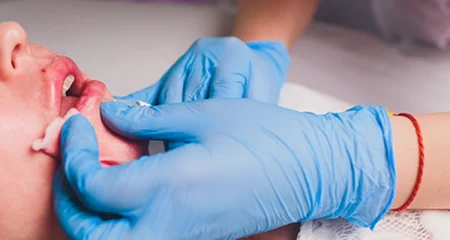


What Is Facial Implant Removal?
Facial implant removal is a surgical procedure used to take out a previously placed chin, jaw, cheek, or other facial implant when the implant is no longer wanted or has developed an aesthetic, structural, or medical problem. Removal may be performed without replacement, or it may form the first stage of a later facial reconstruction or implant revision.
Although removing an implant can sound simpler than placing one, secondary surgery may be technically challenging. Scar tissue can surround the implant, fixation screws may need to be removed, and the underlying bone and soft tissues may have changed since the original operation.
The final appearance after removal depends on the implant’s location, size, duration of placement, underlying facial anatomy, and the condition of the surrounding tissues.
Common Reasons for Removing a Facial Implant
Patients may request implant removal because their aesthetic preferences have changed or because the implant no longer suits their facial proportions.
Other reasons include implant displacement, asymmetry, excessive projection, visible or palpable edges, persistent discomfort, infection, exposure, or dissatisfaction with the original result.
Removal may also be appropriate when repeated attempts to reposition an implant have failed or when surrounding tissues can no longer provide suitable implant coverage.
Signs That a Facial Implant May Need to Be Removed
Potential warning signs include progressive pain, redness, unusual swelling, drainage, implant exposure, increasing asymmetry, or noticeable movement of the implant.
A facial implant that becomes increasingly visible or palpable can also require assessment, particularly when surrounding soft tissues have become thinner.
These findings do not automatically mean permanent removal is necessary. Examination and imaging may show that repositioning or replacement is possible instead.
Ideal Candidates for Facial Implant Removal
Candidates include patients who no longer want their facial implant as well as those experiencing implant-related complications.
The surgeon should determine why removal is being considered and whether taking out the implant alone will provide an acceptable facial contour.
Patients with very large implants, significant tissue stretching, skeletal changes, or multiple previous procedures may require additional correction after removal.
Chin Implant Removal and Facial Profile Changes
A chin implant increases anterior projection and sometimes chin width. Removing it therefore decreases the structural augmentation created by the implant.
The profile may return toward its preoperative appearance, although it may not look exactly as it did before implantation.
Long-standing implants can be associated with changes in surrounding tissues or underlying bone. The amount of visible change depends heavily on the original implant dimensions and natural chin anatomy.
Jaw Implant Removal and Lower-Face Contour
Jaw implants can substantially increase mandibular width, projection, or angle definition.
After jaw implant removal, the lower face may become narrower or less angular. Changes can be particularly noticeable when large bilateral implants have been used.
Soft tissues may require time to contract and adapt to the reduced underlying volume. Early postoperative contours therefore should not be considered permanent.
Cheek Implant Removal and Midface Appearance
Removing cheek implants reduces the structural projection they previously created over the midface.
The cheeks can temporarily look flatter than expected because the patient has become accustomed to the augmented appearance and because postoperative swelling changes facial proportions.
Large or long-standing implants may leave more noticeable changes in soft-tissue support than smaller implants.
Removing a Shifted or Malpositioned Facial Implant
An implant that has migrated away from its intended position can produce asymmetry, irregular projection, or visible edges.
The surgeon carefully releases scar tissue and removes the displaced implant. Existing screws or other fixation materials may also need to be addressed.
The implant pocket may require surgical management to encourage appropriate healing and reduce residual contour irregularity.
Facial Implant Removal Due to Infection or Complications
Infection is an important medical reason for considering implant removal.
Treatment depends on the severity and circumstances of the infection. Antibiotics and other management may be appropriate in selected situations, while persistent or significant implant-associated infection can require removal.
Immediate replacement is not always advisable. Allowing infected or inflamed tissues to heal before considering another implant can sometimes provide a safer environment for later reconstruction.
Managing Pain or Discomfort Associated with Facial Implants
Persistent implant-associated pain requires evaluation rather than assuming the implant itself is always responsible.
Potential causes can include displacement, pressure on surrounding tissues, inflammation, infection, fixation problems, nerve irritation, or unrelated dental and facial conditions.
When examination indicates that the implant is contributing to persistent symptoms, removal or revision may be considered.
What Happens to Facial Tissues After Implant Removal?
Soft tissues gradually adapt after the volume created by an implant is removed.
How completely they contract depends on implant size, location, duration of implantation, skin elasticity, previous operations, scar tissue, age, and individual healing characteristics.
Scar tissue forming the implant capsule may remain and can change during subsequent healing. Selected scar tissue may need surgical modification when it contributes to an abnormal contour.
Facial Changes to Expect After Removing an Implant
The most predictable change is loss of the projection or width previously provided by the implant.
The chin may appear less projected, the jaw narrower, or the cheeks flatter depending on the implant location.
Temporary swelling can make these changes difficult to evaluate initially. Patients should also remember that their natural face may have aged since the original augmentation, meaning removal does not necessarily recreate the exact pre-implant appearance.
Facial Implant Removal vs. Implant Revision
Implant removal eliminates the existing implant, whereas facial implant revision can involve repositioning, resizing, or replacing it.
Removal may be appropriate when augmentation is no longer desired or when complications make continued implantation unsuitable.
Revision is more relevant when the patient still wants structural augmentation but needs improvements in implant size, shape, position, or symmetry.
Implant Removal vs. Replacement with a New Facial Implant
Some patients choose to replace an unsuitable implant rather than eliminate augmentation completely.
A replacement may have different dimensions, projection, material, or design. Custom implants can also be considered when standard options do not correspond well with the patient’s anatomy.
In other situations, a staged approach may be recommended: the existing implant is removed first, tissues heal, and replacement is considered later.
Using Fat Grafting After Facial Implant Removal
Fat grafting can be considered for selected patients who want softer volume restoration without another facial implant.
Transferred fat can help improve localized depressions, contour transitions, or soft-tissue deficiencies.
However, fat does not reproduce the same rigid structural projection as a chin, jaw, or cheek implant. Some transferred fat is also naturally resorbed, making the final retained volume less predictable than a fixed implant.
Correcting Asymmetry After Implant Removal
Asymmetry after removal can originate from the underlying skeleton, different amounts of scar tissue, previous implant positioning, or unequal soft-tissue adaptation.
Minor irregularities may improve naturally as swelling resolves.
Persistent differences may require scar-tissue management, fat grafting, skeletal contouring, or another implant procedure depending on the underlying cause.
Restoring Natural Facial Contours Following Implant Removal
Restoration does not always require adding another implant.
When appropriate, the surgeon can manage the implant pocket, release problematic scar tissue, smooth selected skeletal irregularities, or redistribute soft tissues.
Fat grafting can sometimes help create smoother transitions. More significant structural deficiencies may require skeletal surgery or a newly designed implant if the patient wants continued augmentation.
Surgical Techniques Used for Facial Implant Removal
The surgical approach depends on where the original implant was placed.
Whenever practical, surgeons may use an existing intraoral, submental, or other previous incision to access the implant. Scar tissue surrounding the implant is carefully dissected while protecting nerves and other structures.
Fixation screws may be removed when necessary. The surgeon then evaluates the implant pocket, underlying bone, and surrounding tissues before closure.
Planning Facial Implant Removal Around Existing Scar Tissue
Scar tissue is one of the major differences between primary facial surgery and implant removal.
The amount and density of scar tissue can depend on implant location, previous operations, infection, implant mobility, and individual healing.
Aggressive scar removal is not always desirable because important nerves, muscles, and blood vessels may be nearby. Revision planning should balance adequate release with preservation of healthy tissue.
Facial Implant Removal Prices 2026
Facial Implant Removal Prices 2026 vary because removing a facial implant can range from straightforward extraction of a single uncomplicated implant to complex secondary surgery involving several implants, fixation screws, extensive scar tissue, or infection.
Frequently Asked Questions
Preparing for Facial Implant Removal Surgery
Preparation usually begins with examination of the implant location and surrounding facial structures.
CT or other imaging may be useful when the implant position, fixation, underlying bone, or previous surgical changes need detailed evaluation. Previous operative reports and information about implant manufacturer, size, and material can also be helpful.
Patients should disclose medications, supplements, allergies, nicotine use, dental problems, previous infections, fillers, fat grafting, and other facial procedures.
Facial Implant Removal Recovery and Healing Stages
Recovery varies considerably according to implant location and surgical complexity.Early symptoms commonly include swelling, bruising, tenderness, tightness, and temporary numbness. Removal of multiple jaw implants generally involves a different recovery experience from removal of a small chin implant.
Swelling and Tightness After Facial Implant Removal
Tightness can result from inflammation, scar-tissue manipulation, and changes within the previous implant pocket.The face can temporarily appear uneven as each side heals at a different rate. More extensive implant removal, particularly involving the jaw or multiple facial regions, may produce residual swelling for several months.
Returning to Work and Daily Activities After Implant Removal
Return to work depends on the location and complexity of the procedure.After relatively straightforward implant removal, some patients may feel comfortable returning to desk-based activities within approximately one to two weeks. Complex removal involving multiple implants, infection, or extensive scar tissue may require longer.
When the Face Reaches Its Final Appearance After Implant Removal
The immediate postoperative appearance is not a reliable indication of the final facial shape.Early swelling can temporarily conceal the reduction in projection or create asymmetry. As swelling decreases, the tissues gradually settle onto the underlying skeletal framework.
Factors That Influence Facial Shape After Implant Removal
The final contour depends on several variables, including the type and size of the removed implant, how long it was present, original facial anatomy, underlying bone, scar tissue, skin elasticity, and soft-tissue thickness.
Risks and Possible Complications of Facial Implant Removal
Facial implant removal carries surgical risks even when no replacement implant is inserted.Potential temporary effects include swelling, bruising, tenderness, tightness, numbness, and early asymmetry. Possible complications include bleeding, hematoma, infection, delayed wound healing, persistent pain, sensory changes, nerve injury, and unfavorable scarring.