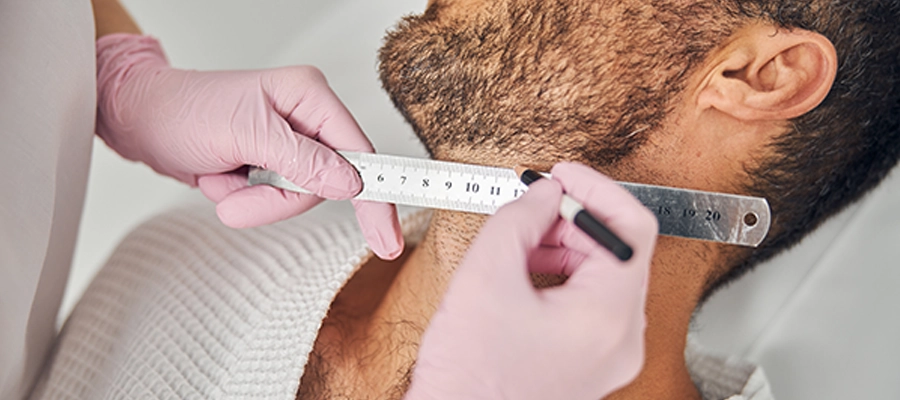
What Is Jaw Shaving and Contouring?
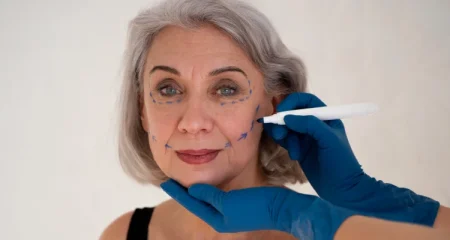
Jaw shaving and contouring is a facial bone surgery that reshapes selected areas of the mandible to reduce excessive width, soften prominent jaw angles, correct certain skeletal asymmetries, and create more balanced lower-face proportions. Depending on the anatomy, treatment may involve bone shaving, burring, mandibular angle reduction, osteotomy, or a combination of these techniques.
Unlike liposuction, which removes fat, jaw shaving directly modifies the underlying skeletal framework. It can therefore create long-lasting structural changes in facial width and jaw shape.
Successful treatment requires careful planning because the jaw contains important nerves and supports the teeth and surrounding soft tissues. The objective is controlled skeletal refinement rather than removing the maximum possible amount of bone.
Understanding Jaw Shape and Lower-Face Structure
The mandible determines much of the width, angle, and structural outline of the lower face. Its shape is influenced by the mandibular body, jaw angles, chin, dental relationships, and overall craniofacial anatomy.
However, bone is not the only factor determining jawline appearance. Masseter muscle thickness, facial fat, skin quality, jowling, and neck anatomy can make the lower face appear wider or less defined.
Before considering bone reduction, the surgeon should therefore determine whether excessive width comes primarily from bone, muscle, soft tissue, or a combination.
Reasons for Choosing Jaw Shaving and Contouring
Patients commonly consider jaw contouring because they feel their lower face appears excessively broad, square, angular, asymmetric, or disproportionate to the midface.
Some patients want to soften prominent mandibular angles, while others seek a smoother transition between the jaw and chin.
Jaw shaving may also form part of more comprehensive facial contouring when chin shape, facial width, or profile proportions require simultaneous correction.
Facial Concerns Treated with Jaw Contouring Surgery
Jaw contouring can address selected skeletal concerns including prominent jaw angles, excessive mandibular width, irregular bone contours, and certain forms of lower-face asymmetry.
It may also help create a smoother mandibular border or reduce an excessively angular lower face.
The procedure cannot directly correct every cause of a wide jaw. Large masseter muscles, thick facial fat, loose skin, and jowling may remain even after skeletal reduction and can require different treatments.
Ideal Candidates for Jaw Bone Shaving
Suitable candidates generally have a skeletal jaw shape that can safely be improved through controlled bone reduction.
Candidates should have realistic expectations and suitable general health. Detailed assessment of the mandible, chin, teeth, bite, facial nerves, muscles, and soft tissues is important before treatment.
Patients with significant bite abnormalities or broader maxillofacial problems may require orthognathic assessment because cosmetic jaw shaving does not correct the relationship between the upper and lower jaws.
Reducing a Wide or Square Jawline
A wide or square lower face can result from prominent mandibular angles, a broad mandibular body, enlarged masseter muscles, or combinations of these characteristics.
When skeletal width is the primary cause, carefully planned bone reduction can narrow selected areas of the jaw.
The degree of narrowing should remain proportional to the cheekbones, chin, and overall facial structure. Excessive reduction can create unnatural proportions or compromise smooth lower-face contours.
Creating a Slimmer and More Defined Lower Face
Jaw shaving can create a slimmer lower face by reducing excessive skeletal width.
However, a narrower jaw is not automatically a more defined jawline. Definition also depends on skin elasticity, subcutaneous fat, jowls, and the relationship between the mandible and neck.
Some patients therefore require separate soft-tissue treatment if their objective includes both skeletal narrowing and sharper mandibular definition.
Reshaping the Mandibular Angle for Facial Balance
The mandibular angle is located toward the posterior lower jaw and strongly influences the shape of the lower face.
A prominent or laterally projecting angle can create a wider, squarer appearance from the front. Its vertical position also affects the side profile.
Contouring the angle can soften this region, but enough structure should remain to preserve a natural transition from the mandibular body toward the back of the jaw.
Correcting Jawline Asymmetry with Bone Contouring
Selected skeletal asymmetry can be improved by reducing more bone on the relatively prominent side.
Three-dimensional evaluation can help identify differences in mandibular width, angle position, chin alignment, and skeletal projection.
Perfect symmetry cannot always be achieved because facial muscles and soft tissues may also differ between sides. Significant asymmetry may additionally involve dental or skeletal relationships requiring more extensive treatment.
Jaw Shaving Techniques and Surgical Approaches
Jaw shaving techniques vary according to the location and extent of skeletal reduction required.
The surgeon may use specialized surgical burs, saws, or osteotomy instruments to modify selected areas of the mandible. Intraoral incisions are commonly used for certain approaches, helping avoid external scars.
The surgical plan should consider bone thickness, tooth roots, the inferior alveolar nerve, mental nerves, and surrounding structures.
Mandibular Angle Reduction for Jawline Reshaping
Mandibular angle reduction specifically targets prominent posterior jaw angles.
The surgeon removes or reshapes selected portions of the angle to decrease width or angularity. Depending on anatomy, the reduction can extend along part of the mandibular border to create a smoother transition.
Overly isolated angle removal can create an unnatural step or irregular contour, making careful planning of the entire mandibular line important.
V-Line Jaw Contouring for a Narrower Facial Shape
V-line jaw contouring is a broader lower-face reshaping concept that may involve the mandibular angles, jaw body, chin, or several areas together.
The objective is usually to create a narrower transition from the jaw toward the chin.
V-line surgery is not one standardized operation. Some patients need primarily angle reduction, while others require chin osteotomy or additional mandibular contouring. The technique should therefore be adapted to individual anatomy.
Achieving Natural-Looking Results with Jaw Reduction Surgery
Natural-looking jaw reduction depends on maintaining harmony between the lower face, cheeks, chin, and neck.
The surgeon should avoid reducing the jaw solely according to a predetermined ideal width. Facial height, cheekbone prominence, chin shape, muscle thickness, and soft-tissue characteristics all influence appropriate dimensions.
Smooth skeletal transitions are particularly important because abrupt changes can become visible as postoperative swelling resolves.
Jaw Shaving for Better Facial Profile Balance
Although jaw shaving frequently changes frontal facial width, it can also influence profile and three-quarter appearance.
Reducing an excessively prominent mandibular angle can soften the posterior lower-face contour. Chin position and mandibular length should also be evaluated because these structures affect how the new jawline appears from the side.
Comprehensive profile analysis helps avoid creating imbalance between a narrowed jaw and an untreated chin.
Jaw Shaving vs. Mandibular Angle Reduction
The terms overlap but do not always describe exactly the same procedure.
Jaw shaving is a broader term that can refer to contouring different portions of the mandibular border. Mandibular angle reduction specifically focuses on reducing the prominent posterior angles of the jaw.
Some patients require only angle reduction, while others need a longer segment of the mandible reshaped to achieve a smooth and proportional result.
Jaw Shaving vs. Jawline Liposuction
Jaw shaving reduces skeletal width, whereas jawline liposuction removes appropriate deposits of superficial fat.
Liposuction can improve definition when fat obscures an otherwise suitable mandibular structure. It cannot narrow genuinely prominent jaw bones.
Conversely, shaving bone does not remove submental or jawline fat. Patients with both concerns may require a carefully planned combination of skeletal and soft-tissue procedures.
Jaw Contouring vs. Non-Surgical Jawline Reshaping
Non-surgical jawline contouring can involve fillers or treatments directed at specific soft-tissue concerns.
Fillers add volume and therefore cannot reduce an excessively wide mandibular skeleton. They may instead improve selected contour deficiencies or create the appearance of greater definition.
Treatments that reduce masseter muscle activity may narrow a lower face when muscle bulk contributes significantly to width, but they do not physically reduce jaw bone.
Jaw Shaving and Contouring Prices 2026
Jaw Shaving and Contouring Prices 2026 vary considerably because jaw contouring can describe anything from limited mandibular border refinement to extensive bilateral angle reduction and V-line facial surgery.
Frequently Asked Questions
Combining Jaw Shaving with Chin Contouring
Jaw and chin contouring are frequently considered together because both structures form the continuous lower facial border.
Combining Jaw Contouring with Facial Profile Harmonization
Jaw contouring can form part of broader facial profile harmonization when several structures contribute to disproportion.Depending on anatomy, treatment may involve chin contouring, rhinoplasty, facial fat grafting, neck contouring, or other procedures alongside mandibular reshaping.
Preparing for Jaw Shaving and Contouring Surgery
Preparation generally involves detailed facial examination and imaging of the mandible.The surgeon evaluates bone dimensions, symmetry, tooth roots, nerve pathways, dental relationships, chin position, and surrounding soft tissues. Three-dimensional CT imaging may be particularly useful for surgical planning.
Jaw Shaving and Contouring Recovery Stages
Early recovery commonly involves considerable swelling, tightness, bruising, tenderness, and temporary changes in facial sensation.When intraoral incisions are used, patients may receive specific instructions regarding oral hygiene and diet.
Swelling and Numbness After Jaw Bone Contouring
Swelling is typically most pronounced during the first several days after jaw bone contouring.A significant amount usually improves during the following weeks, although residual swelling can remain for several months after extensive surgery.
Returning to Work and Exercise After Jaw Shaving
Patients commonly require approximately two weeks or longer before returning to work and social activities, particularly when visible swelling is a concern.More extensive V-line or combined chin surgery can require additional recovery.
When Jaw Contouring Results Begin to Look Natural
Skeletal changes occur during surgery, but postoperative swelling initially hides the final jaw shape.The lower face typically becomes noticeably slimmer as swelling decreases during the first several weeks. More refined contours develop progressively over subsequent months.
Longevity of Jaw Shaving and Contouring Results
The skeletal changes produced through jaw shaving and contouring are generally permanent because surgically removed mandibular bone does not normally regenerate to its original shape.However, facial appearance continues changing with aging. Weight changes, skin laxity, facial fat distribution, muscle volume, and jowling can alter the visible jawline over time.
Risks and Possible Complications of Jaw Shaving Surgery
Potential temporary effects include swelling, bruising, tightness, tenderness, numbness, and early asymmetry.
Jaw Shaving and Contouring Prices 2026
Jaw Shaving and Contouring Prices 2026 vary considerably because jaw contouring can describe anything from limited mandibular border refinement to extensive bilateral angle reduction and V-line facial surgery.