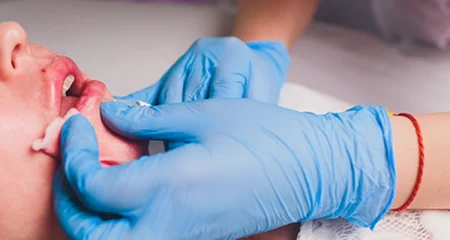


What Is Custom Facial Implant Surgery?
Facial implants can be individually designed to improve skeletal contours, restore structural deficiencies, or create better balance between facial features. Instead of relying on predetermined implant shapes, Custom Facial Implant Surgery uses patient-specific planning to create implants that correspond more closely to an individual’s anatomy.
The process commonly begins with detailed facial assessment and three-dimensional imaging of the underlying bones. These records help determine where additional projection, width, symmetry, or structural support may be appropriate.
Custom implants may be considered for cosmetic facial contouring, congenital differences, post-traumatic deformities, or selected reconstructive needs. Chin, jaw, cheek, and other skeletal regions can potentially be treated depending on the anatomy.
Results depend on implant design, surgical placement, soft-tissue characteristics, bone structure, and healing. Careful planning is therefore essential for achieving balanced facial proportions rather than simply increasing facial volume.
How Does Custom Facial Implant Surgery Work?
Treatment begins with an assessment of facial proportions, skeletal anatomy, soft tissues, and the changes the patient wants to achieve. Three-dimensional imaging is typically incorporated into Custom Facial Implant Surgery planning so the underlying facial bones can be studied from multiple angles.
Digital models allow the implant’s thickness, projection, borders, and relationship with surrounding structures to be planned before surgery. Once the design is finalized, the patient-specific implant is manufactured according to the selected specifications.
During surgery, the implant is positioned directly over the planned facial bone. Depending on the treatment area, access may be created through an incision inside the mouth or through a carefully selected external approach.
Secure positioning is important because movement can affect symmetry and contour. Swelling is expected during early recovery, so the final facial shape becomes clearer gradually as tissues settle.
Who Is a Good Candidate for Custom Facial Implants?
People with facial skeletal asymmetry, limited projection, structural deficiencies, or contour differences may be considered for patient-specific implants. When anatomy cannot be adequately addressed with a conventional implant, Custom Facial Implant Surgery may provide greater control over shape, dimensions, and coverage.
Candidates may include individuals seeking chin, jawline, cheek, or other skeletal contour changes. Custom implants can also be considered in selected reconstructive cases involving congenital differences, previous trauma, or residual asymmetry after earlier procedures.
Good general health and realistic expectations are important. Active infections, untreated dental problems near an intraoral surgical site, or medical conditions that significantly interfere with healing may need attention before surgery.
Not every facial concern requires an implant. Soft-tissue treatments, fat grafting, skeletal surgery, or other approaches may be more appropriate depending on the underlying cause.
What Areas of the Face Can Be Enhanced With Custom Implants?
Different parts of the facial skeleton can be treated when additional projection, width, support, or correction of asymmetry is required. Depending on individual anatomy, Custom Facial Implant Surgery can be planned for the chin, jawline, mandibular angles, cheeks, midface, or selected areas around the orbital region.
Chin implants can modify forward projection, width, or asymmetry. Jawline and mandibular angle implants may create changes along the lower facial contour, while cheek implants can increase skeletal projection in the midface.
More complex patient-specific designs may extend across multiple anatomical regions. These larger implants require careful consideration of nerves, muscles, bone surfaces, and surrounding soft tissues.
The appropriate treatment area depends on the source of the facial imbalance. Increasing volume alone may not correct significant bite problems or major skeletal discrepancies, which can require different surgical approaches.
Types of Custom Facial Implants
Patient-specific implants can be categorized according to the facial region and the structural change they are designed to produce. Common options include custom chin, jawline, mandibular angle, cheek, midface, and selected orbital implants. During Custom Facial Implant Surgery, one region or several connected areas may be addressed depending on the treatment plan.
Chin designs can modify projection, height, width, and asymmetry. Jawline implants may extend along portions of the mandible, while angle implants focus more specifically on the posterior lower jaw.
Cheek and midface designs can alter skeletal projection or correct differences between the two sides. Reconstructive implants may have more complex shapes when replacing or augmenting irregular bone contours.
Implant categories should not be viewed as interchangeable. Facial anatomy, treatment goals, soft-tissue thickness, and nearby anatomical structures determine which design is appropriate.
How Are Custom Facial Implants Designed?
Design begins with detailed three-dimensional information about the patient’s facial skeleton. Imaging data can be converted into a digital anatomical model, allowing Custom Facial Implant Surgery to be planned around the actual contours of the underlying bone.
The desired change is then evaluated digitally. Implant borders, thickness, projection, symmetry, and transitions into surrounding bone can be adjusted before manufacturing. Important anatomical structures, including nerve pathways and tooth roots in relevant areas, must also be considered.
A custom design does not mean that maximum projection should be added everywhere. Gradual transitions and proportions that match the rest of the face are important for avoiding an unnatural or overly augmented appearance.
Once the final design has been approved for production, the implant is manufactured from the selected biocompatible material. Surgical planning then focuses on accurate placement in the predetermined anatomical position.
Custom Facial Implants vs Standard Facial Implants
The main difference involves how closely the implant corresponds to an individual patient’s skeletal anatomy. Standard implants are manufactured in predetermined shapes and sizes, whereas Custom Facial Implant Surgery uses an implant designed from patient-specific anatomical information.
Standard implants can work well when the required change closely matches an available shape. They may also involve a simpler planning and manufacturing process.
Custom designs offer additional control when significant asymmetry, unusual bone contours, previous surgery, trauma, or complex augmentation requirements are present. Their borders and dimensions can be adjusted to fit a particular skeletal surface.
Neither option is automatically appropriate for every patient. A custom implant involves additional digital planning and manufacturing, while some straightforward contour concerns can be treated effectively with standard options. Selection should depend on anatomy and the specific structural objective.
What Are Custom Facial Implants Made Of?
Patient-specific facial implants can be manufactured from biocompatible materials selected according to the treatment area and surgical requirements. Depending on the planned Custom Facial Implant Surgery, materials may include medical-grade silicone, porous polyethylene, or other implantable materials suitable for facial reconstruction and augmentation.
Different materials have different physical characteristics. Some are relatively smooth and flexible, while porous materials allow varying degrees of tissue integration. Material choice can influence surgical handling, fixation, removal, and long-term tissue interaction.
The shape of the implant is just as important as its composition. Thickness, edge transitions, surface characteristics, and contact with the underlying bone must be considered during design.
No implant material eliminates every potential complication. Infection, displacement, contour irregularity, tissue reactions, or the need for revision can occur, making appropriate material selection and surgical planning important.
Benefits of Custom Facial Implant Surgery
A patient-specific approach allows facial augmentation to be planned according to individual skeletal dimensions rather than predetermined implant shapes. For complex anatomical differences, Custom Facial Implant Surgery can provide detailed control over projection, width, symmetry, borders, and the transition between augmented and untreated areas.
Digital planning may be particularly useful when correcting asymmetry or addressing facial contours affected by previous trauma or surgery. Multiple dimensions can be assessed before the implant is manufactured.
Custom designs can also reduce the need to manually modify a standard implant during surgery. A closer fit against the intended bone surface may help the surgeon reproduce the preoperative plan more accurately.
These advantages do not guarantee a particular cosmetic result. Soft-tissue thickness, healing, implant positioning, facial movement, and individual anatomy continue to influence the final appearance and long-term outcome.
Custom Facial Implant Surgery Results
Visible changes depend on the treated facial region, implant dimensions, underlying skeletal anatomy, and soft-tissue thickness. When appropriately planned, Custom Facial Implant Surgery can improve projection, contour, structural balance, or asymmetry while maintaining proportions with surrounding facial features.
Chin augmentation may change lower-face projection and profile balance, while jaw implants can modify width or definition. Cheek and midface implants can provide additional skeletal projection in areas where structural volume is limited.
Results should not be judged immediately after surgery because swelling can temporarily exaggerate or obscure the new contours. As inflammation decreases and the tissues adapt, facial definition becomes progressively clearer.
Long-term appearance also depends on implant position, tissue changes, aging, and healing. Patient-specific design can improve control over skeletal contour, but it cannot guarantee perfect symmetry or prevent normal age-related facial changes.
Custom Facial Implant Surgery Before and After
Preoperative and postoperative comparisons can demonstrate changes in facial projection, symmetry, width, and overall skeletal contour. Because each implant is individually designed, before-and-after evaluation following Custom Facial Implant Surgery should focus on the original anatomical concern and the specific correction that was planned.
Standardized photographs from the front, profile, and angled views can help document changes accurately. Three-dimensional imaging may also provide additional information in selected cases.
Early postoperative photographs should be interpreted carefully. Swelling, bruising, and temporary soft-tissue changes can make the face appear wider or less symmetrical during initial recovery.
More meaningful comparisons are generally possible after swelling has substantially decreased and tissues have settled. Outcomes vary between patients, so another person’s before-and-after result cannot reliably predict the degree of change achievable in a different facial structure.
Custom Facial Implant Surgery Prices 2026
Treatment cost varies because patient-specific implants require individualized imaging, digital planning, manufacturing, surgery, and postoperative care. In 2026, Custom Facial Implant Surgery prices can therefore differ considerably according to the facial region being treated and the complexity of the required design.
A relatively limited chin implant and a custom implant extending across multiple areas of the jaw do not involve the same planning or manufacturing requirements. Complex asymmetry, previous facial surgery, traumatic deformities, or reconstructive cases may require more extensive digital design.
The selected implant material can also influence overall cost. Additional factors may include three-dimensional imaging, virtual surgical planning, anesthesia, operating facility requirements, fixation materials, and postoperative monitoring.
Revision procedures can be more complex because existing implants, scar tissue, altered anatomy, or previous fixation may need to be addressed. Some patients may also require additional procedures to achieve their intended structural correction.
Price alone does not indicate whether a particular implant design is appropriate. Treatment planning should consider facial anatomy, material characteristics, surgical complexity, long-term stability, potential revision needs, and the extent of the intended correction.
Frequently Asked Questions
Is custom facial implant surgery painful?
Anesthesia is used during the operation, so significant pain is generally controlled while the procedure is performed. During early recovery from Custom Facial Implant Surgery, swelling, tightness, tenderness, or moderate discomfort may occur and usually improves as healing progresses.
Pain levels vary according to the implant location and surgical extent. Severe or progressively worsening pain should be medically evaluated.
How long do custom facial implants last?
Facial implants are generally designed for long-term placement rather than routine replacement after a fixed number of years. When healing is uncomplicated, implants placed through Custom Facial Implant Surgery may remain in position for many years.
Longevity can still be affected by infection, trauma, displacement, tissue changes, or other complications. Long-lasting placement therefore cannot be guaranteed for every patient.
Can custom facial implants be removed?
Removal is generally possible if an implant causes complications, no longer meets the patient’s goals, or needs to be addressed for another medical reason. Because Custom Facial Implant Surgery changes the relationship between the implant and surrounding tissues, removal may be more complex after long-term healing.
Scar tissue and tissue adaptation can influence the procedure. Facial appearance after removal may also differ from the appearance before implantation.
Can custom facial implants be replaced or revised?
Revision can be considered when implant position, contour, symmetry, size, or another clinical issue needs correction. Depending on the problem, Custom Facial Implant Surgery may involve repositioning the existing implant, removing it, or designing a new patient-specific replacement.
Revision procedures can be more complicated than initial surgery because scar tissue and altered anatomy may be present. The appropriate approach depends on the reason for revision.
How long does it take to make a custom facial implant?
Production time varies according to imaging, digital design, design approval, material selection, and manufacturing requirements. Before Custom Facial Implant Surgery can take place, the three-dimensional model and final implant specifications generally need to be completed in advance.
Complex designs may require additional planning or modifications. Manufacturing time should therefore be considered separately from the surgical and postoperative recovery periods.
How long does facial implant recovery take?
Initial swelling and tenderness usually improve progressively during the first weeks, although recovery varies with the treated region and surgical extent. Following Custom Facial Implant Surgery, some residual swelling and tissue firmness can remain after the early healing period.
Returning to normal activities and achieving complete tissue settling are different milestones. More extensive jaw, cheek, or multi-region procedures may require a longer recovery period.
When will I see the final results?
An immediate contour change may be visible after surgery, but early swelling prevents an accurate assessment of the final appearance. As healing progresses after Custom Facial Implant Surgery, the implant contours generally become easier to evaluate over the following weeks and months.
Subtle swelling can persist longer than obvious swelling. For this reason, the final result should be assessed only after the tissues have sufficiently settled and adapted to the new skeletal contour.