

What Is an Endoscopic Brow Lift?
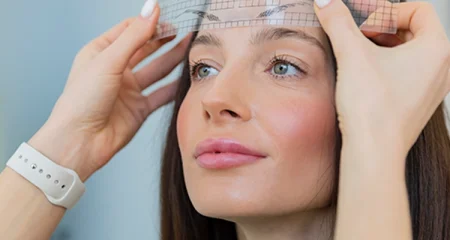
An endoscopic brow lift is a surgical procedure that elevates descended forehead and eyebrow tissues through several small incisions, usually hidden within the hair-bearing scalp. A small camera helps the surgeon visualize deeper structures while releasing and repositioning selected tissues.
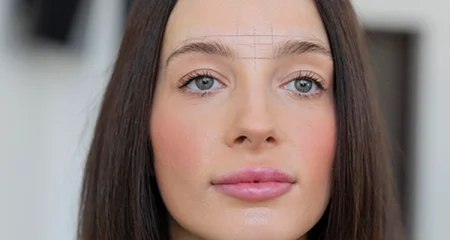
The procedure can improve low brows, lateral brow descent, and heaviness around the upper eyes. Unlike techniques requiring longer scalp incisions, the endoscopic approach provides limited-access treatment while still allowing deeper tissue repositioning. The amount and direction of elevation are customized according to forehead height, brow shape, hairline position, eye anatomy, and facial expression.
How Brow Position Changes the Expression of the Upper Face
Eyebrow position strongly influences whether the upper face appears open, tired, heavy, or alert. Even relatively small changes in brow height can alter the relationship between the forehead and eyes.
A low brow may create additional fullness above the upper eyelids, while excessive elevation can produce an unnatural or surprised expression. Surgical planning therefore considers the entire brow rather than simply aiming to position it higher. Natural asymmetry, eye shape, forehead dimensions, and muscle activity all influence the ideal brow position.
Why the Brows Begin to Descend with Age
Eyebrows can gradually descend as skin elasticity decreases and the supporting soft tissues of the forehead change with age. Genetics, facial anatomy, sun exposure, and repetitive muscle activity may also influence this process.
The outer portion of the eyebrow can sometimes descend more noticeably than the inner brow. This may increase lateral upper-eyelid hooding and change the natural brow curve. Treatment should distinguish true brow descent from excess eyelid skin because these concerns require different surgical approaches.
Lifting the Forehead Through Small Hidden Incisions
Endoscopic forehead surgery generally uses several short incisions positioned within or close to the hair-bearing scalp. These access points allow specialized instruments and an endoscope to reach the deeper forehead tissues.
Because the incisions are relatively small, scars can usually be concealed within the hair. However, the procedure is still surgery, and scar visibility depends on hair density, incision placement, skin characteristics, and healing. Hairline position and the possibility of future hair thinning should also be considered when planning access points.
Repositioning the Brow Without Creating a Surprised Look
Natural brow repositioning depends on controlling both the amount and direction of elevation. The goal is generally to restore a balanced position rather than simply lift the eyebrows as high as possible.
The central and outer portions of the brow may require different degrees of correction. Excessive central elevation can create a surprised appearance, while aggressive lateral elevation can produce an unnatural arch. Preoperative assessment considers existing brow shape, forehead height, eye position, and natural facial expression.
Treating Heavy Brows and a Tired Eye Appearance
Low or heavy eyebrows can make the upper eye area appear crowded and may contribute to a tired expression. An endoscopic brow lift can reposition descended tissues and create more space between the brow and upper eyelid.
Not every tired-looking eye is caused by brow position. Upper-eyelid skin excess, volume changes, eyelid ptosis, or under-eye concerns can also contribute. Identifying the anatomical source of heaviness helps determine whether brow surgery, eyelid treatment, or a combination is more appropriate.
Improving Outer Brow Droop with Endoscopic Elevation
Lateral brow descent can create heaviness around the outer upper eyelid and alter the eyebrow’s natural shape. Controlled endoscopic elevation can reposition this area while maintaining a balanced relationship with the central brow.
The amount of correction depends on brow anatomy and the desired result. Some patients need only modest lateral elevation, while others have broader forehead descent requiring more extensive repositioning. Excessive elevation should be avoided because it can create an exaggerated arch or change the natural character of the upper face.
How Brow Lift Surgery Can Reduce Upper Eyelid Heaviness
When brow descent pushes soft tissue downward toward the upper eyelids, repositioning the forehead can reduce some of the apparent hooding.
This does not mean brow surgery replaces blepharoplasty in every case. True excess eyelid skin remains after the eyebrow is returned to an appropriate position. A careful examination can determine how much heaviness comes from brow descent and how much originates within the eyelid itself.
The Role of Forehead Muscles in Brow Position
Forehead muscles play an important role in eyebrow movement and facial expression. The frontalis muscle elevates the eyebrows, while other muscles contribute to brow depression and frowning.
Some people unconsciously activate the forehead muscles to compensate for naturally low or descended brows. This can contribute to prominent horizontal forehead lines. Surgical planning considers these muscle relationships because changing brow position can alter the way the upper face looks both at rest and during expression.
Endoscopic Release of Brow Retaining Tissues
Certain tissue attachments help maintain the position of the forehead and brow. During surgery, selected retaining structures can be released to allow controlled tissue movement.
The tissues can then be elevated and secured in a planned position. The objective is to create adequate mobility without unnecessary dissection. The amount of release depends on anatomy, degree of brow descent, previous surgery, and the direction of correction required.
Creating Better Symmetry Between the Eyebrows
Most faces naturally have some difference in eyebrow height, shape, or muscle activity. Brow surgery can sometimes reduce noticeable asymmetry by adjusting each side independently.
Perfect symmetry cannot be guaranteed. Differences in bone structure, muscle movement, eye position, and healing can remain after surgery. Early postoperative swelling can also temporarily make one eyebrow appear higher than the other. Final symmetry becomes easier to evaluate as tissues settle.
Preserving a Natural Brow Arch During Surgery
A natural brow arch depends on the relationship between its inner, central, and outer portions. Surgical elevation should preserve these proportions rather than create a standardized eyebrow shape.
The desired contour can also differ according to facial anatomy and individual aesthetic preferences. Fixation direction and the amount of tissue movement influence the final arch. Conservative planning helps prevent excessive lateral elevation or an unnaturally high central brow.
Endoscopic Brow Lift for Early and Moderate Upper-Face Aging
An endoscopic brow lift can be suitable for selected patients with early to moderate brow descent who still have relatively good skin elasticity.
It may be particularly useful when the concern involves brow position rather than substantial excess forehead skin. Hairline position, forehead height, hair density, previous surgery, and degree of tissue laxity can affect candidacy. More advanced upper-face aging may sometimes require a different or more extensive surgical approach.
Endoscopic Brow Lift vs. Temporal Lift
These procedures overlap but generally treat different amounts of the upper face. A temporal lift focuses mainly on the outer eyebrow and temple, while broader endoscopic brow surgery can reposition central and lateral forehead tissues.
A temporal approach may be appropriate when only the brow tail has descended. More generalized brow descent may benefit from wider forehead treatment. The choice depends on where the eyebrow has dropped and how much correction is necessary.
Endoscopic Brow Lift vs. Direct Brow Lift
A direct brow lift uses an incision immediately above or close to the eyebrow, providing direct control over brow position. Endoscopic surgery usually uses scalp incisions instead.
Direct techniques can provide effective correction in selected cases but leave scars closer to the eyebrows. Scalp-based approaches avoid a direct eyebrow scar but require different tissue dissection and fixation. Brow anatomy, hairline, skin characteristics, degree of descent, and scar considerations influence technique selection.
Endoscopic Brow Lift vs. Traditional Coronal Brow Lift
A traditional coronal brow lift generally uses a longer incision across the scalp, whereas the endoscopic technique uses several smaller access incisions.
The coronal approach can provide broad exposure and may be useful for specific patterns of forehead aging. However, it can also influence hairline position and involves a longer incision. Neither technique is automatically better. Forehead height, hairline anatomy, tissue laxity, previous surgery, and treatment goals determine the appropriate method.
When Blepharoplasty Alone May Not Correct a Heavy Brow
Upper blepharoplasty removes selected excess eyelid skin but does not reposition a descended eyebrow. If brow descent is an important cause of upper-eye heaviness, treating the eyelid alone may leave part of the original concern unchanged.
Brow position should therefore be assessed before deciding how much eyelid skin to remove. In some patients, restoring brow position provides sufficient improvement. Others have both brow descent and genuine eyelid skin excess and may benefit from combined treatment.
Combining Endoscopic Brow Lift with Upper Eyelid Surgery
An endoscopic brow lift with upper blepharoplasty can address both descended eyebrows and excess upper-eyelid skin when these problems occur together.
The procedures should be planned as a unit because changing brow height affects how much eyelid skin remains. Conservative eyelid removal is particularly important when simultaneous brow elevation is planned. The combination can create a more open upper-eye region without relying on excessive correction of either structure individually.
Endoscopic Brow Lift Prices 2026
Endoscopic Brow Lift Prices 2026 vary according to surgical complexity, location, anesthesia, treatment extent, and whether other facial procedures are performed.
Can It Raise Only the Outer Part of the Brow?
Yes, selected patients can have treatment focused primarily on the lateral or outer portion of the eyebrow. This approach may be useful when the brow tail has descended while the central and inner brow remain appropriately positioned.
Will an Endoscopic Brow Lift Make My Forehead Look Bigger?
Not necessarily. Brow elevation can expose slightly more space between the eyebrows and hairline, which may make the forehead appear somewhat taller in certain patients.
Does Brow Lift Surgery Change the Shape of the Eyes?
Brow surgery does not directly reshape the eyeball, but changing the position of surrounding tissues can alter how the eyes appear.