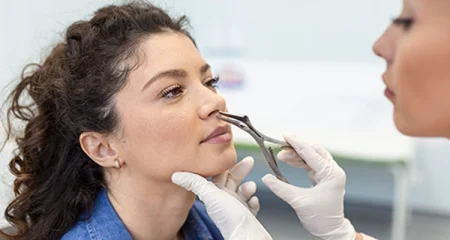


What Is Feminine Rhinoplasty?
Nasal surgery designed around softer proportions and an individual’s preferred facial balance is commonly described as feminine rhinoplasty. Treatment may modify the bridge, tip, nostrils, width, projection, or internal nasal structures. The procedure does not follow one universal definition of a feminine nose. Instead, planning considers facial anatomy, personal preferences, nasal function, and the features someone wants to preserve.
Some people prefer a refined tip, smoother bridge, narrower appearance, or subtle upward tip rotation. However, these characteristics are not suitable or desirable for everyone. Skin thickness, cartilage strength, facial width, and chin projection influence how nasal changes appear. Functional problems may also be corrected when structural abnormalities restrict breathing. The overall goal is a balanced result that complements surrounding facial features without creating an artificial or standardized appearance.
Why Is Feminine Rhinoplasty Performed?
People may consider nasal surgery to create softer proportions, improve facial balance, correct asymmetry, or address breathing difficulties. Cosmetic feminine rhinoplasty can modify bridge shape, nasal width, tip definition, projection, or nostril proportions. Some people want subtle refinement, while others seek more noticeable structural changes. Previous injuries can also create visible differences or functional problems requiring correction.
The desired result depends on individual preferences rather than fixed gender-based measurements. A smoother bridge or refined tip may suit one face but appear unbalanced on another. Functional correction can accompany cosmetic changes when internal structures restrict airflow. Surgery may also strengthen areas where cartilage support is insufficient. Treatment goals should consider the relationship between the nose and surrounding facial features. Personal preferences, anatomy, breathing function, skin characteristics, and structural stability ultimately determine why specific changes are performed.
Who Is a Good Candidate for Feminine Rhinoplasty?
People with developed facial structures, suitable general health, and realistic appearance goals may be candidates for feminine rhinoplasty. Candidates may want softer nasal proportions, improved symmetry, structural correction, or better breathing. The procedure is not limited by gender because personal appearance preferences vary widely. Facial and nasal growth should generally be sufficiently complete before elective structural changes are considered.
Skin thickness, cartilage strength, previous injuries, and existing facial proportions influence what changes may be achievable. Smoking and certain health conditions can affect tissue healing during recovery. Expectations should focus on balanced improvement rather than perfect symmetry or a standardized nasal shape. Existing breathing function should also be considered before cosmetic structures are changed. Suitability ultimately depends on health, anatomy, nasal development, personal preferences, and realistic treatment goals rather than gender alone.
What Features Define a Feminine Nose?
A smooth bridge, refined tip, balanced width, and subtle tip rotation are often associated with feminine nose features. However, no single nasal shape or measurement defines femininity for everyone. Bridge height and tip projection should remain proportional to the surrounding facial structures. Excessive reduction can create imbalance even when a smaller appearance is desired.
The nose should be considered together with the forehead, cheeks, lips, chin, and overall facial width. Skin thickness can influence how clearly tip refinement becomes visible. Cartilage strength also affects projection and long-term structural support. Some people prefer a straight bridge, while others want a gentle curve. Personal preference remains more important than conventional descriptions of feminine proportions. A balanced appearance therefore depends on individual anatomy and the relationship between nasal features and the rest of the face.
What Concerns Can Feminine Rhinoplasty Address?
Bridge prominence, excessive width, tip concerns, asymmetry, nostril differences, and breathing problems may be addressed through feminine rhinoplasty. A prominent hump can be reduced when a smoother profile is desired. A broad or poorly defined tip may also be refined according to skin and cartilage characteristics. Tip rotation or projection can be adjusted when existing proportions appear unbalanced.
Nasal width and nostril shape may also be modified when appropriate. Previous injuries can create deviation that affects both appearance and breathing. Structural correction may improve airflow when internal narrowing contributes to obstruction. Some people want smaller proportions without dramatically changing their recognizable appearance. Others prefer refinement in only one specific area. No fixed set of corrections applies to everyone. The treatment plan depends on facial proportions, nasal structure, skin thickness, breathing function, and individual preferences.
How Is Feminine Rhinoplasty Different from Traditional Rhinoplasty?
The surgical methods are similar, but feminine rhinoplasty specifically considers proportions and contours the individual associates with a softer appearance. Traditional nasal surgery also addresses facial balance, anatomy, function, and personal goals. The primary difference lies in the desired outcome rather than completely separate surgical techniques. Bridge contour, tip rotation, projection, and width may receive particular attention.
Open and closed approaches can both be used depending on structural requirements. Cartilage may be reshaped, reduced, repositioned, or strengthened according to existing anatomy. Functional correction can also accompany cosmetic refinement when breathing problems are present. A feminine result does not automatically require a small nose or strongly rotated tip. Individual facial proportions remain more important than standardized measurements. Surgical planning should therefore reflect personal preferences while maintaining appropriate structural support and nasal function.
How Is Feminine Rhinoplasty Performed?
After facial proportions and treatment goals are evaluated, feminine rhinoplasty is performed by modifying selected nasal bone, cartilage, and supporting structures. An open or closed approach may be chosen according to the required access. A prominent bridge can be reshaped, while tip cartilage may be refined or repositioned. Nasal width and nostril proportions can also be adjusted when appropriate.
Cartilage support may be preserved or added to maintain long-term structural stability. Functional structures can also be treated when breathing difficulties are present. The amount of reduction depends on existing anatomy rather than a predetermined feminine measurement. Once the planned changes are completed, tissues are repositioned and incisions are closed. A splint may support the nose during early healing. Final contours develop gradually because swelling temporarily hides smaller refinements after surgery.
How Can Feminine Rhinoplasty Create a Softer Nasal Profile?
Careful adjustments to bridge contour, tip position, projection, and width can create a softer appearance during feminine rhinoplasty. A prominent hump may be reduced while maintaining enough structural support for balanced proportions. The bridge can sometimes be smoothed without creating an excessively low profile. Tip refinement may also improve definition and create subtle rotation when appropriate.
A softer profile does not necessarily mean making every part of the nose smaller. Excessive reduction can weaken support or create proportions that appear unnatural. The relationship between the nose, forehead, lips, and chin should guide profile changes. Skin thickness also influences how clearly underlying structural refinements become visible. Personal preferences remain essential because different people define softness differently. The intended result should combine desired contours with stable support, natural facial relationships, and appropriate breathing function.
Can Feminine Rhinoplasty Improve Breathing?
Yes, breathing can improve when feminine rhinoplasty includes correction of structural abnormalities that restrict nasal airflow. A deviated septum may narrow one or both nasal passages. Weak or narrow nasal valves can also contribute to obstruction. Previous trauma may affect internal structures while changing the external appearance of the nose.
Functional treatment may involve correcting the septum, strengthening nasal valves, or improving cartilage support. External changes can sometimes help when nasal shape contributes directly to airway narrowing. Cosmetic refinement should maintain enough structural support for normal breathing. However, surgery does not treat every cause of nasal congestion. Allergies and inflammation can continue affecting airflow even after structural correction. Early swelling may also temporarily restrict breathing after surgery. Functional improvement becomes clearer as internal tissues recover and swelling gradually decreases.
How Should You Prepare for Feminine Rhinoplasty?
Health history, medications, breathing function, smoking habits, and appearance goals should be carefully reviewed before feminine rhinoplasty. Previous injuries and nasal operations can influence surgical planning. Current medications and supplements may affect bleeding or tissue healing. They should not be changed without appropriate medical guidance. Existing health conditions can also influence preparation and recovery.
Personal goals should clearly identify which nasal characteristics should change and which should remain. Facial proportions deserve careful consideration when bridge height, tip rotation, or projection will be adjusted. Smoking can interfere with blood circulation and normal healing. Practical preparation includes allowing enough time for bruising, swelling, and temporary activity restrictions. The final appearance develops gradually rather than immediately. Understanding the recovery timeline helps create realistic expectations about nasal definition, symmetry, breathing, and long-term changes.
How Long Does Feminine Rhinoplasty Take?
Most procedures require several hours, although feminine rhinoplasty duration varies according to anatomy and the number of corrections required. Limited tip or bridge refinement may take less time than extensive structural reconstruction. Cartilage grafting can add surgical steps when additional support is necessary. Functional correction may also extend the procedure when breathing structures require treatment.
Bone repositioning, tip refinement, and nostril adjustments can sometimes be performed during the same operation. Previous surgery or trauma may make nasal anatomy more complex. The selected open or closed approach can also influence procedure length. Anaesthesia preparation and postoperative monitoring are separate from actual operating time. The desired feminine appearance itself does not determine duration. Surgical time ultimately depends on existing anatomy, structural changes, breathing concerns, grafting requirements, and the number of nasal areas being treated.
What Is the Recovery Process After Feminine Rhinoplasty?
Early healing usually involves swelling, congestion, tenderness, and possible bruising, while feminine rhinoplasty recovery continues gradually over several months. A nasal splint may provide support during the first stage. Internal swelling can temporarily make breathing feel restricted. Bruising around the eyes may occur when nasal bones are adjusted. These effects generally improve progressively during the early weeks.
Normal activities can return gradually as discomfort and visible swelling decrease. The nose remains vulnerable to pressure and accidental impact during early healing. Residual tip swelling often lasts longer than swelling around the bridge. Skin thickness can affect how quickly refined contours become visible. Internal tissues continue healing after the external appearance seems relatively normal. Small changes may remain noticeable for many months. Recovery speed depends on surgical complexity, structural adjustments, skin characteristics, and individual tissue response.
How Long Do Swelling and Bruising Last After Feminine Rhinoplasty?
Visible bruising often improves within several weeks, while swelling after feminine rhinoplasty may continue decreasing for many months. Puffiness is generally strongest during the first days after surgery. Bruising can appear around the eyes when nasal bones require repositioning. The bridge often settles earlier than the nasal tip. Tip swelling may temporarily hide smaller refinements and definition.
Skin thickness influences how quickly the nose adapts to its modified framework. Extensive tip work or cartilage grafting may also extend the swelling period. Heat and strenuous physical activity can temporarily increase puffiness. Uneven swelling may create temporary asymmetry as both sides heal at different rates. External improvement does not mean deeper tissues have completely stabilized. Final definition becomes increasingly visible as residual swelling resolves and the skin gradually settles around the corrected cartilage and bone.
What Should You Avoid After Feminine Rhinoplasty?
Strenuous exercise, nasal pressure, smoking, forceful nose blowing, and accidental impacts should generally be avoided during early recovery. Throughout feminine rhinoplasty recovery, heavy lifting and repeated bending can increase facial pressure and temporarily worsen swelling. Contact sports carry additional risk because healing nasal structures remain vulnerable. Glasses may require special consideration if they place pressure directly on the nasal bridge.
Smoking can reduce blood flow and interfere with normal tissue healing. Alcohol may contribute to swelling during the early recovery period. Sleeping face down can place unnecessary pressure on sensitive nasal structures. Excessive heat can temporarily make swelling more noticeable. Strong sunlight may also affect temporary discoloration or external scar appearance. Activities should resume gradually as healing progresses. Restrictions depend on surgical technique, structural changes, cartilage grafting, and individual recovery.
What Are the Benefits of Feminine Rhinoplasty?
Softer proportions, improved facial balance, refined nasal contours, and better breathing are potential benefits of feminine rhinoplasty. Surgery can smooth a prominent bridge, refine the tip, adjust width, or modify projection according to individual preferences. These changes can be planned without making the nose unnecessarily small. Structural support can also be maintained or strengthened during refinement.
Functional correction may improve airflow when internal anatomy contributes to breathing problems. Personalized planning allows softer features to remain compatible with the forehead, cheeks, lips, and chin. The procedure does not require applying identical proportions to every person. However, perfect symmetry or a specific appearance cannot be guaranteed. Potential benefits depend on nasal anatomy, skin thickness, cartilage strength, healing, and realistic expectations. The intended result should combine desired refinement with stable structural support and appropriate nasal function.
Frequently Asked Questions
What Are the Risks of Feminine Rhinoplasty?
Bleeding, infection, asymmetry, breathing changes, scarring, altered sensation, and contour irregularities are possible risks of feminine rhinoplasty. Temporary congestion, swelling, bruising, and numbness commonly occur during early recovery. Cartilage and bone can occasionally heal differently than expected. Some visible irregularities may remain after swelling has completely resolved.
When Are Feminine Rhinoplasty Results Visible?
Early changes become noticeable after initial swelling decreases, while feminine rhinoplasty results continue becoming more defined throughout the following months. The nasal bridge often settles sooner than the tip. Residual swelling can temporarily hide subtle refinement, particularly around areas where cartilage was reshaped. Thicker skin may also require more time before smaller structural changes become visible.
Are Feminine Rhinoplasty Results Permanent?
Structural changes are generally long-lasting, although feminine rhinoplasty results can gradually evolve with aging, healing, trauma, and natural tissue changes. Bone and cartilage typically maintain substantial correction once they heal in stable positions. Added cartilage support can also remain durable when it integrates appropriately. However, nasal tissues continue changing naturally throughout life.
Is Feminine Rhinoplasty Only for Women?
No, this approach is not limited to women and can suit anyone seeking softer or traditionally feminine nasal proportions. The purpose of feminine rhinoplasty is to shape selected nasal features according to personal preferences and existing facial anatomy. Gender alone does not determine which bridge height, tip position, projection, or width will appear balanced. People of different gender identities may prefer similar nasal characteristics.
What Makes a Nose Look More Feminine?
A smooth bridge, refined tip, balanced width, and subtle upward rotation are commonly associated with a more feminine nasal appearance. These feminine nose features should remain proportional to the forehead, cheeks, lips, chin, and overall facial structure. A slightly narrower appearance may create softer proportions for some people. Others may prefer a straight bridge rather than a curved profile.
Can Feminine Rhinoplasty Make the Nose Smaller?
Yes, nasal dimensions can be reduced when existing anatomy allows changes that maintain balanced proportions and adequate structural support. During feminine rhinoplasty, reduction may involve the bridge, tip, width, projection, or a combination of these areas. A prominent bridge can be lowered, while broad nasal structures may sometimes be narrowed. Tip volume can also be refined when appropriate.
Can Feminine Rhinoplasty Refine the Nasal Tip?
Yes, tip shape, projection, rotation, and definition can be adjusted when the underlying cartilage allows appropriate structural modification. Through feminine rhinoplasty, broad or poorly defined tip cartilage may be reshaped while preserving enough support for long-term stability. Tip projection can also be increased or reduced according to facial proportions. Subtle rotation may create a softer profile when appropriate.
Can Feminine Rhinoplasty Create a More Delicate Nasal Bridge?
Yes, bridge height, width, and contour can be adjusted to create a softer appearance when nasal anatomy supports appropriate modification. With feminine rhinoplasty, a prominent hump may be reduced to produce a smoother profile. Nasal bones can sometimes be repositioned when excessive width contributes to a heavier appearance. Smaller contour irregularities may also be refined during surgery.
Can Feminine Rhinoplasty Correct a Drooping Nasal Tip?
Yes, a downward-pointing tip can often be repositioned and supported when its underlying structure allows appropriate correction. During feminine rhinoplasty, tip cartilage may be reshaped, repositioned, or reinforced to improve rotation and projection. Additional support can sometimes help maintain the new position when existing cartilage is weak. The amount of rotation should remain balanced with other facial features.