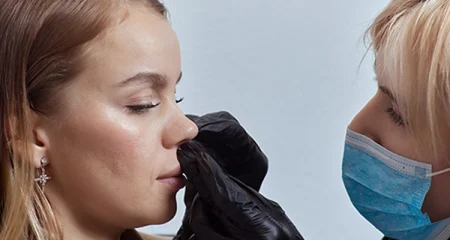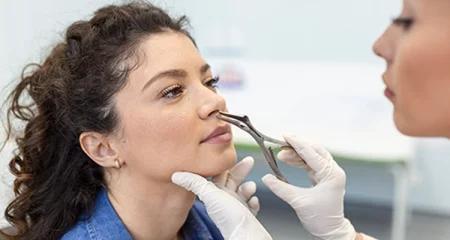


What Is Post-Traumatic Rhinoplasty?
Surgery that repairs structural or functional nasal changes caused by an injury is called post-traumatic rhinoplasty. Trauma can alter the nasal bones, cartilage, septum, tip, or internal airway. These changes may affect appearance, breathing, or both.
Treatment is planned according to the structures damaged and how they healed after the original injury. Surgery may straighten displaced nasal bones, rebuild cartilage support, correct septal deviation, or improve visible asymmetry. Some cases require cartilage grafts when trauma has weakened or damaged supporting structures. Previous fractures and scar tissue can make reconstruction more complex than surgery on an uninjured nose. The procedure aims to restore balanced nasal proportions while preserving or improving function. The appropriate approach depends on injury severity, existing deformity, airway condition, tissue quality, and previous treatment.
Why Is Post-Traumatic Rhinoplasty Performed?
Nasal injuries can leave lasting changes in appearance or airflow after the initial swelling and fracture healing have finished. People may consider post-traumatic rhinoplasty when trauma causes persistent crookedness, obstruction, asymmetry, bridge irregularities, or weakened structural support. The procedure can address cosmetic and functional problems during the same operation.
A fracture may heal in a displaced position, leaving the nasal bones visibly uneven. Cartilage damage can also change tip position or weaken the nasal sidewalls. Septal injuries may narrow one or both nasal passages and make breathing difficult. Treatment therefore focuses on the specific structures affected rather than simply changing external appearance. Some injuries require limited correction, while others need extensive reconstruction. Surgical planning depends on fracture history, current anatomy, breathing symptoms, scar tissue, structural stability, and the changes caused by trauma.
Who Is a Good Candidate for Post-Traumatic Rhinoplasty?
People with persistent nasal deformity or breathing problems after an injury may be suitable candidates for post-traumatic rhinoplasty. Common concerns include a crooked bridge, displaced nasal bones, septal deviation, asymmetry, or structural weakness. Suitable general health and realistic expectations are also important when considering reconstructive nasal surgery.
Timing matters because recently injured tissues may still be swollen or unstable. Some acute fractures can receive earlier treatment, while established deformities often require surgery after healing has progressed. Previous operations and scar tissue can affect available techniques. Existing breathing problems should be assessed alongside visible changes because trauma may damage several airway structures. Candidate selection depends on injury type, healing stage, nasal stability, functional symptoms, tissue condition, and whether reconstructive surgery can provide meaningful improvement.
What Nasal Problems Can Trauma Cause?
Trauma can cause nasal fractures, septal deviation, cartilage damage, asymmetry, obstruction, and changes in bridge or tip position. A nasal injury may affect several structures simultaneously because bone, cartilage, and internal airway tissues are closely connected. Even injuries without obvious external fractures can sometimes alter septal alignment or cartilage support.
Displaced bones may create a crooked or widened bridge. Septal damage can reduce airflow through one or both sides. Cartilage weakness may contribute to tip distortion or nasal valve collapse. Scar tissue can further affect internal breathing and external contours after healing. Severe injuries may cause loss of structural support or irregularities along the bridge. Symptoms and appearance can evolve as swelling decreases. The resulting problems depend on impact direction, injury severity, previous nasal anatomy, treatment received, and how damaged structures heal.
What Concerns Can Post-Traumatic Rhinoplasty Correct?
Crookedness, bridge irregularities, asymmetry, septal deviation, airway narrowing, and cartilage damage may be addressed through post-traumatic rhinoplasty. Surgery can reposition healed nasal bones when they remain displaced after an injury. Cartilage may also be reshaped or reconstructed to restore support and improve external proportions.
A damaged septum can require correction when it contributes to obstruction or visible deviation. Structural grafts may strengthen areas weakened by trauma. Nasal valve problems can also require treatment when the sidewalls collapse during breathing. Some injuries produce complex differences that cannot be completely eliminated. Scar tissue and previously healed fractures may limit the amount of correction possible. Treatment therefore aims for meaningful structural and functional improvement rather than guaranteed perfect symmetry. Results depend on damage severity, remaining tissue, healing, and reconstructive requirements.
When Is Post-Traumatic Rhinoplasty Necessary?
Surgery may be considered when nasal trauma leaves persistent deformity, structural instability, or breathing problems after appropriate healing. Post-traumatic rhinoplasty becomes relevant when changes cannot be adequately addressed through early fracture management or when problems remain afterward. Persistent crookedness, septal obstruction, and cartilage collapse are common reasons for later reconstruction.
Not every nasal injury requires rhinoplasty. Minor fractures can sometimes heal without significant cosmetic or functional problems. Recently sustained injuries may also require a different treatment approach than established deformities. Surgery is generally planned according to tissue stability and the nature of the remaining problem. Breathing difficulties should be evaluated because obstruction can involve the septum, nasal valves, or several structures together. The need for surgery depends on symptoms, deformity severity, injury timing, functional impairment, and individual anatomy.
How Is Post-Traumatic Rhinoplasty Different from Cosmetic Rhinoplasty?
Trauma-related surgery often requires reconstruction of damaged structures, while cosmetic rhinoplasty primarily addresses elective changes in nasal appearance. During post-traumatic rhinoplasty, displaced bones, scar tissue, septal damage, cartilage weakness, or airway problems may require correction. The original anatomy may already have been significantly altered by injury.
Cosmetic procedures can also involve structural techniques, so the two categories can overlap. However, trauma cases frequently require greater attention to restoring stability and breathing function. Healed fractures may need controlled repositioning, while damaged cartilage can require grafting. Scar tissue may make normal surgical planes less predictable. Functional and aesthetic goals are therefore often closely connected. The appropriate approach depends on the structures damaged, previous treatment, current nasal shape, airway function, and the amount of reconstruction required.
How Is Post-Traumatic Rhinoplasty Performed?
Damaged nasal structures are identified and then repositioned, reshaped, or reconstructed according to the effects of the original injury. During post-traumatic rhinoplasty, healed bone displacement may require controlled cuts before the bridge can be realigned. Cartilage and septal structures can also be adjusted when trauma has changed their position or strength.
Structural grafts may be added when existing cartilage cannot provide sufficient support. Nasal valve reconstruction can accompany surgery when airway weakness contributes to obstruction. Open or closed surgical access may be selected according to complexity. Once the framework is corrected, tissues are repositioned and incisions are closed. A splint may protect the nose during early healing. The exact procedure varies substantially because trauma affects each nose differently. Planning depends on bone position, cartilage damage, septal alignment, scar tissue, and breathing function.
Can Post-Traumatic Rhinoplasty Correct a Crooked Nose?
Yes, a crooked nose caused by healed fractures or structural displacement can often be improved through post-traumatic rhinoplasty. Nasal bones may need controlled repositioning when they healed away from their original alignment. Cartilage and the septum may also require correction because they can contribute to visible deviation.
Straightening only the external bones may not be sufficient when several structures are involved. The nasal tip, septum, and internal airway can each influence overall alignment. Previous fractures may also create irregular bone surfaces that require reshaping. Perfect straightness cannot always be guaranteed because facial asymmetry and scar tissue can affect the final appearance. Swelling may temporarily make the nose appear uneven during recovery. The achievable correction depends on fracture severity, cartilage condition, septal position, tissue quality, and healing.
Can Post-Traumatic Rhinoplasty Improve Breathing?
Yes, nasal airflow may improve when post-traumatic rhinoplasty corrects structural problems created by an injury. Trauma can displace the septum, narrow the nasal valves, or weaken cartilage supporting the airway. Correcting these structures can increase available space and reduce collapse during breathing.
Functional treatment depends on identifying every significant source of obstruction. Septoplasty may be required when septal deviation contributes to blockage. Cartilage grafts can strengthen weakened nasal valves or sidewalls. Allergies and chronic inflammation can still cause congestion even after structural correction. Early postoperative swelling may also temporarily restrict airflow before improvement develops. Long-term breathing results depend on the original injury, airway anatomy, reconstruction performed, tissue healing, and any nonstructural causes of nasal obstruction.
Can Post-Traumatic Rhinoplasty Repair a Deviated Septum?
Yes, a septum displaced or damaged by trauma can often be corrected during post-traumatic rhinoplasty when it contributes to obstruction or deformity. Septal cartilage and bone may be repositioned, reshaped, or selectively removed while preserving adequate structural support. Complex injuries can require additional reconstruction.
The septum supports both nasal function and external alignment. Significant deviation can therefore contribute to breathing difficulty and a visibly crooked nose. Correcting the septum may also provide cartilage that can be used for structural grafting when appropriate. Severe trauma can make treatment more complex because cartilage may be fractured, weakened, or scarred. Septal correction alone may not solve obstruction when nasal valve damage is also present. Treatment depends on deviation severity, remaining cartilage, airway anatomy, previous procedures, and the extent of traumatic damage.
Can Post-Traumatic Rhinoplasty Restore Nasal Symmetry?
Yes, trauma-related differences in bridge, tip, or nostril position can often be improved through post-traumatic rhinoplasty. Surgery may realign displaced bones, reposition cartilage, correct septal deviation, or rebuild weakened structures. These changes can create better balance between both sides of the nose.
Complete symmetry cannot be guaranteed because natural facial anatomy is rarely identical. Previous fractures and scar tissue can also limit how precisely structures can be repositioned. Severe trauma may permanently change available cartilage or bone. Swelling during recovery can temporarily exaggerate differences between both sides. The goal is usually meaningful improvement while maintaining structural stability and breathing function. Final symmetry depends on the original injury, existing facial asymmetry, reconstructive requirements, scar formation, and individual healing response.
How Should You Prepare for Post-Traumatic Rhinoplasty?
Medical history, injury details, previous treatments, breathing symptoms, and current medications should be reviewed before post-traumatic rhinoplasty. Information about previous fractures or nasal operations can help clarify how the anatomy has changed. Existing airway problems should also be identified because functional correction may need to accompany external reconstruction.
Frequently Asked Questions
How Long Does Post-Traumatic Rhinoplasty Take?
The procedure usually requires several hours, although post-traumatic rhinoplasty duration varies according to the extent of reconstruction needed. Limited correction of a healed fracture may take less time than surgery involving the septum, nasal valves, cartilage grafts, and extensive structural rebuilding. Previous operations can further increase complexity.
What Is the Recovery Process After Post-Traumatic Rhinoplasty?
Early recovery commonly involves swelling, bruising, congestion, tenderness, and temporary nasal sensitivity after post-traumatic rhinoplasty. A splint may support repositioned structures during the initial healing period. Internal swelling can temporarily make nasal breathing difficult even when functional correction has been performed.
How Long Do Swelling and Bruising Last After Post-Traumatic Rhinoplasty?
Bruising often improves within several weeks, while swelling after post-traumatic rhinoplasty can continue decreasing for many months. Early swelling is usually most noticeable during the first days after surgery. The bridge may settle sooner than the nasal tip, which commonly retains swelling for longer.
What Should You Avoid After Post-Traumatic Rhinoplasty?
Heavy exercise, nasal pressure, smoking, forceful nose blowing, and activities carrying facial injury risk should be avoided during early recovery. Throughout post-traumatic rhinoplasty recovery, repositioned bones and reconstructed cartilage need protection while they stabilize. Contact sports can be particularly risky because another impact may disrupt healing structures.
What Are the Risks of Post-Traumatic Rhinoplasty?
Bleeding, infection, persistent asymmetry, breathing problems, scarring, and contour irregularities are possible risks of post-traumatic rhinoplasty. Temporary swelling, congestion, tenderness, and altered sensation commonly occur during early recovery. Trauma-related scar tissue can make healing less predictable than in an uninjured nose.
When Are Post-Traumatic Rhinoplasty Results Visible?
Initial improvements become noticeable as early swelling decreases, while post-traumatic rhinoplasty results continue developing over many months. Changes in bridge alignment may become visible relatively early. Tip definition and smaller contour refinements generally take longer because swelling persists in soft tissues.
Are Post-Traumatic Rhinoplasty Results Permanent?
Reconstructed bone and cartilage changes are generally long-lasting after stable healing, although post-traumatic rhinoplasty results can evolve naturally over time. Repositioned nasal bones heal in their corrected locations, while cartilage grafts can provide lasting structural support. The durability of correction depends partly on the severity of the original injury.