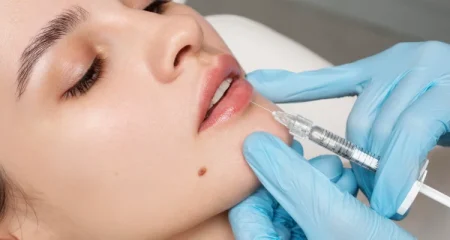


What Is Correction of Filler-Related Lip Deformities?
Treatment focuses on improving unwanted changes in lip shape, volume, contour, or tissue quality that develop after injectable augmentation. Depending on the filler material and underlying problem, Correction of Filler-Related Lip Deformities may involve observation, targeted dissolution, medical treatment, or selected surgical procedures.
Hyaluronic acid fillers can often be approached differently from permanent or unknown injectable substances. For this reason, identifying the product used, injection history, and timing can influence treatment planning.
Correction does not always mean removing every trace of filler. In some cases, reducing a specific area is enough to restore more balanced proportions.
Swelling, scar tissue, inflammatory reactions, and natural asymmetry can resemble filler-related distortion. Careful assessment is therefore important before treatment begins, particularly when the original injection material is uncertain.
What Are Filler-Related Lip Deformities?
Unwanted changes following lip augmentation can include excessive volume, asymmetry, migration, lumps, nodules, border distortion, or irregular projection. When these changes persist, Correction of Filler-Related Lip Deformities aims to identify their cause before selecting an appropriate treatment.
Some irregularities become apparent shortly after injection, while others develop gradually. Product characteristics, injection depth, quantity, repeated treatments, tissue response, and lip movement can all influence the appearance.
Not every early irregularity represents a permanent deformity. Swelling and bruising can temporarily make the lips appear uneven during the initial healing period.
Persistent abnormalities require a different assessment. The clinician may need to distinguish between filler accumulation, migration, fibrosis, inflammatory nodules, infection, or pre-existing anatomical asymmetry before attempting correction.
Why Can Lip Fillers Create Irregular or Unnatural Results?
Several factors can contribute to an unnatural result, including excessive product volume, unsuitable placement, repeated injections, filler migration, and differences in tissue response. When these issues become noticeable, Correction of Filler-Related Lip Deformities should focus on the specific mechanism rather than simply adding more filler.
Lip tissues move continuously during speaking, eating, and facial expression. Product characteristics and injection location can therefore influence how filler behaves over time.
Natural asymmetry may also become more noticeable after augmentation. If additional volume is placed without accounting for existing differences, one side can appear larger or differently shaped.
Some delayed problems involve inflammation or nodules rather than simple overfilling. These conditions may require a different treatment strategy from ordinary cosmetic dissatisfaction.
Common Types of Lip Deformities After Filler Injections
Post-filler concerns can appear in several forms, including overfilled lips, uneven volume, palpable lumps, visible nodules, migration beyond the vermilion border, and loss of normal lip definition. Depending on the cause, Correction of Filler-Related Lip Deformities may require one or several targeted approaches.
Migration above the upper lip can blur the vermilion border or create a shelf-like appearance. Localized accumulation may instead produce bumps or disproportionate projection.
Some people develop asymmetry because filler distribution differs between the two sides. Others experience inflammatory reactions that create swelling or firmness.
Correct diagnosis matters because these appearances can overlap. A lump caused by concentrated filler should not automatically be treated in the same way as infection, scar tissue, or an inflammatory nodule.
How Lip Filler Migration Affects Lip Shape
Migration describes filler located outside the intended treatment area or extending beyond the desired lip boundaries. When migration changes the vermilion border or surrounding tissues, Correction of Filler-Related Lip Deformities may focus on reducing misplaced material while preserving natural lip structure.
Upper-lip migration can create fullness above the vermilion, reducing the sharp transition between the red lip and surrounding skin. Other patterns may produce uneven projection or localized bulges.
Repeated augmentation can make the problem more difficult to interpret because residual material from different treatment sessions may be present.
The appropriate correction depends heavily on filler type. Hyaluronic acid material may respond to enzymatic dissolution, whereas permanent or unknown substances can require substantially different management.
Correction of Overfilled Lips
Excessive augmentation can make the lips appear disproportionate, stiff, projected, or poorly defined. When too much injectable material is responsible, Correction of Filler-Related Lip Deformities can aim to reduce unnecessary volume and restore a more balanced relationship between the lips and surrounding face.
For hyaluronic acid filler, targeted enzymatic dissolution may be considered when appropriate. Complete dissolution is not always necessary if only certain areas are overfilled.
The process should remain controlled because reducing too much volume at once may reveal natural asymmetry or previously stretched tissues.
Permanent fillers require a different approach. Surgical removal may sometimes be considered, but complete extraction can be difficult when material is integrated with normal tissue, and aggressive removal can create additional scarring or contour changes.
Treatment of Uneven Lip Volume After Fillers
Asymmetry can occur when filler is distributed unevenly, migrates differently, or produces variable tissue responses. After the cause is identified, Correction of Filler-Related Lip Deformities may involve selective dissolution rather than treating both sides identically.
Natural lip asymmetry should also be considered. One side may have been larger, higher, or more projected before any filler was injected.
Adding more filler is not always the best way to correct an uneven result. Additional volume can worsen the problem when excessive material is already responsible for the imbalance.
Treatment may therefore involve reducing one area first and reassessing the lips after swelling resolves. Any further augmentation, when appropriate, can then be based on the remaining natural anatomy.
Correction of Lumps and Nodules in the Lips
Palpable or visible lumps can develop for different reasons, including concentrated filler, superficial placement, fibrosis, inflammatory reactions, or infection. Before Correction of Filler-Related Lip Deformities is attempted, distinguishing between these possibilities is important.
A localized collection of hyaluronic acid filler may respond differently from a delayed inflammatory nodule. Management therefore depends on clinical findings, filler history, symptoms, and timing.
Pain, warmth, increasing redness, drainage, or fever may indicate a complication requiring medical evaluation rather than routine cosmetic correction.
Permanent materials and unknown injectables can be particularly challenging. When material has become incorporated into surrounding tissue, complete removal may not be possible without removing or disturbing some normal tissue as well.
Managing a Distorted Vermilion Border After Lip Filler
The vermilion border creates the visible transition between the red lip and surrounding facial skin. Excessive or migrated filler can blur this boundary and produce an unnatural contour. In appropriate cases, Correction of Filler-Related Lip Deformities can reduce misplaced volume and allow the natural border to become more visible.
The treatment strategy depends on filler type and location. Hyaluronic acid material may permit targeted dissolution when the product is accessible and clinically suitable for enzyme treatment.
Repeated augmentation can make correction less predictable because several layers of residual filler may be present.
After reduction, the lips should be allowed to settle before their final shape is assessed. Immediate reinjection may make it difficult to distinguish natural anatomy from temporary swelling caused by correction.
Possible Risks of Correcting Filler-Related Lip Deformities
Corrective treatment has its own potential complications, and risks depend on whether management involves dissolution, injections, medication, or surgery. During Correction of Filler-Related Lip Deformities, possible concerns can include swelling, bruising, tenderness, temporary asymmetry, incomplete correction, allergic reactions, infection, scarring, or contour changes.
Hyaluronidase can affect hyaluronic acid filler beyond the exact area intended, making volume changes less predictable. Allergic reactions, although uncommon, are also possible.
Surgical treatment of permanent material carries additional risks because injected substances may be mixed with normal tissue.
Urgent assessment is appropriate for severe or increasing pain, pale or dusky skin, unusual mottling, blistering, visual disturbance, eye pain, vision loss, or neurological symptoms. Spreading redness, drainage, or fever can also indicate a complication requiring prompt medical attention.
Secondary Correction for Persistent Lip Irregularities
Some abnormalities remain after an initial corrective procedure, particularly when several filler treatments, scar tissue, permanent material, or substantial migration are involved. After adequate reassessment, secondary Correction of Filler-Related Lip Deformities can target remaining problems without automatically repeating the original approach.
Residual hyaluronic acid filler may occasionally require additional dissolution. Persistent contour differences can also become easier to evaluate after swelling from the first treatment has resolved.
Surgical intervention may be considered for selected permanent materials, fibrosis, or structural abnormalities that cannot be managed adequately through nonsurgical methods.
Repeated correction should remain conservative. Each intervention can change tissue characteristics, so allowing adequate healing between treatments helps distinguish temporary swelling from a persistent problem requiring further treatment.
Correction of Filler-Related Lip Deformities Prices 2026
Treatment costs vary significantly because filler complications range from minor excess volume to complex problems involving permanent material, inflammation, fibrosis, or previous corrective procedures. During 2026, pricing for Correction of Filler-Related Lip Deformities may therefore depend on the filler type, extent of irregularity, number of affected areas, and treatment required.
Frequently Asked Questions
Can migrated lip filler be completely removed?
Hyaluronic acid filler can often be substantially reduced with hyaluronidase, but complete removal cannot be guaranteed in every situation. During Correction of Filler-Related Lip Deformities, treatment may need to target several areas when migrated material is distributed unevenly.
Permanent or unknown fillers behave differently and cannot be dissolved with hyaluronidase. Surgical removal may sometimes be considered, although complete extraction can be difficult when material is integrated with normal tissue.
How do I know if my lip filler has migrated?
Possible signs include fullness extending beyond the intended lip border, blurred vermilion definition, new bulges above the upper lip, or changes in contour away from the original injection area. Assessment for Correction of Filler-Related Lip Deformities can help distinguish migration from swelling, natural anatomy, or scar tissue.
Appearance alone may not always identify the cause. Filler history, timing, examination, and sometimes additional diagnostic evaluation can help clarify the problem.
Can hyaluronidase dissolve all types of lip filler?
The enzyme primarily breaks down hyaluronic acid, so it does not dissolve every injectable material used for lip augmentation. When planning Correction of Filler-Related Lip Deformities, identifying the original filler is therefore particularly important.
Permanent fillers, silicone, and other non-hyaluronic materials generally require different management. If the injected substance is unknown, treatment should not assume that hyaluronidase will remove it.
How many sessions does it take to dissolve lip filler?
The number of sessions varies with filler quantity, location, product characteristics, treatment goals, and individual response. During Correction of Filler-Related Lip Deformities, some localized problems may respond to limited treatment, while more extensive filler can require staged dissolution.
Gradual correction can also make reassessment easier. Swelling after treatment may temporarily alter lip shape, so the need for another session is often judged after the tissues have had time to settle.
Does dissolving lip filler damage natural lip tissue?
Hyaluronidase breaks down hyaluronic acid and is used clinically to dissolve suitable fillers, but temporary changes in local tissue volume and swelling can occur. When used for Correction of Filler-Related Lip Deformities, the lips may initially look different as filler is reduced and inflammation settles.
Natural hyaluronic acid is continually produced and broken down by the body. Even so, hyaluronidase should be used appropriately because treatment can produce unwanted volume changes or, rarely, allergic reactions.