
What Is Foreign-Body Granuloma Treatment?
Foreign-Body Granuloma Treatment includes medical and surgical approaches used to manage persistent inflammatory nodules that form around injected, implanted, or retained materials. A granuloma develops when the immune system attempts to isolate material it cannot easily remove.
Treatment depends on the cause, location, symptoms, and type of foreign material involved. Options may include observation, anti-inflammatory medication, intralesional treatment, material-specific dissolution, or surgery in selected cases.
Because infection, filler nodules, cysts, and other conditions can resemble granulomas, accurate diagnosis is important before treatment begins. The main goal is to reduce inflammation, improve discomfort or contour irregularity, and manage the underlying material when possible.
What Causes a Foreign-Body Granuloma?
A foreign-body granuloma forms when the immune system creates a prolonged inflammatory response around material it recognizes as difficult to break down. Foreign-Body Granuloma Treatment is therefore directed at both inflammation and the triggering substance.
Possible causes include dermal fillers, permanent injectable materials, implants, sutures, retained debris after trauma, and other substances placed within tissue. Reactions can appear soon after exposure or develop much later.
Not everyone exposed to the same material develops a granuloma. Product characteristics, injection technique, tissue location, contamination, immune response, and individual susceptibility may influence risk.
Distinguishing a true granulomatous reaction from infection or other types of nodules is essential because management can differ significantly.
How Does the Body React to Injected or Implanted Materials?
The body normally reacts to foreign material by activating immune cells around the affected area. Foreign-Body Granuloma Treatment may become necessary when this reaction becomes persistent and produces noticeable inflammation or nodules.
Macrophages attempt to remove or contain the material. When they cannot process it effectively, they may combine into multinucleated giant cells and contribute to granuloma formation. Fibrous tissue can also develop around the affected area.
This response varies depending on the material and the individual. Some implanted substances remain stable without problems, while others can trigger delayed inflammation.
A foreign-body reaction is not automatically an infection. However, infection and inflammatory reactions can sometimes occur together, which makes careful evaluation important.
What Are the Common Signs of a Foreign-Body Granuloma?
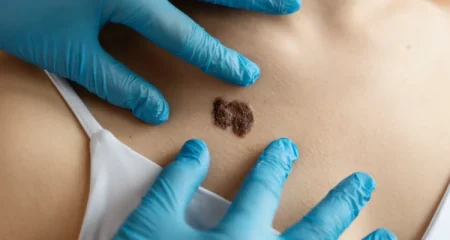
Common symptoms that may lead to Foreign-Body Granuloma Treatment include persistent lumps, firm nodules, swelling, redness, tenderness, and changes in skin contour.
Some granulomas are painless and mainly cause a visible or palpable irregularity. Others may become inflamed and produce discomfort, warmth, or intermittent swelling. Symptoms can remain stable or fluctuate over time.
Granulomas related to fillers may occur at the injection site or occasionally in nearby tissue. Their appearance can overlap with infection, delayed inflammatory nodules, or product migration.
Rapidly worsening redness, significant pain, drainage, fever, or other signs of infection require medical evaluation because these symptoms should not simply be assumed to represent a granuloma.
Where Can Foreign-Body Granulomas Develop?
Foreign-body granulomas can develop wherever foreign material has been injected, implanted, or retained. Foreign-Body Granuloma Treatment is therefore used in both facial and body areas.
After aesthetic injections, nodules may occur in the lips, cheeks, nasolabial region, chin, jawline, under-eye area, or other treated zones. Granulomas can also form around implants, sutures, or material left after traumatic injuries.
The location influences treatment because some anatomical areas contain important nerves, blood vessels, or functional structures. Deep nodules may also be more difficult to access surgically.
Evaluation should identify both the location and likely type of material before a treatment method is selected.
How Is a Foreign-Body Granuloma Diagnosed?
Foreign-Body Granuloma Treatment begins with diagnosis based on medical history, physical examination, and the characteristics of the lump or inflammatory reaction.
Important information includes previous fillers, implants, surgery, trauma, and the timing of symptom development. The area is assessed for firmness, tenderness, redness, mobility, depth, and relationship to nearby tissues.
Ultrasound or other imaging may sometimes help locate injected material or distinguish different types of nodules. In uncertain or persistent cases, tissue sampling may be considered to clarify the diagnosis.
Infection should also be assessed when clinically suspected. This distinction matters because treating inflammation without recognizing an infection can lead to inappropriate management.
Foreign-Body Granuloma After Dermal Filler Injections
A delayed granulomatous reaction can occasionally develop after dermal filler treatment. Foreign-Body Granuloma Treatment in these cases depends heavily on the filler material involved.
Symptoms may include firm nodules, persistent swelling, tenderness, redness, or recurrent inflammation. Reactions can develop months or even years after injection, particularly with materials that remain in tissue for long periods.
Hyaluronic acid filler can sometimes be reduced with hyaluronidase when retained product contributes to the problem. Permanent or non-hyaluronic materials require different approaches.
Not every delayed filler lump is a granuloma. Infection, inflammatory nodules, migration, and other complications can produce similar findings, making accurate diagnosis essential before treatment.
Treatment Options for Persistent Lumps and Nodules
Persistent nodules may require Foreign-Body Granuloma Treatment when they cause inflammation, discomfort, or visible contour changes.
Treatment options depend on whether the nodule is inflammatory, infectious, material-related, or mixed. Anti-inflammatory medication or intralesional treatment may be considered in selected granulomatous reactions.
When hyaluronic acid filler contributes to the problem, hyaluronidase may help reduce retained material. Permanent filler nodules can be more difficult to manage because the material cannot necessarily be dissolved.
Surgical removal may be considered when a well-defined lesion remains resistant to other treatments. However, complete removal can be difficult if the material has spread through surrounding tissue.
Non-Surgical Approaches to Foreign-Body Granulomas
Non-surgical Foreign-Body Granuloma Treatment may be appropriate when inflammation and symptoms can be controlled without removing tissue. The treatment approach depends on the injected material, degree of inflammation, and whether infection is present.
Options may include corticosteroid-based treatment, other anti-inflammatory medications, intralesional therapies, or material-specific dissolution. Hyaluronidase may be considered when hyaluronic acid filler is involved, while other materials may not have a specific dissolving enzyme.
Non-surgical treatment options and considerations include:
- Corticosteroid-based treatment
- Anti-inflammatory medications
- Intralesional therapies
- Material-specific dissolution
- Hyaluronidase for hyaluronic acid filler
- Assessment for infection
- Antibiotics when infection is suspected
- Type of injected material
- Degree of inflammation
- Number of treatment sessions
- Monitoring treatment response
- Risk of tissue thinning
- Risk of contour changes
- Other treatment-related side effects
When Is Surgical Removal of a Granuloma Considered?
Surgery may be considered as part of Foreign-Body Granuloma Treatment when a persistent granuloma causes significant symptoms, visible deformity, recurrent inflammation, or does not respond adequately to nonsurgical management.
Localized nodules may sometimes be removed directly, while diffuse reactions can be more difficult because foreign material may extend through several tissue planes. Surgical planning should protect nearby nerves, blood vessels, muscles, and other facial structures whenever possible.
Factors considered before surgical granuloma removal include:
- Persistent symptoms
- Visible deformity
- Recurrent inflammation
- Failure of nonsurgical treatment
- Localized granuloma
- Diffuse granulomatous reaction
Managing Inflammation Associated with Foreign-Body Reactions
Controlling inflammation is a major part of Foreign-Body Granuloma Treatment when swelling, tenderness, redness, or firmness develops around retained material.
Management depends on whether the inflammation is sterile, infectious, or related to another immune process. Anti-inflammatory or intralesional treatments may be appropriate for selected noninfectious granulomas.
If infection is possible, antimicrobial treatment and further evaluation may be necessary. Suppressing inflammation without addressing an active infection can worsen the problem.
Treatment should also consider the foreign material itself. Removing, dissolving, or reducing the trigger may sometimes be necessary before inflammation can settle reliably.
Can Foreign-Body Granulomas Return After Treatment?
Foreign-body granulomas can recur after Foreign-Body Granuloma Treatment, particularly when the triggering material remains within the tissue.
Recurrence risk depends on the type of material, distribution, treatment method, immune response, and whether complete removal or dissolution is possible. Permanent fillers and widely dispersed material can be particularly difficult to eliminate fully.
Symptoms may also fluctuate, with periods of reduced inflammation followed by renewed swelling or firmness.
Follow-up is useful after treatment because recurrent nodules may need further assessment. Additional treatment can sometimes control the reaction, but complete and permanent resolution cannot be guaranteed in every case.
Recovery After Foreign-Body Granuloma Treatment
Recovery after Foreign-Body Granuloma Treatment varies according to whether management involves injections, medications, filler dissolution, or surgery.
Nonsurgical treatment may cause temporary swelling, tenderness, bruising, or local irritation. Surgical removal can involve more noticeable swelling and a healing incision, with recovery depending on the size and location of the granuloma.
Inflammation may not disappear immediately even when treatment is successful. Tissue can require time to soften and settle after the triggering material is reduced or removed.
More complex reactions may need repeated treatment rather than one session. Final contour should therefore be assessed after inflammation and postoperative swelling have sufficiently decreased.
Follow-Up and Monitoring After Treatment
Follow-up is an important part of Foreign-Body Granuloma Treatment because symptoms can recur or evolve over time.
Monitoring may focus on changes in nodule size, tenderness, redness, swelling, and skin contour. Patients with permanent or widely distributed injectable material may require longer observation because delayed reactions can occur.
Additional imaging or testing may be considered if the response is unexpected or the diagnosis remains uncertain. Treatment can then be adjusted according to the clinical findings.
New pain, drainage, rapidly increasing redness, fever, or significant swelling should be assessed promptly because these findings may suggest infection or another complication rather than simple residual inflammation.
Foreign-Body Granuloma Treatment Prices 2026
Foreign-Body Granuloma Treatment Prices 2026 vary according to the cause, location, number of nodules, injected material, and treatment complexity.
Frequently Asked Questions
Is a foreign-body granuloma the same as an infection?
A granuloma is an inflammatory immune reaction to retained material, while an infection is caused by microorganisms. Foreign-Body Granuloma Treatment begins by distinguishing between them because the treatments differ. In some cases, inflammation and infection can occur together.
How long after a filler injection can a granuloma develop?
A granuloma can appear weeks, months, or even years after an injection. Foreign-Body Granuloma Treatment therefore considers previous filler history even when treatment occurred long before symptoms developed.
Can foreign-body granulomas disappear without treatment?
Some mild inflammatory reactions may settle, but established granulomas can persist. Foreign-Body Granuloma Treatment may be needed when lumps, swelling, tenderness, or recurrent inflammation continue or become more noticeable.
What does a foreign-body granuloma feel like?
A foreign-body granuloma often feels like a firm or rubbery lump beneath the skin. Foreign-Body Granuloma Treatment may be considered when the nodule becomes tender, inflamed, visible, or causes contour irregularity.
Can permanent fillers cause granulomas years later?
Permanent fillers can trigger delayed reactions long after injection because the material remains within tissue. Foreign-Body Granuloma Treatment can be more complex in these cases because permanent materials may not be dissolvable and may be difficult to remove completely.