
What Is Post-Traumatic Scar Correction?
Post-Traumatic Scar Correction includes surgical and nonsurgical treatments designed to improve scars that develop after cuts, accidents, burns, lacerations, or other injuries. The goal is usually to improve scar width, texture, depth, color, position, or function rather than completely remove the scar.
Treatment depends on how the original injury healed. Some traumatic scars become wide or irregular, while others remain raised, depressed, contracted, or discolored. Deeper trauma may also cause tissue loss beneath the skin, creating visible contour differences.
Post-Traumatic Scar Correction may involve laser treatment, microneedling, injections, subcision, fat grafting, scar excision, or reconstructive surgery. The appropriate method depends on scar maturity, location, skin type, tissue quality, and whether movement or nearby structures are affected.
How Do Scars Develop After Facial or Body Trauma?
Traumatic scars form when the skin repairs damage caused by an injury. Post-Traumatic Scar Correction may become necessary when this healing process produces excessive, insufficient, or irregular scar tissue.
The final scar depends partly on the depth and direction of the original wound. Deep injuries that extend into fat, muscle, or other tissues can produce more noticeable contour changes. Wound tension, infection, tissue loss, delayed closure, and poor blood supply may also affect scar quality.
Some injuries produce raised scars because excessive collagen develops during healing. Others create depressed scars because tissue has been lost or attached to deeper structures. Genetics, skin type, wound location, and individual healing biology also influence how visible a traumatic scar eventually becomes.
Which Traumatic Scars Can Be Treated?
Many scars caused by injury can be considered for Post-Traumatic Scar Correction, including wide, depressed, raised, irregular, contracted, tethered, and discolored scars.
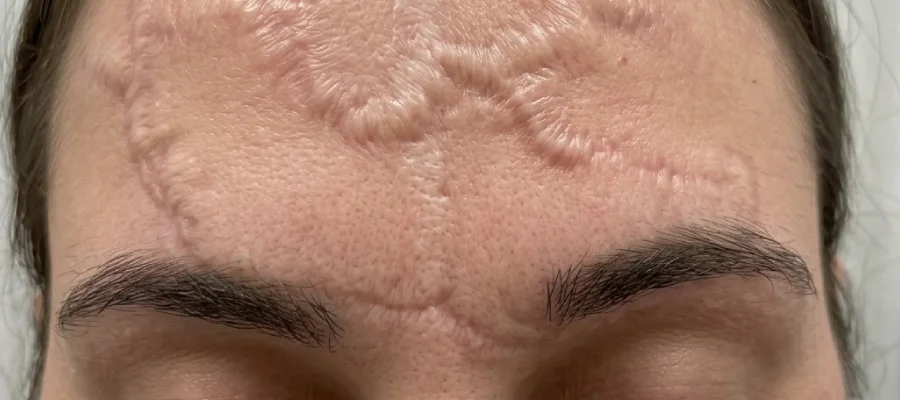
Cuts and lacerations may leave scars that do not follow natural skin lines. Crush injuries or deeper wounds can produce uneven contours because underlying soft tissue has also been damaged. Burns may create thickened scars or contractures that restrict normal movement.
Treatment can also address scars that remain red, dark, lighter than surrounding skin, or rough in texture. However, each feature may require a different approach.
The treatment plan depends on scar type, age, depth, location, symptoms, tissue quality, and previous procedures. Complete scar removal is generally not possible, but meaningful improvement may be achievable.
When Should a Post-Traumatic Scar Be Corrected?
The timing of Post-Traumatic Scar Correction depends on scar maturity, symptoms, and whether the injury has created a functional problem.
Many traumatic scars continue changing for several months after the wound closes. Redness may decrease, firmness can soften, and some raised scars may gradually flatten during normal maturation. For elective surgical revision, allowing the scar to mature can make the final problem easier to assess.
Earlier treatment may be appropriate when a scar restricts movement, pulls on an eyelid or lip, causes significant contracture, or develops excessive thickness. Certain nonsurgical scar treatments may also begin earlier than surgery.
There is therefore no single waiting period for every traumatic scar. Timing should be based on healing progress and the specific problem being treated.
How Is a Traumatic Scar Evaluated Before Treatment?
A detailed assessment is necessary before Post-Traumatic Scar Correction because the visible scar may not show the full extent of the original tissue damage.
Evaluation usually considers scar width, depth, thickness, color, direction, mobility, and texture. The surrounding skin is examined for laxity, tension, pigmentation, and available healthy tissue. Movement may also be assessed when the scar lies near a joint, eyelid, lip, or another functional area.
The history of the original injury is important. Infection, tissue loss, previous surgery, delayed wound healing, and earlier treatments can influence future options.
The evaluation helps determine whether resurfacing, injections, subcision, volume restoration, scar excision, tissue rearrangement, or a reconstructive procedure is most appropriate.
Treatment Options for Irregular and Uneven Scars
Irregular scars can require several approaches during Post-Traumatic Scar Correction, depending on whether the main problem involves surface texture, scar direction, depth, or tissue loss.
Microneedling and resurfacing procedures may improve selected textural differences. Depressed sections can sometimes require subcision or volume correction, while raised areas may need injections or other treatments aimed at reducing excess scar tissue.
When an irregular scar is wide or poorly positioned, surgical revision may be more appropriate. Scar excision, Z-plasty, W-plasty, or local tissue rearrangement can sometimes create a more favorable contour and direction.
Combination treatment is often useful because traumatic scars may contain several different characteristics. The goal is to make the area smoother and less noticeable while preserving function.
Correcting Depressed Scars After an Injury
Depressed scars may develop when trauma causes tissue loss or when scar tissue becomes attached to deeper structures. Post-Traumatic Scar Correction can target both the visible indentation and the underlying cause.
Subcision may be used in suitable cases to release fibrous attachments pulling the skin downward. Fat grafting or selected fillers can sometimes restore missing soft-tissue volume beneath the scar. Resurfacing procedures may then improve remaining surface irregularities.
More severe depressions can require surgical scar excision, tissue rearrangement, or reconstructive techniques when several tissue layers have been damaged.
The appropriate treatment depends on the depth, size, mobility, and location of the scar. Deep traumatic scars often require more than one treatment method to produce balanced improvement.
Treatment for Raised and Thickened Traumatic Scars
Raised scars may require Post-Traumatic Scar Correction when excessive collagen formation causes the scar to become thick, firm, uncomfortable, or visually prominent.
Hypertrophic scars generally remain within the boundaries of the original injury, while keloids can grow beyond those borders. This distinction matters because the risk of recurrence and treatment strategy can differ.
Silicone products, corticosteroid injections, other intralesional treatments, and selected laser procedures may be considered depending on scar characteristics. Surgery can sometimes reduce thick scar tissue, but it is not appropriate as a standalone solution for every raised scar.
Keloids require particular caution because they may return after excision. Treatment should therefore consider scar biology, previous responses, symptoms, location, and individual healing tendencies.
Surgical Revision for Wide or Contracted Scars
Post-Traumatic Scar Correction may involve surgery when a scar remains unusually wide, poorly aligned, or contracted after healing.
A wide scar can sometimes be removed and replaced with a more precise closure designed to reduce tension. Contracted scars may require techniques such as Z-plasty or other forms of tissue rearrangement to lengthen tight tissue and improve movement.
More complex cases can require local flaps, grafts, or staged reconstruction, especially when significant tissue has been lost. Surgery is particularly important when contracture affects joints, eyelids, lips, neck movement, or other functional structures.
Surgical revision creates a new scar, so the purpose is not scar elimination. The objective is to produce a better-positioned, narrower, or less restrictive scar.
Restoring Skin Contours After Trauma
Trauma can alter the shape of the skin and underlying soft tissues, making contour restoration an important part of Post-Traumatic Scar Correction.
Depressions may form when fat or deeper tissue is lost during the original injury. Raised areas can develop from excessive scar tissue, while tethering can create uneven transitions between the scar and surrounding skin.
Treatment may involve subcision, fat grafting, fillers, scar excision, local tissue rearrangement, or reconstructive surgery. Surface resurfacing can sometimes be added when texture remains uneven after deeper contour problems are addressed.
The best approach depends on the amount and depth of tissue loss. Restoring a smooth transition is usually a more realistic goal than recreating the exact appearance of uninjured skin.
Improving Scars Caused by Cuts and Lacerations
Cuts and lacerations can leave scars that are wide, irregular, depressed, raised, or poorly aligned. Post-Traumatic Scar Correction may be considered once the original wound has healed sufficiently and the scar can be properly assessed.
Treatment depends on the position and depth of the original injury, involvement of deeper tissues, and the final scar pattern. Simple scars may respond to resurfacing or surgical revision, while more complex lacerations can require tissue rearrangement or scar redirection.
Factors that influence treatment for scars caused by cuts and lacerations include:
- Scar width
- Scar depth
- Irregular scar edges
- Depressed scars
- Raised scars
- Scar alignment
- Original injury depth
- Damage to deeper tissues
- Relationship to natural skin lines
- Wound tension
- History of infection
- Quality of the initial closure
- Individual healing response
- Need for resurfacing
- Need for surgical revision
Managing Scar Discoloration and Texture Changes
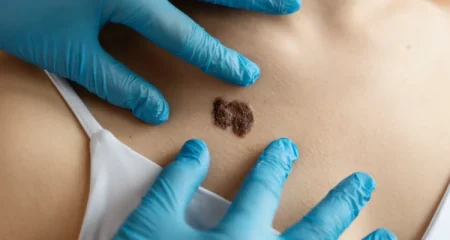
Post-traumatic scars may develop changes in both color and surface texture. Some scars remain red because of vascular changes, while others become darker or lighter than the surrounding skin after injury or prolonged inflammation.
Selected laser treatments may help address redness or certain pigmentation concerns, while microneedling and resurfacing can improve some textural irregularities. Treatment should be chosen carefully because skin type and the extent of pigment-cell damage can affect both safety and predictability.
Factors considered when treating scar discoloration and texture include:
- Persistent redness
- Darkened pigmentation
- Loss of pigmentation
- Uneven skin color
- Rough texture
- Shiny scar surface
- Firm scar tissue
- Uneven scar texture
- Depth of the original injury
- History of inflammation
- Skin type
Recovery After Post-Traumatic Scar Correction
Recovery after Post-Traumatic Scar Correction varies significantly according to the treatment method and the complexity of the original scar.
Nonsurgical treatments may cause temporary redness, swelling, sensitivity, or crusting. More extensive resurfacing procedures can require additional healing time. Surgical scar revision may produce bruising, swelling, tenderness, and a new incision that needs careful wound protection.
Patients undergoing tissue rearrangement, grafting, or flap reconstruction may require a longer recovery and closer postoperative monitoring. Activity restrictions can also be necessary to reduce tension on the healing area.
The treated scar often changes for months after the initial recovery. Early appearance should not be considered final because scar remodeling continues long after the skin surface has closed.
Factors That Influence the Final Scar Appearance
Many variables influence the result of Post-Traumatic Scar Correction, including scar location, injury depth, tissue tension, skin type, genetics, and the quality of the surrounding tissue.
Areas exposed to frequent movement or tension can produce wider or more noticeable scars. Infection, wound separation, poor circulation, smoking, and previous tissue damage may also interfere with healing.
A personal history of hypertrophic scars or keloids can increase the risk of raised scarring after revision. Sun exposure may contribute to prolonged discoloration during the healing period.
Treatment technique is important, but individual biology remains a major factor. Even well-planned treatment cannot guarantee an invisible scar or identical healing between different patients.
Post-Traumatic Scar Correction Prices 2026
Post-Traumatic Scar Correction Prices 2026 vary because traumatic scars can range from small surface irregularities to complex defects involving several layers of tissue.
Frequently Asked Questions
Can an old traumatic scar still be corrected?
An old scar can often be improved with Post-Traumatic Scar Correction, even many years after the original injury. Mature scars may be treated with resurfacing, subcision, volume restoration, injections, or surgical revision depending on their structure. Complete removal is not possible, but width, texture, depth, and contour may often be improved.
How soon after an injury can scar treatment begin?
Some forms of Post-Traumatic Scar Correction can begin during early healing, particularly appropriate wound care, sun protection, and selected scar-management measures. More aggressive procedures are generally delayed until the wound has healed sufficiently. Surgical revision is often considered later unless the scar causes significant contracture or functional distortion.
Can post-traumatic scars be completely removed?
Post-Traumatic Scar Correction cannot completely remove a scar because injured skin heals by forming scar tissue. Treatment aims to make the scar flatter, narrower, smoother, less discolored, or better positioned. Surgical revision also creates a new scar, although it may heal in a more favorable way.
What treatment is suitable for a deep or indented scar?
A deep or indented scar may require Post-Traumatic Scar Correction that addresses tissue beneath the skin. Options can include subcision, fat grafting, fillers, surgical scar release, or tissue reconstruction. Resurfacing may also improve surface texture, but deeper scars often need structural treatment first.
Can a wide scar caused by an injury be made narrower?
A wide traumatic scar may sometimes be narrowed through Post-Traumatic Scar Correction using scar excision and precise layered closure. Tissue tension, scar location, skin flexibility, and individual healing influence the result. Some scars require additional tissue rearrangement when direct closure would create excessive tension.
Does traumatic scar revision create another scar?
Surgical Post-Traumatic Scar Correction creates a new scar because the existing scar is revised through an incision. The aim is to replace an unfavorable scar with one that is narrower, better aligned, or less restrictive. Final appearance develops gradually as the revised scar matures.
Can scar correction improve skin texture and color?
Post-Traumatic Scar Correction can improve certain texture and color changes, although results vary. Laser treatments, microneedling, resurfacing, and other targeted procedures may help with redness, pigmentation, or roughness. Permanent pigment loss caused by deep trauma can be more difficult to correct completely.